Haverstraw would not be what it is today without the Hudson River, and the Hudson River wouldn’t be what it is today (for better or worse) without the brick industry. However, the secret to Haverstraw’s success wasn’t just in its revolutionary inventions in brickmaking. Rather, it’s hidden in the very shape of the river itself.
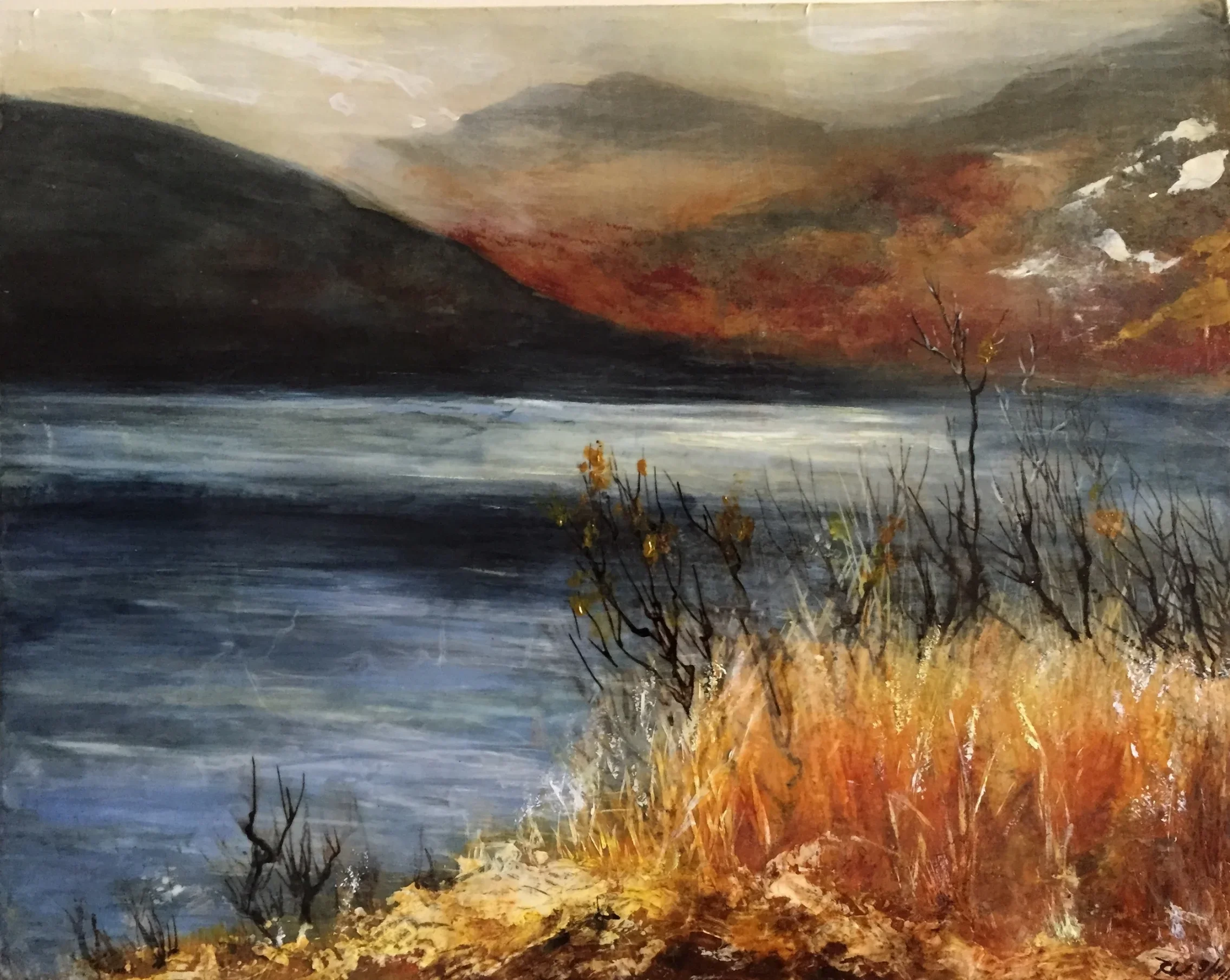
View of the Fjord looking north up the Hudson River to the Hudson Highlands, painting by Rachel Whitlow, in private collection, 2016
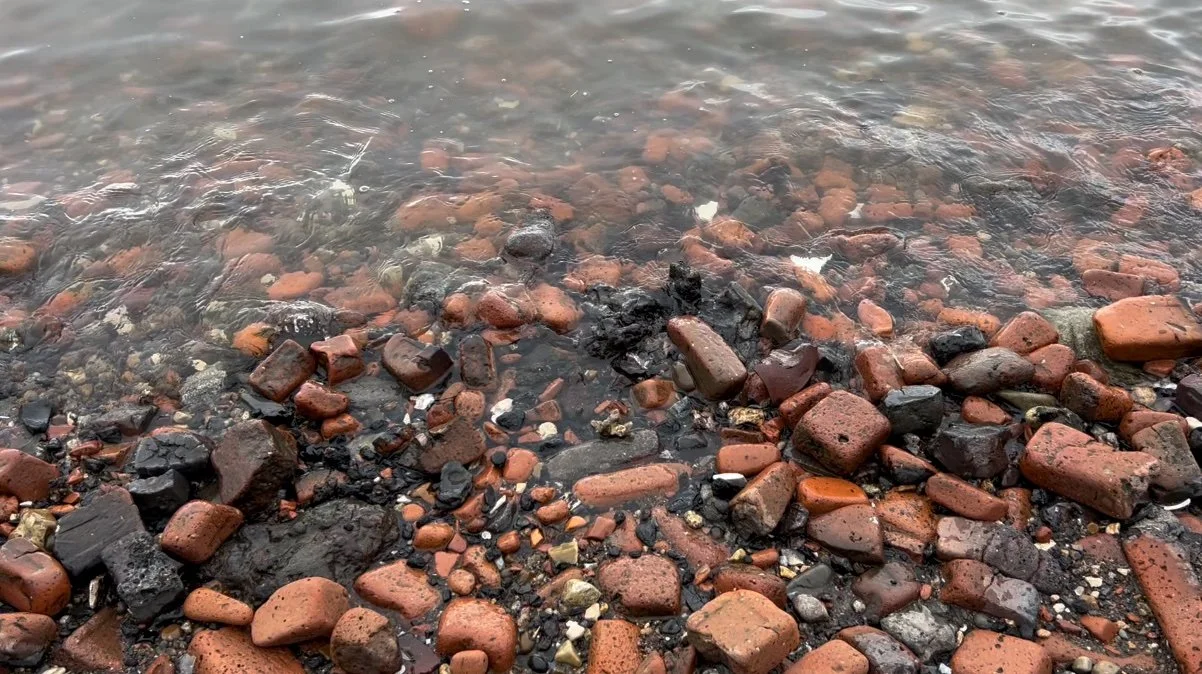
When looking at the Haverstraw shoreline today, it’s fairly easy to see the industry’s 150-year-long impact on the ecology of the Hudson River. [1] Yet, as it turns out, we’ve been living alongside a geological marvel usually reserved for the Arctic. When we think of fjords, we usually picture the icy peaks and deep sea valleys of Norway. But did you know that the Hudson River is the only true fjord on the U.S. East Coast? [2]
Carved by the massive Laurentide Ice Sheet nearly 20,000 years ago, the Hudson is a drowned river valley. The glacier gouged out a deep, U-shaped trough—reaching depths of 170 feet near West Point—allowing the Atlantic tide to surge over 100 miles inland. This violent glacial history didn't just create a beautiful landscape; it set the stage for Haverstraw to become the Brickmaking Capital of the World.
Varved Clay: The Earth’s Tree Rings
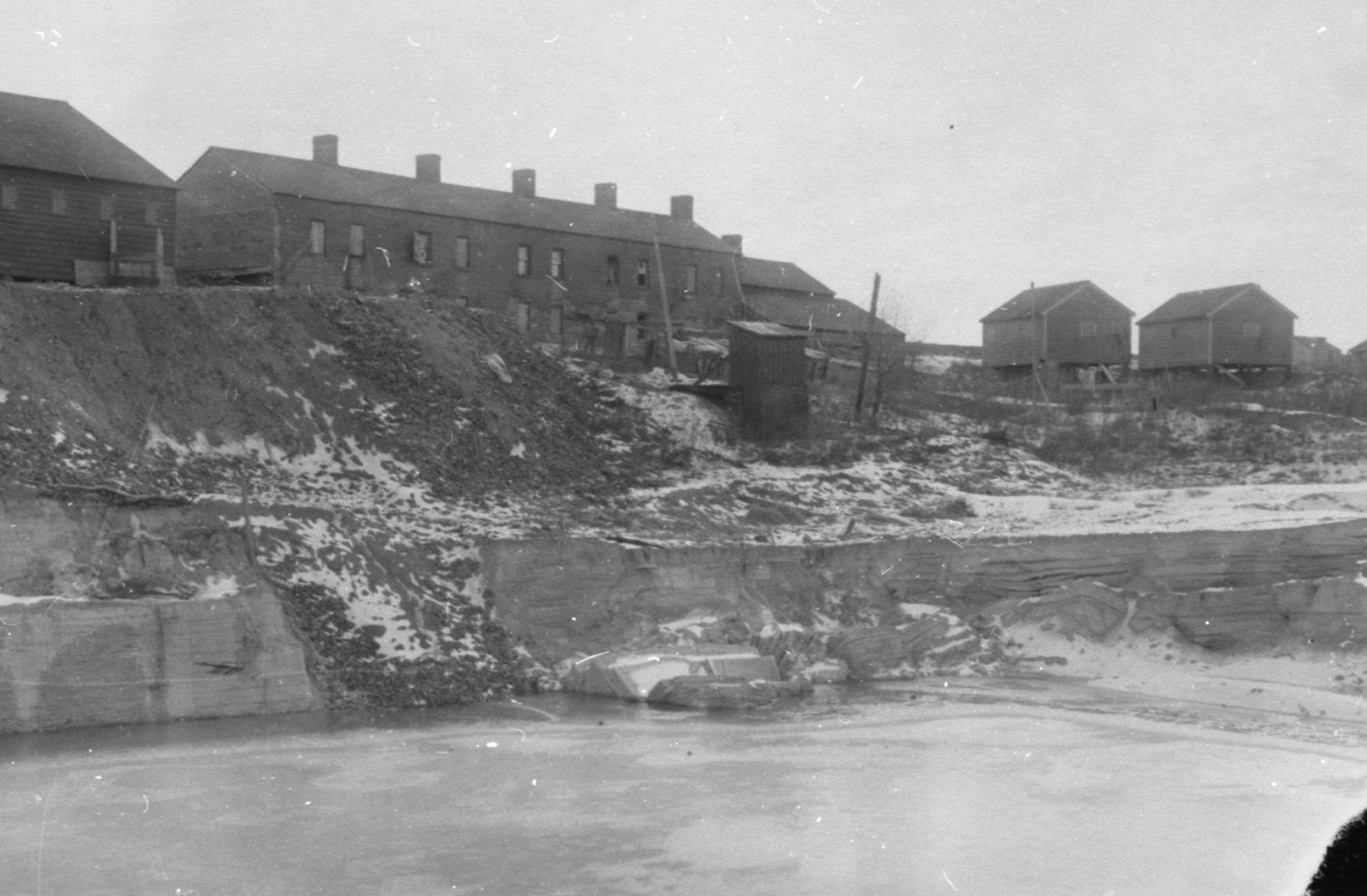
Varve layers can be seen in this exposed clay bank. Over time, between frost and thaw, these extensive excavations destabilized the land around the clay pits. Haverstraw Brick Museum Archives, Sullivan Collection, 35mm Contacts, Workers Housing c.1904.
As the glaciers began to melt and retreat roughly 18,000 years ago, they left behind a massive basin filled with still, frigid water known as Glacial Lake Hudson. For thousands of years, the Haverstraw area was submerged, acting as a giant trap for the fine debris ground up by the ice.
Think of the resulting deposits—varved clay—as tree rings for the planet. Just as a tree adds a ring every year, the lakebed added a double layer (called a couplet) that recorded the passing seasons over tens of thousands of years:
The Summer Layer: Rushing meltwater carried light-colored, coarse silt into the lake. These settled quickly as the water slowed down in the basin.
The Winter Layer: When the lake surface froze, the water became perfectly still. This allowed the fine blue-gray clay particles to settle into a thin, dense sheet of clay.
By counting these couplets of silt and clay layers, geologists can read the Earth’s history like a book, tracking ancient shifts in temperature and rainfall. [3] These layers were more than a climate record for 19th-century brickmakers. The natural grain of the varves were a blessing that made the clay easier to refine, process, and rid it of any impurities.
Chemical Magic: Why Are Bricks Red?
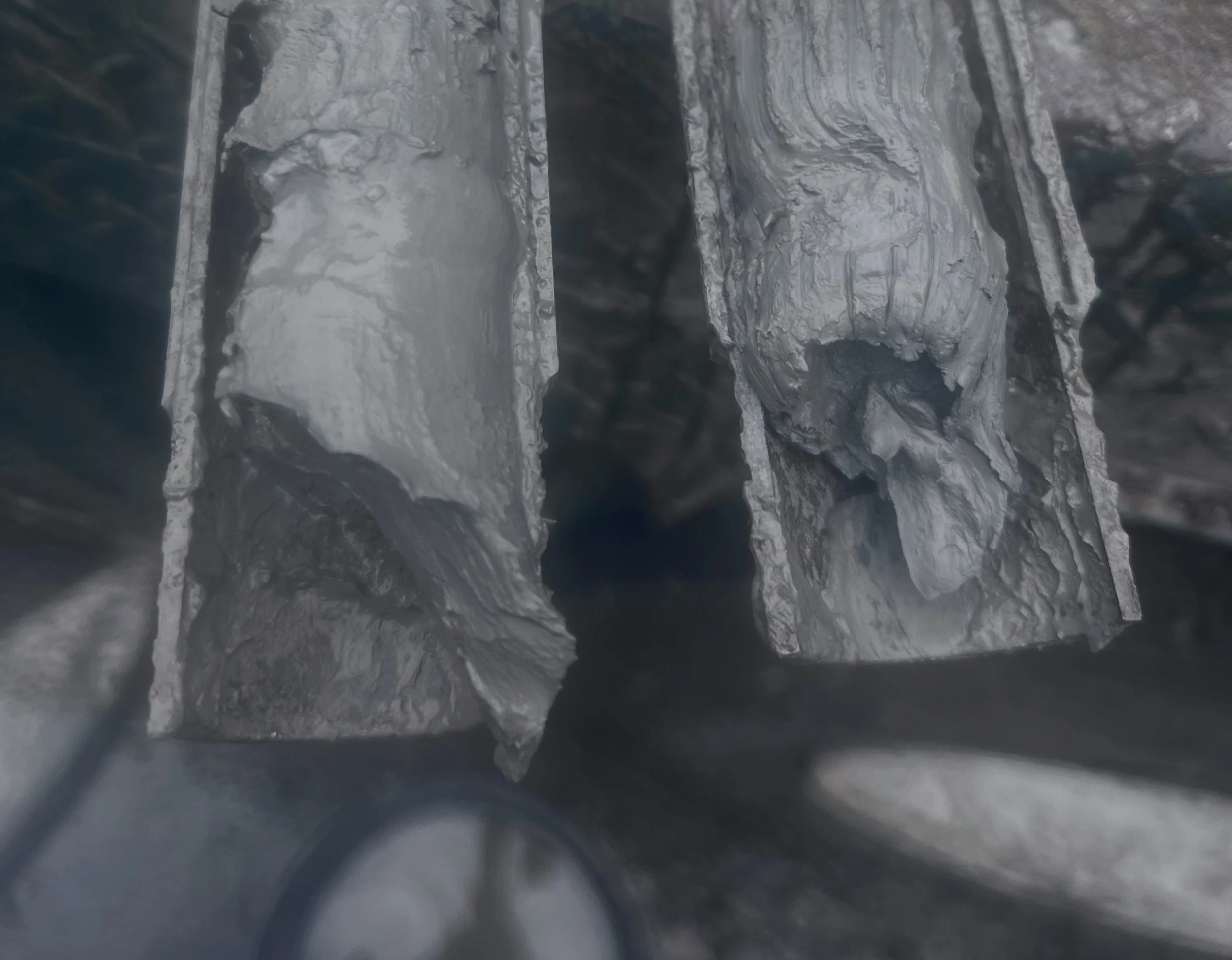
Photo by Rachel Whitlow of gray varved clay recently extracted as core samples from underneath the Haverstraw Brick Museum during geotechnical testing for the new Museum build.
If you dig into the banks of the Hudson today (which the museum recently did as part of the engineering for the new building), you’ll see a chemical map written in color. Long before the clay was ever fired in kilns, nature was already painting it. The hue of the raw clay depends entirely on its relationship with the water table:
Yellow Clay: Found in the splash zone above the water table. Here, oxygen can penetrate the soil, rusting the iron into a ferric state, Fe3+.
Blue-Gray Clay: Found deep underwater in oxygen-free zones. This anaerobic (without oxygen) environment keeps the iron in a reduced state, Fe2+.
So, how does cold, blue-gray mud become the iconic Hudson River Red brick? It all comes down to the alchemy of the kiln.
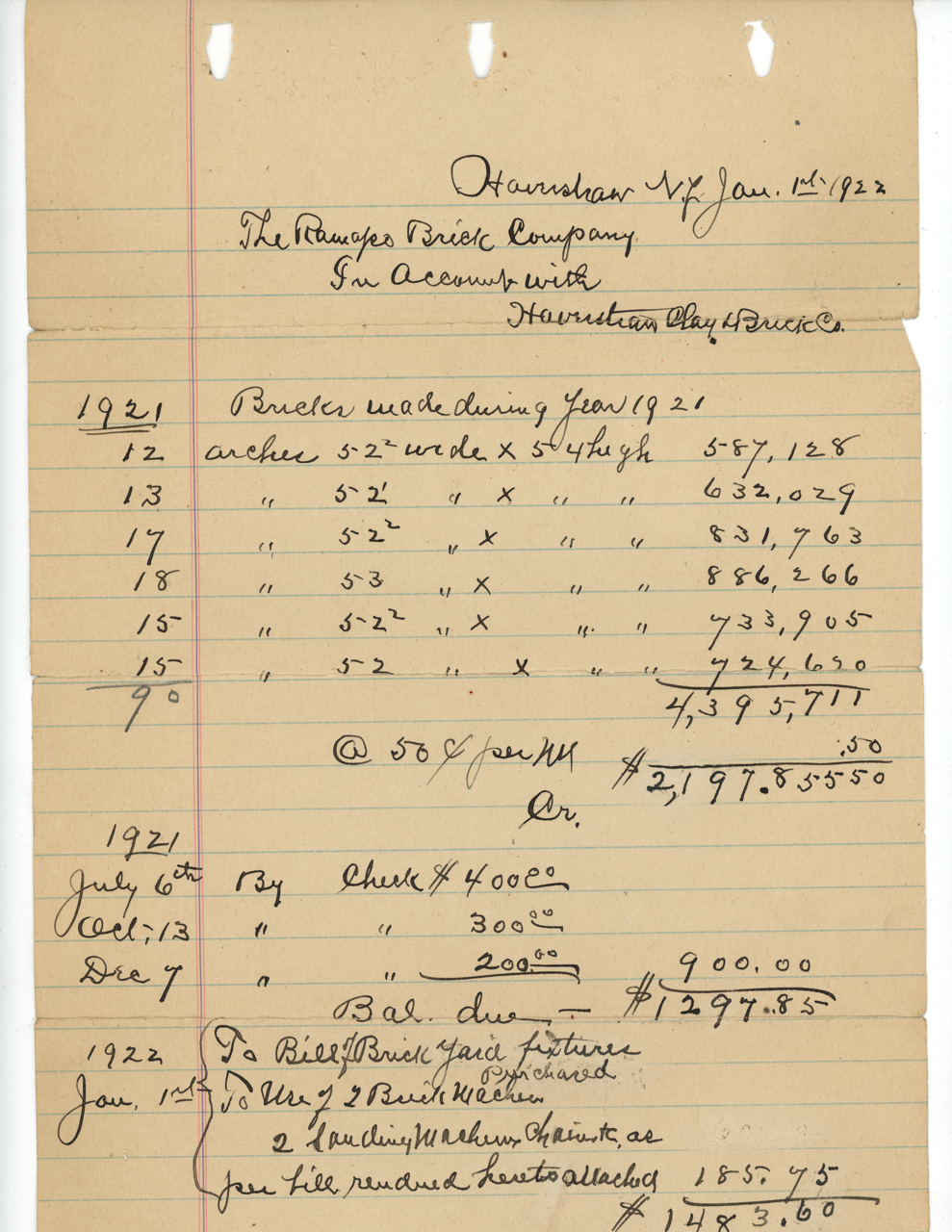
The amount of bricks in kilns were usually measured according to how many arches they had. Arches were the entrances to the kiln’s flue, and where the fuel source to burn the bricks entered. Haverstraw Brick Museum Archives, Sullivan Collection, Haverstraw Clay and Brick Co Series, Ramapo Brick Company.
As the bricks are fired to over 1,000°C, the iron does something incredible: it acts as a flux. It lowers the melting point of the surrounding quartz grains, essentially creating a microscopic glassy glue that welds the brick into a vitrified solid.
Haverstraw bricks had an additional advantage: James Wood. [4] Wood, an immigrant from England, had become accustomed to the English tradition of adding potash, or burned ash, into the brick recipe. In 1815, after emigrating to the U.S. and leasing land from the De Noyelles, he discovered that adding 1% anthracite coal dust (culm) from the Pennsylvania coal fields to the traditional brick mixture made the iron melt faster and burn hotter. More specifically, the recipe called for “22.5 tons of coal per 450,000 bricks.”[5]
This enabled the bricks to fire more completely at the relatively low temperatures in wood- or coal-fired kilns. Thus, Haverstraw bricks were stronger and lighter than bricks made without culm. This enabled brick buildings to be taller, for greater sewer and aqueduct tunnels to be constructed, etc.
The final magic trick happens during cooling. As oxygen is reintroduced into the kiln, the iron rusts one last time inside the ceramic matrix. This creates hematite Fe2O3, the mineral responsible for that vibrant, permanent red that defines the skylines of Manhattan and the historic streets of Haverstraw.
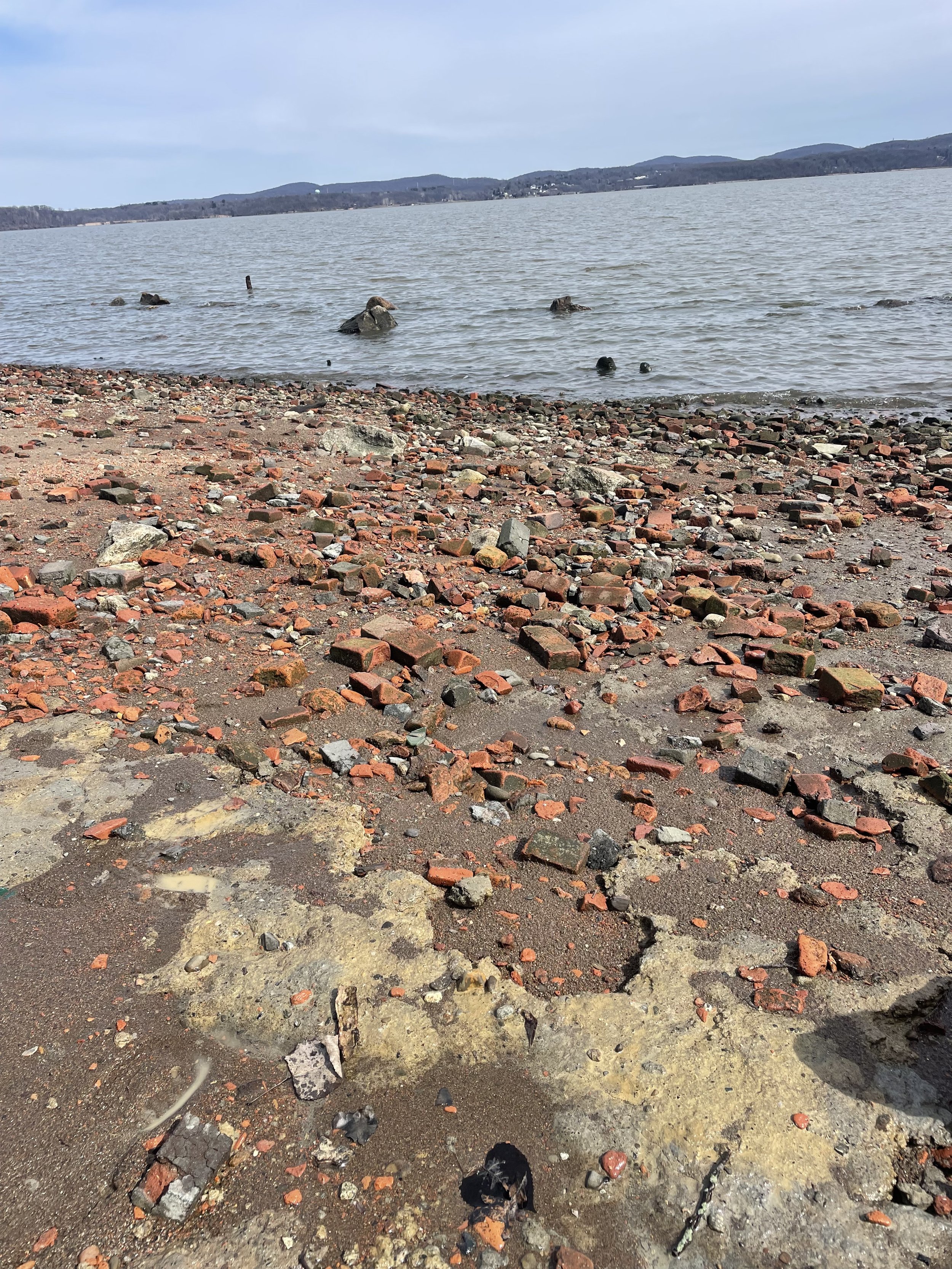
Remnants of a yellow - grey clay bank “up the beach,” adjacent from the former Roseville neighborhood. Brick waste scatters these beaches due to scove kiln methods.
However, the firing process wasn’t always uniform. Variations in oxygen and mineral contents produced a spectrum from deep purple to a light salmon pink. The different colors on the outside of the bricks are called flashing. This process occurs when the bricks are unevenly starved of oxygen in the firing process as the iron is brought to the outside of the brick.
LAMMY OR CLINKER BRICKS
Sometimes, bricks that were improperly mixed or were closest to the fire got too hot and over-vitrified. The core of the brick fired unevenly in the kiln. The mineral components liquified and trapped gases inside, which made the bricks bubble outward like a loaf of bread. These became clinker bricks, also called lammies. When they were clapped together to test their structural integrity, they made a low metallic thud sound; hence, the name.
Lammies were also created purposefully by adding up to 8% coal dust to the bricks on the outer 2 feet of the kiln. This lammy layer pushed the heat to the center of the kiln to make the good bricks burn more evenly. The added coal made the lammy bricks fire extra hot, and they often melted or fused in what is often described as being like moon rock. Because of the uneven heat distribution, these bricks often had interesting color effects or a blackened appearance. These were part of the calculated loss that brickyard owners factored in – about 3% of each kiln — knowing they would be discarded. [5]
Workers at the brickyards were often allowed to take or purchase lammmy bricks for practically nothing to build their own homes. Soon, contractors caught onto the cheapness of these bricks and began to use them to create decorative effects in neighborhoods like Washington Heights and Harlem. Many of these neighborhoods still stand today, not so far from the Hudson River that gave them life.
Did You Know? Haverstraw bricks are so strong (testing up to 8,000 psi) because the glacier ground the minerals into sharp, angular shapes that interlock perfectly. You can find this local geology hiding in plain sight in the foundations of the Brooklyn Bridge and the tunnels of the PATH train!
Written by Rebecca (Becky) Stewart
FURTHER READING, CITATIONS
[1]Luke Spaltro, “BrickTalk: Fluctuating Shorelines- The Impact of Clay Extraction on the Ecology of the Hudson River,” Haverstraw Brick Museum, May 1, 2025. https://www.haverstrawbrickmuseum.org/from-thearchives/bricktalk-bricktalk-fluctuating-shorelinesthe-impact-of-clay-extraction-on-the-ecology-of-the-hudson-river
[2] Geology and Ecology of National Parks, “The NYC Region - The Hudson River ‘fjord.” https://www.usgs.gov/media/images/nyc-region-hudson-river-fjord
[3] Ridge , Jack. “What Is Varve Chronology?” Tufts University. https://varves.as.tufts.edu/Geology/chronology.asp.html
[4] James Wood, “Art of Manufacturing Bricks and Tile,” Letters Patent No. 97, Nov. 9, 1836, https://patents.google.com/patent/US97
[5] George V. Hutton, The Great Hudson River Brick Industry: Commemorating Three and a Half Centuries of Brickmaking ( Fleischmanns: Purple Mountain Press, New York, 2003) p. 21.
[6] Ibid., 53.