PIONEER, ARTIST, LANDSCAPE DESIGNER
A pioneer in every sense of the word, Mary Mowbray Clarke’s story and contributions to the fields of preservation, art education, and landscape architecture continue to have a lasting impact today. As the mother of the Modern Arts Movement, she organized art exhibitions, ran an influential bookstore, and, by age 54, had shaken the foundations of the art world numerous times. Utilizing her past experiences, she was soon to become the only known woman to design and supervise a Temporary Emergency Relief Administration (TERA) and Works Progress Administration (WPA) landscape architecture project.[1]
Since a child, Mary had always had a love for inquiry and landscape architecture instilled in her by her father. She was not formally educated until she was 16, when she attended the Art Students League. At the turn of the century, she was a governess in Europe for the Cromwell Twins. Mary used this opportunity to enhance her studies, which landed her a teaching position at the all-women’s Finch School in NYC. Here, she met her husband, John Frederick Mowbry-Clarke. In 1907, she published the Argonaut Art History — a hodgepodge of art and architectural history. In 1913, she was one of the key organizers of the “Armory Show.” The exhibition showcased roughly 1,300 works from 300 artists, including European artists like Pablo Picasso and Vincent Van Gogh, as well as American artists like Arthur B. Davies and Edward Hopper. Women, like Mary, Mabel Dodge, and others, worked as organizers, collectors, and fundraisers. Without them, the show would not have materialized. Due to her involvement, Mary was described by the New York Times as “An early champion of modern art.”[2]
She also created spaces for revolutionary figures in the arts, literature, and politics to flourish and meet, like the women-owned Sunwise Turn Bookstore, which operated from 1916 to 1928.[3] The bookstore was managed with the theory, penned by co-partner and writer Madge Jenison, that “if you have an idea, you do not have to pay rent.”[4] Unfortunately, as the only male co-owner, Harold Loeb put it, “Mary and Madge were more intent on getting their ideas across than on selling books,” and the store closed due to bankruptcy.[5] Mary once again found herself in Rockland at her home, The Brocken: a farm and art studio commune tucked away on South Mountain Road.[6]
“In planning a garden, one must take into account how it will look 100 years from now.” — Interviewer Betzi Manoogian, paraphrasing Mary.[7]
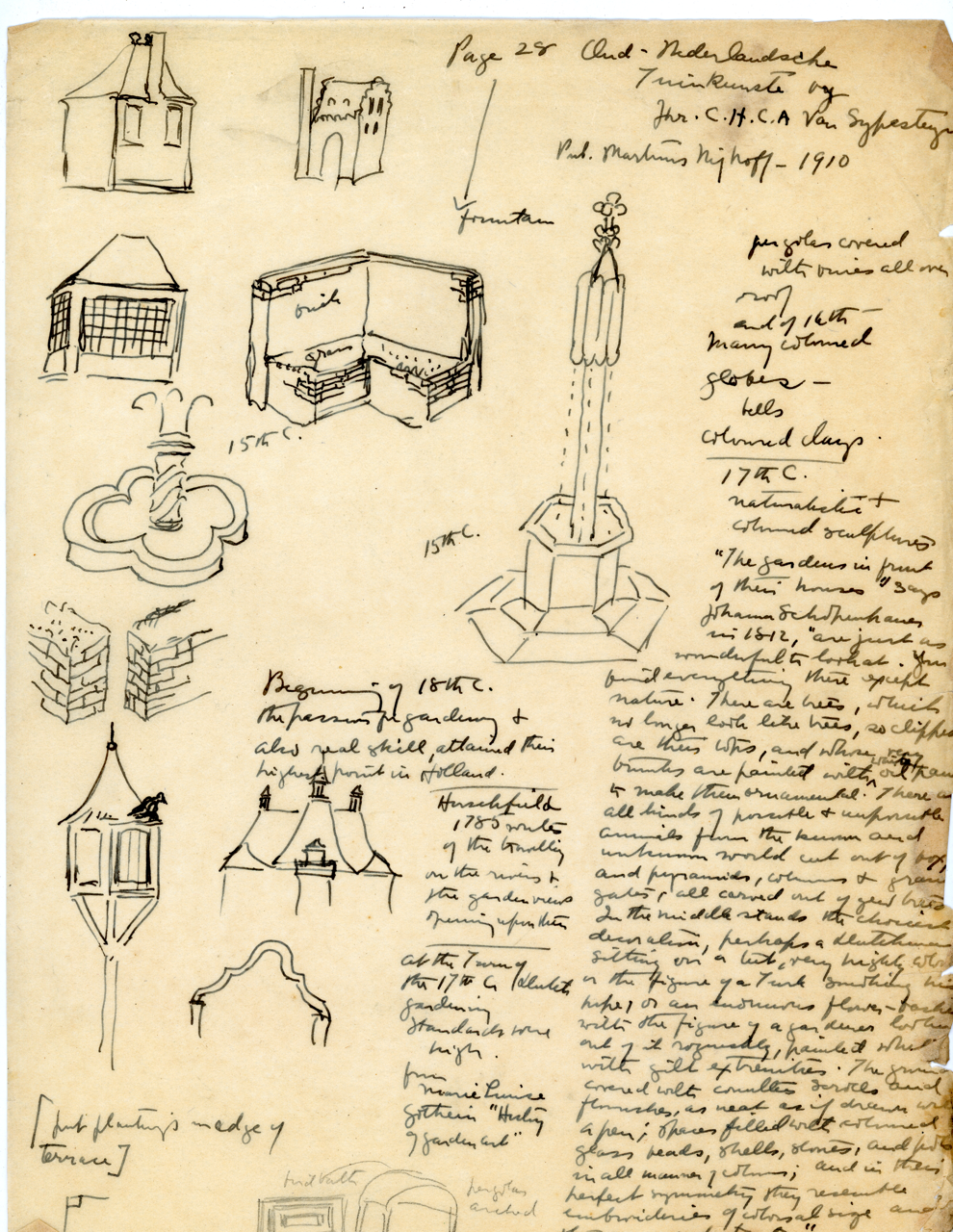
Mary Mowbray-Clarke, sketches and notes, p. 28, Justin Duerr Collection, Dutch Garden+Wild Garden…” Box, “Notes on Dutch Garden and Dutch Garden Brickwork” folder, “ on loan to the Haverstraw Brick Museum.
The impetus of the Gardens began in the Turn’s last year of operation, as Mary became invested in the history of the New Netherlands colony that gave way to Rockland County. In March of 1927, she reached out to the City History Club of New York, looking for a bibliography of books concerning the Dutch period.[8] The Turn specialized in creating book lists for customers, or what Madge described as “‘sets of ideas’ to include the fifteen or twenty best books in any field.”[9]
After the bookstore went under, the stock market crash in 1929 and the ensuing Great Depression found Mary not only trying to recoup from the losses of the bookstore, but also looking for work to support herself. On April 8, 1931, Mary applied for a fellowship application for the Royal Horticultural Society of Westminster, England, and described her profession as being a “WRITER and NATURALIST-ARTIST.” [10]
While the archival record in these years is scarce, it can be presumed that Mary used this time to continue to study Rockland’s history, as well as the Dutch period and their gardening methods in the area. This resulted in George Henry Budke — one of the leading figures in the establishment of the Rockland Society (later the County Historical Society) — reaching out to Mary on June 13, 1931, when he asked her to join the organization.[11]
On December 3, 1931, Mary published her first work on Rockland history in the Journal News, where she argued for her fellow county residents to study their history through place names and to preserve said names:
“Walking over any piece of Rockland county land, it comes into the mind that the first workers of these fields now ours were, however humble, and many of them were negro slaves - heroic pioneers….yet how few of them are commemorated here.”[12]
Mary steadily increased her portfolio, gaining more work as she continued her studies. In September of 1932, Mary gained a serial position in the New York Gardens magazine published by the Federated Garden Clubs of New York State. She began her columns detailing “a study of [Rockland] county.”[13]
In line with Mary’s gregarious social schedule, she didn’t respond to Budke until April 26, 1932. Mary accepted the historian’s invitation to the Society and scheduled a time to meet with him.[14] This became a crucial meeting which heavily influenced Mary, as at this time, Budke was uncovering the first royal patents — tucked away in the New York and New Jersey state archives — between the Dutch settlers and the Indigenous Munsee Lenape in what would become Rockland.[15]
While Budke’s research and manuscripts remain a valuable source for understanding Munsee history in Rockland, the interpretations of Mary and many others during that period can now be considered outdated and, at times, reflect biases present in historical scholarship. On December 31, 1932, Mary published a history of the County in the Nyack Journal News, where she recognized that “our race was willing to get the better of the aborigines,” defrauding them of lands and goods. However, she perpetuated the myth of the “gradual disappearance of the Indian as his lands were bought from him.” Moreover, she spoke disparagingly of the “few remaining Jackson Whites of the Ramapos.” She recognized their “arts of the woods” and basketweaving. Yet, according to Madge Jenison, Mary “thought very badly of” the Munsee. [16] These ideas would, unfortunately, be reflected at times in the design and carved reliefs of the Gardens. Dutch history was heavily emphasized, while the Lenape legacy was largely forgotten.
A WOMAN FOREMAN
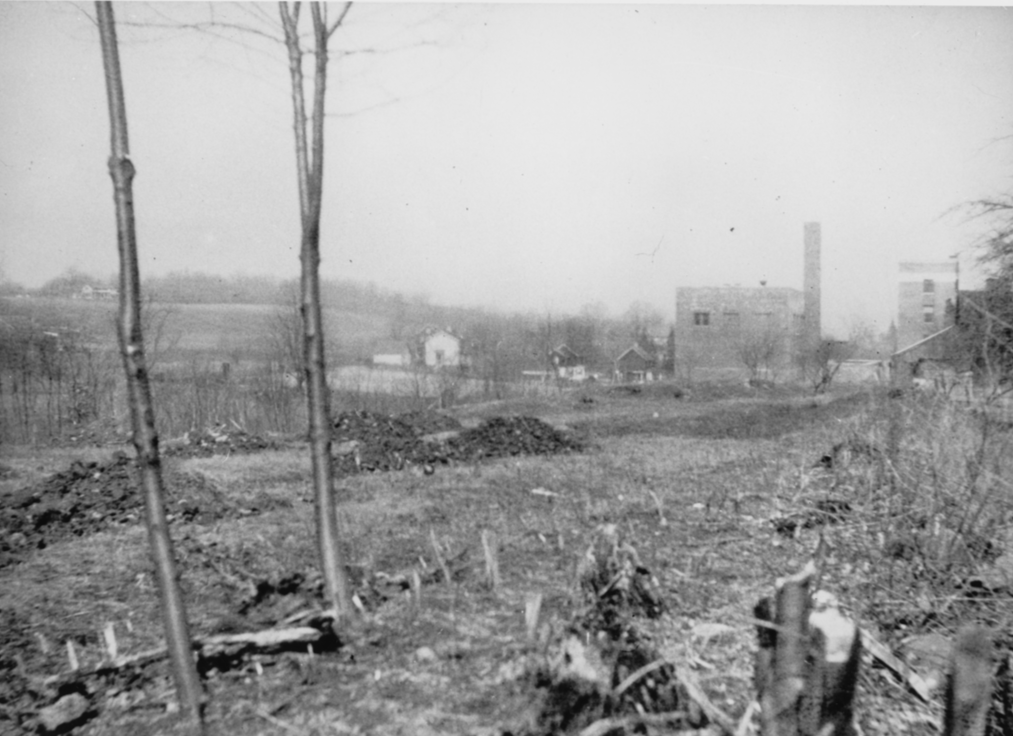
Photo, taken north facing County Court House and Jail, ~Winter of 1933-34. 2025.002.392, Williamson Family Collection, Dutch Gardens Restoration Reprinted Photos, ©Haverstraw Brick Museum Archives.
As the country faced its worst economic crisis yet, Franklin Deleanor Roosevelt, then governor of New York, waged a New Deal on the state level. The creation of the Temporary Relief Administration (TERA) on October 1, 1931, gave work aid to the unemployed in an effort to stimulate the economy.
Being elected to the Presidency on March 4, 1933, FDR established the Civil Works Administration (CWA), a sort of national version of TERA, on November 8, 1933. Simultaneously, Mary was reported to be on the verge of publishing a book entitled Gardening in Rockland County.[17] Presumably finishing her writing, Mary became an employee funded by CWA, where she made “a preliminary inspection and survey of the landscaping possibilities” along county highways, as well as the construction of a “park and Dutch gardens to the rear of the [county] courthouse.”[18]
In the winter months, she began drafting contour maps. What resulted were her first blueprints for the Dutch Gardens, drafted in December of 1933. [19] In March of 1934, Mary’s work was recognized. She was appointed to the office of landscape consultant, led by engineer Calvin T. Allison, and remained under CWA funding.[20]
However, Mary quickly ran into several issues, from misogyny to more monetary constraints. She was given a hodgepodge of TERA men, including “an electrician, a butcher, a marble-setter, several brickyard men, a chauffeur, a plumber, a statistician even!” However, not one was a gardener.
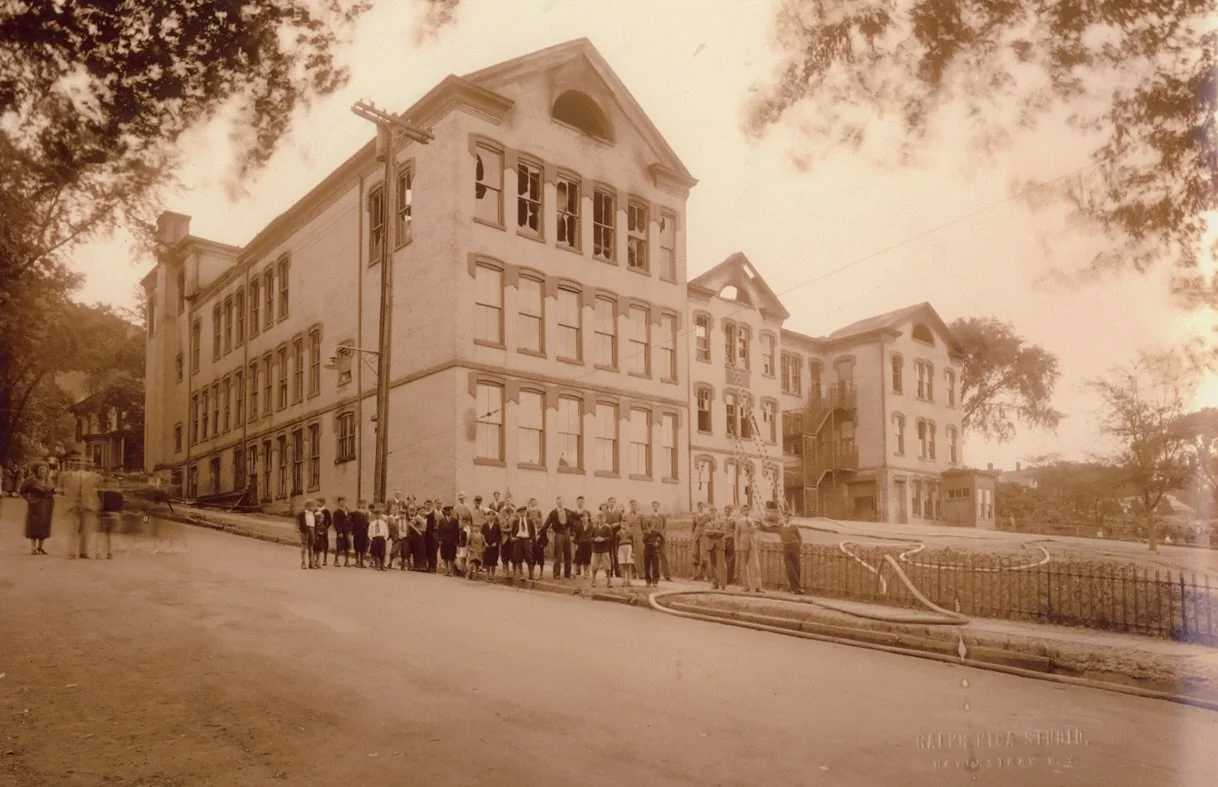
The “old Haverstraw school” was a high and grammar school. Pictured is the aftermath of the school after a fire gutted it on June 9, 1935. Albert A. Pica Collection, Haverstraw Brick Museum Archives.
Subsequently, Mary wrote: “I found myself on the bare plateau which I designed to make into a formal garden, facing a group of men of all ages and degrees of intelligence but of absolutely one mind in their resentment at having to be bossed by a woman!”[21] Quickly after beginning the project, the CWA shut down on March 31, 1934, which left her stranded without funding. [22] Despite this, Mary’s ambitious plans for the gardens reportedly “impressed…Democrats and Republicans alike.”[23] As a result, in May of 1934, she was granted a retroactive 100$/month salary for planning the Dutch Gardens.[24]
THE BRICK WORK
Rather than purchase materials, Mary took to using anything possible on the site of the gardens — formerly a county dump — and elsewhere to save funds. Imaginatively, much of the brick was to be recycled from the Haverstraw brickyards. In a letter to the editor of the Rockland County Times, Haverstraw’s paper of record, she asked if they could publish her request for bricks. Moreover, she asked that the bricks be matched with accompanying “historical matter” whenever possible. Mary planned to archive each brick company’s history “with the garden files in a little office located in the garden’s center.”[25]
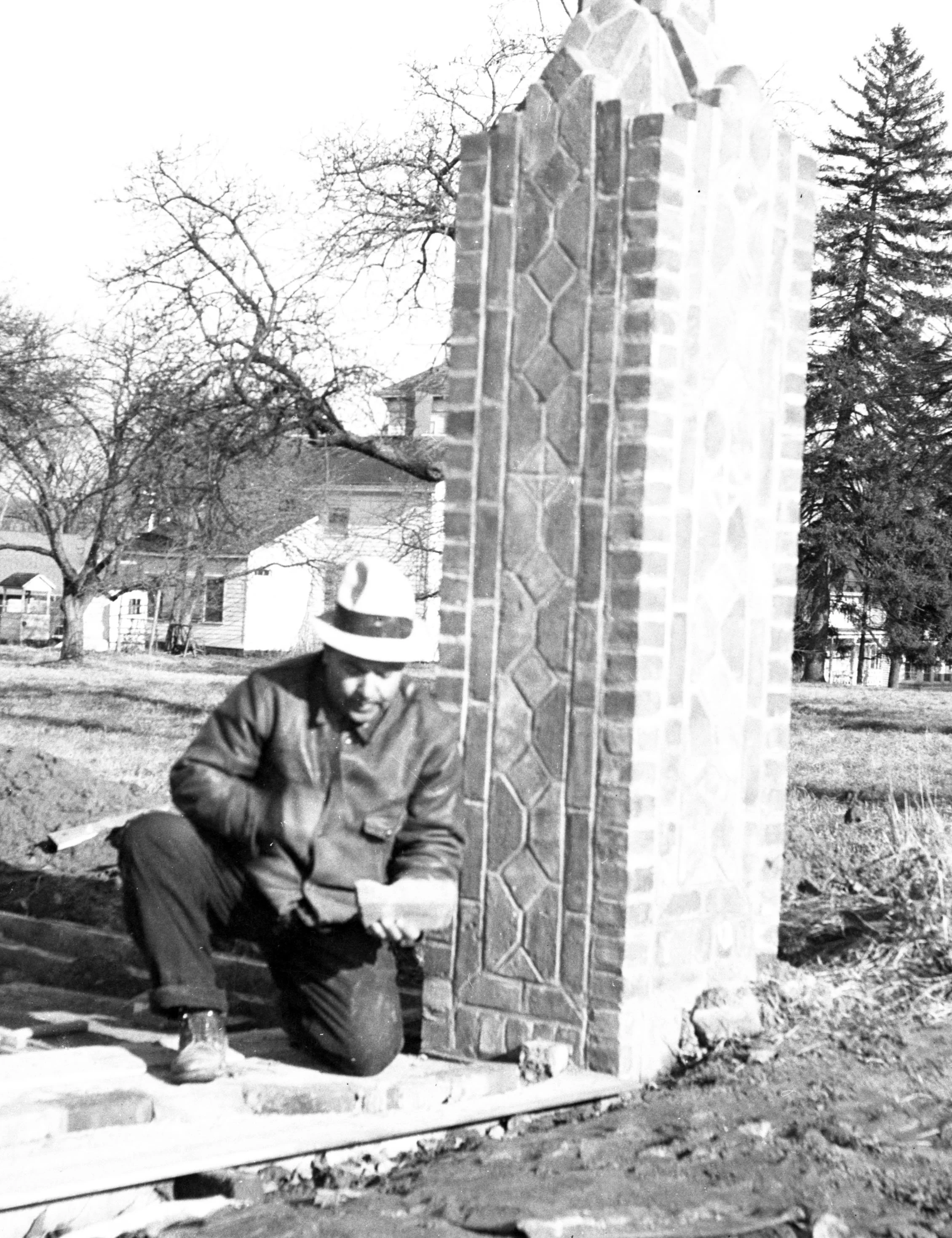
Biagio Gugliuzzo, building the Tea House, Dutch Garden, Janet Newman Collection, ©Haverstraw Brick Museum Archives
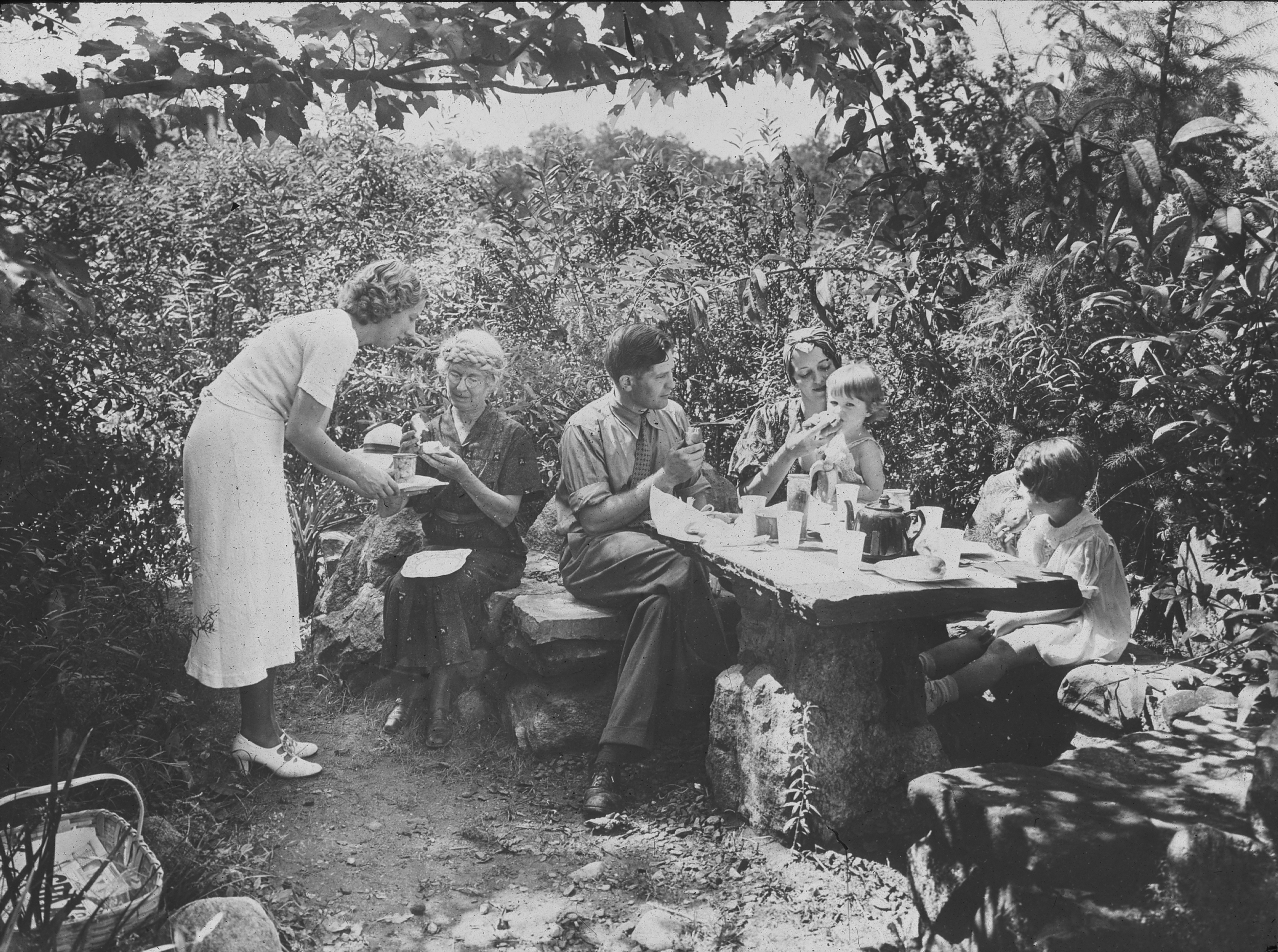
The amphitheater was erected, “made of brick from the Haverstraw brick yards.”[26] Other parts included bricks from “old torn down buildings, including the old Haverstraw school.”[27] Mary’s team, initially funded by TERA, worked 7-hour shifts and often took lunch breaks under the picnic grove they built with bricks.[28]
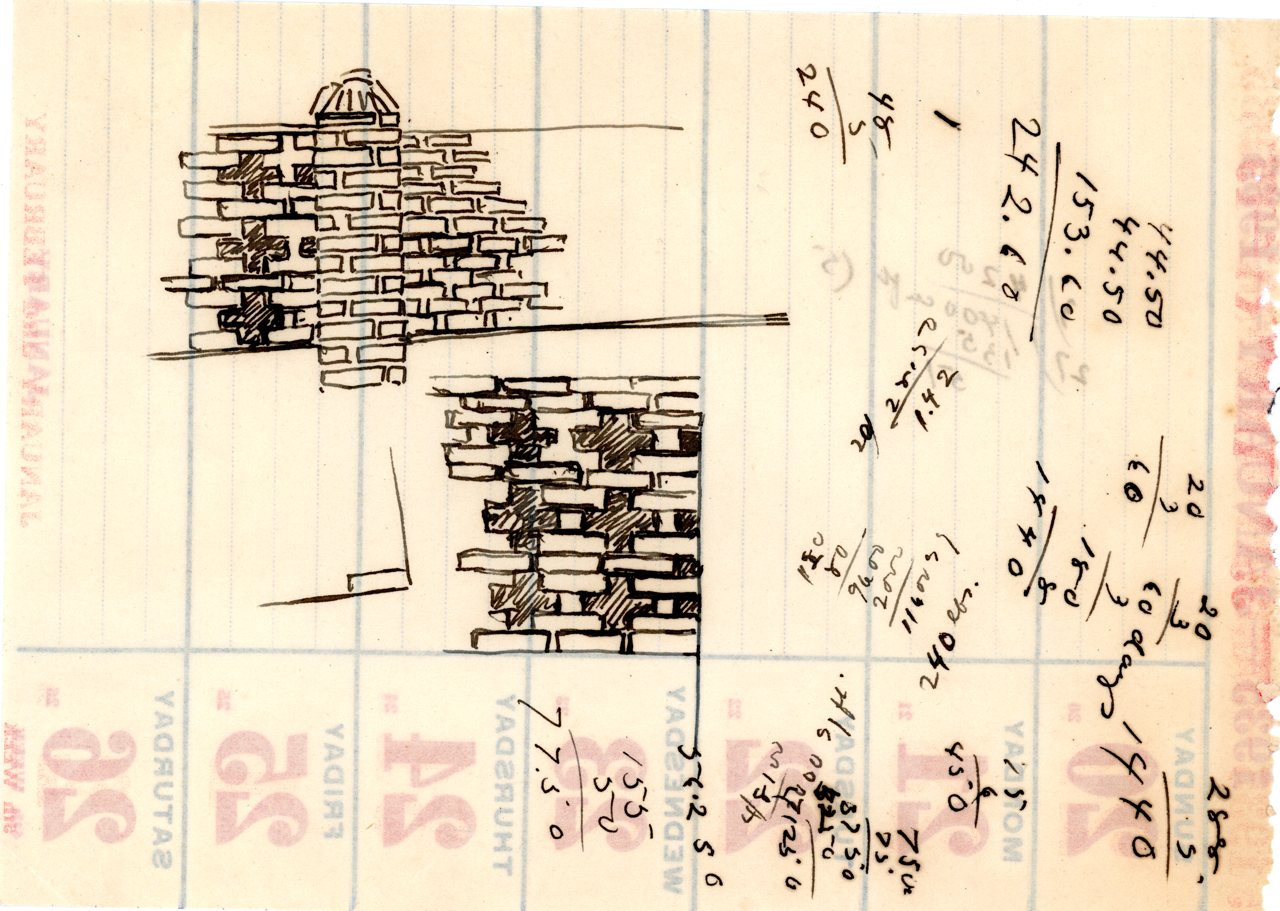
Lattice work design sketched by Mary on a calendar, January 1935. Justin Duerr Collection, “Dutch Garden+Wild Garden…” Box, Dutch Garden materials - no folder, on loan to the Haverstraw Brick Museum
Mary’s “right-hand man” was Biagio Gugliuzzo, an Italian mason originating from San Piero Patti, Sicily. Gugliuzzo had received formal education in both art and architecture before immigrating to the United States. Before the stock market crash, he contributed to the construction of apartment complexes along Ocean Parkway in Brooklyn. He subsequently relocated to Garnerville upon learning of potential employment opportunities. With assistance from a neighbor, Jesse Meade, Gugliuzzo was introduced to Mary, after which he distinguished himself through exemplary craftsmanship.[29]
Popular accounts — from local historians to the Friends of the Dutch Garden, who helped restore the Garden in the 1990s — have made it seem that all of the intricate brickwork in the gardens was Biagio’s sole doing. However, this is by no means the case. Rather, archival materials of Mary’s sketches and visual research clearly show that Mary had become well-versed in brick architecture and familiar with many kinds of stylized brick bond design. Moreover, in line with the arguments made by Justin Duerr, Mary’s main biographer, Mary utilized her workers — and especially her masons — as a vehicle or conduit to simply materialize what she was physically incapable of doing at her age.
For instance, Mary’s original plans for the brick wall on the east and south were a solid wall, possibly with a serpentine effect, consisting of “a series of bricks bearing all the stamps of the various brickyards that had been in Haverstraw.”[30] Bagio physically built the wall based on Mary’s plans with a unique lattice work, disproving masons who claimed it would not stay standing.[31]
A BOTANICAL HAVEN FOR EVERYONE
Mary’s expertise was in the botanical field, with it being reported during the garden’s construction that she had “recently” graduated at the top of her 22-person “scientific gardening” class at the Brooklyn Botanic Garden.[32] Ahead of her time, Mary conceived the design for the new garden as a mix of both native plantings and Dutch flowers.
In the gardens, laborers planted flowers, bushes, and trees, and created paths through lawn space.[33] Mary ordered around 2,000 tulips and narcissus from the Netherlands to plant, the arrangement of which would have a bloom cycle from late April to mid June.[34]
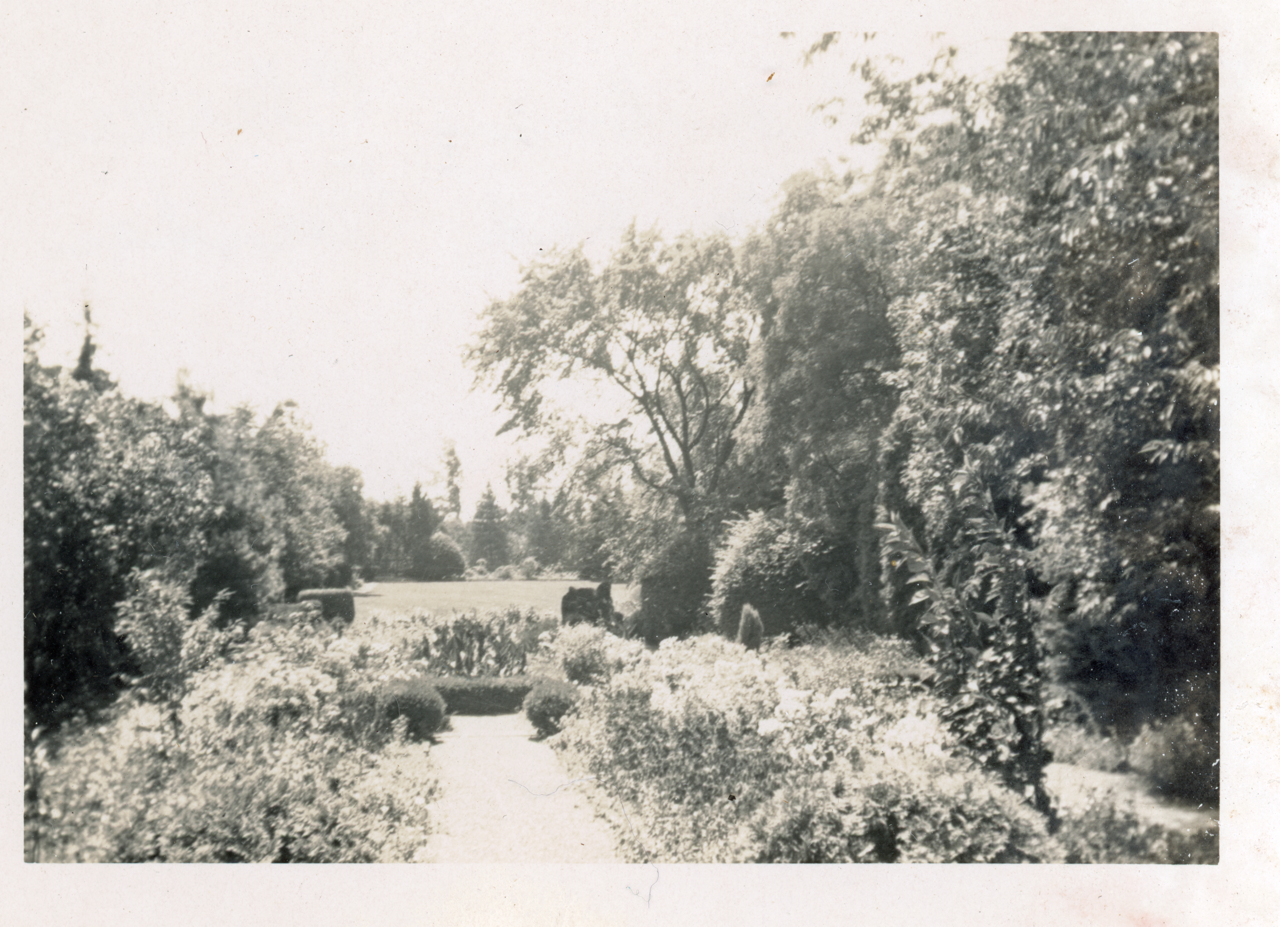
Photo taken on Teahouse platform, facing south. Note how large and imposing the flowers, shrubs, and trees are. 2025.004.126, Estate of Janet Newman Collection, Dutch Gardens Photos, Jessie Kahles (1954) photos, Haverstraw Brick Museum Archives.
Numerous people and organizations also donated thousands of flowers. The New York Botanical Gardens donated “some rare and interesting rock garden plants.”[35] Director Engel of the Botanical and Nature Museum at Bear Mountain, which was managed by the American Museum of Natural History, donated “rare orchids.”[36] The Saw Mill Road farm gave 500 plants spanning 5 varieties of irises, provenance roses, and rock plants.[37] In total, all of the plants were estimated to be valued at around $20,000 in that time period.[38]
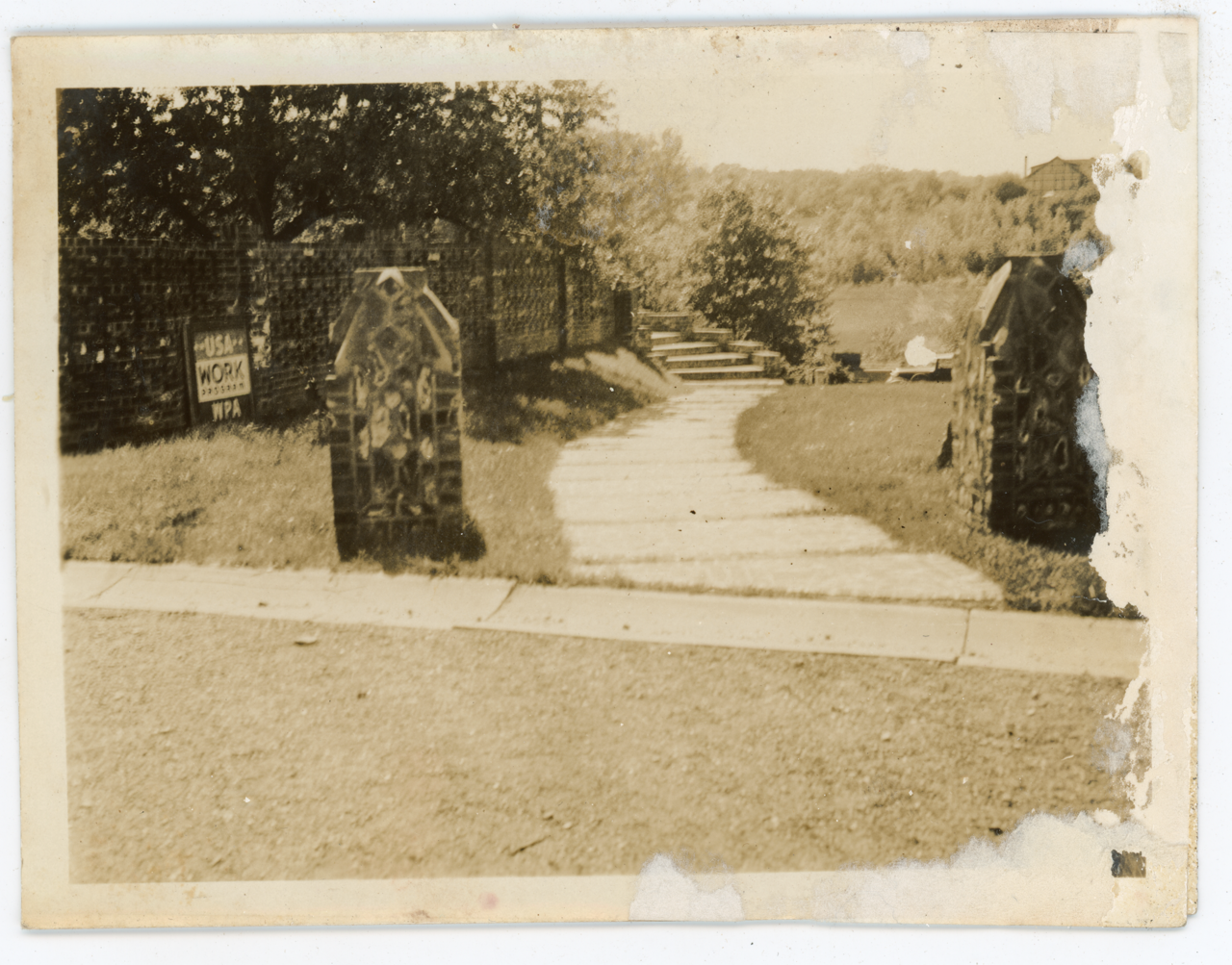
Note the sign inscribed “USA-WORK-WPA” to the left. Estate of Janet Newman Collection, 2025.004.093, Haverstraw Brick Museum Archives.
MAY 6, 1935: THE WORKS PROGRESS ADMINISTRATION AND THE TEAHOUSE
In April of 1935, the gardens won a $1,000 prize in a contest sponsored by Better Homes and Gardens magazine, giving them national attention.[39] However, the gardens remained unfinished as TERA funding steadily decreased. The “platform for the garden house” had been finished; yet, new plans were made to include a fireplace, and an office with a place to keep records.”[40]
On May 6, 1935, FDR created the WPA, and the agency’s management quickly supplemented TERA capital. Within a year, in June of 1936, Henry Dumary — Chief Field Engineer for the WPA in New York — described the gardens as the best in the state.[41] Yet, even with federal support for the gardens, they continued to face funding issues. In August of 1936, work was delayed due to a cut in hours of WPA laborers.[42] As the garden’s construction neared the end, Mary’s team had shrunk to “three bricklayers and their helpers” at a collective “46 hours a month.”[43]
It took roughly another year for the tea house, the centerpiece of the gardens, to be completed, due to both lack of funds, lack of recycled brick that would match the bricks already laid, and the intricacy of brick mason Biagio Gugliuzzo’s craft.[44] In the winters, when mortar froze, and bricks couldn’t be laid, Gugliuzzo, through “The heavy use of carving and sculpture display[ing] the lingering Beaux-Arts influences,” honored the brickyards and American pop culture.[45] The teahouse was adorned with carvings depicting images that celebrated the history of the county.
“Peter Stuyvestant, a Native American, windmills, a Hudson River sloop, Henry Hudson’s Half Moon” were carved into the walls. Above the fireplace was carved “The Sunset Over the Ramapos,” and on the fireplace’s mantle “bescishap,” Dutch for progress. On the floor was an American Eagle, with the arrows and olive branch found on a dollar bill. ”[46] Other images included Betty Boop, Popeye, The sailor, and Mussolini.”
Mary visited an exhibition of other WPA sculptors and left with the opinion that the sculpting of her men was the best in comparison.[47] The final addition to the teahouse was the “Ludovici-Geladon” roof, with tiles being “the ‘Norman,’ copied from old castle roofs in France.[48]
THE WORK OF ARTISTS, NOT BRICK MASONS
A portion of the public criticized the project for taking too long, claiming that one mason could construct the gardens in a month, and that Mary’s effort was wasting relief money. Upon beginning construction of the brickwork, Mary seemed to be the first person frustrated at the pace of the bricklayers. Expecting them to lay 250 bricks a day, they were only laying 80 per day, resulting in Mary calling them “shirkers.”[49] However, once the Gardens were finished, Mowbray-Clarke set the record straight: “a contractor’s masons would work four five-day weeks or 160 hours while we work only every second week or a total of 44 hours in a month.”
Moreover, Mary claimed all of her men deserved “to live in the history of American architecture” due to their efforts. Mary compared her relationship as foreman to her workers to that of “the masters and their apprentices did in the old ateliers. Sometimes I was the master, and sometimes they were, in the authority of skill.”
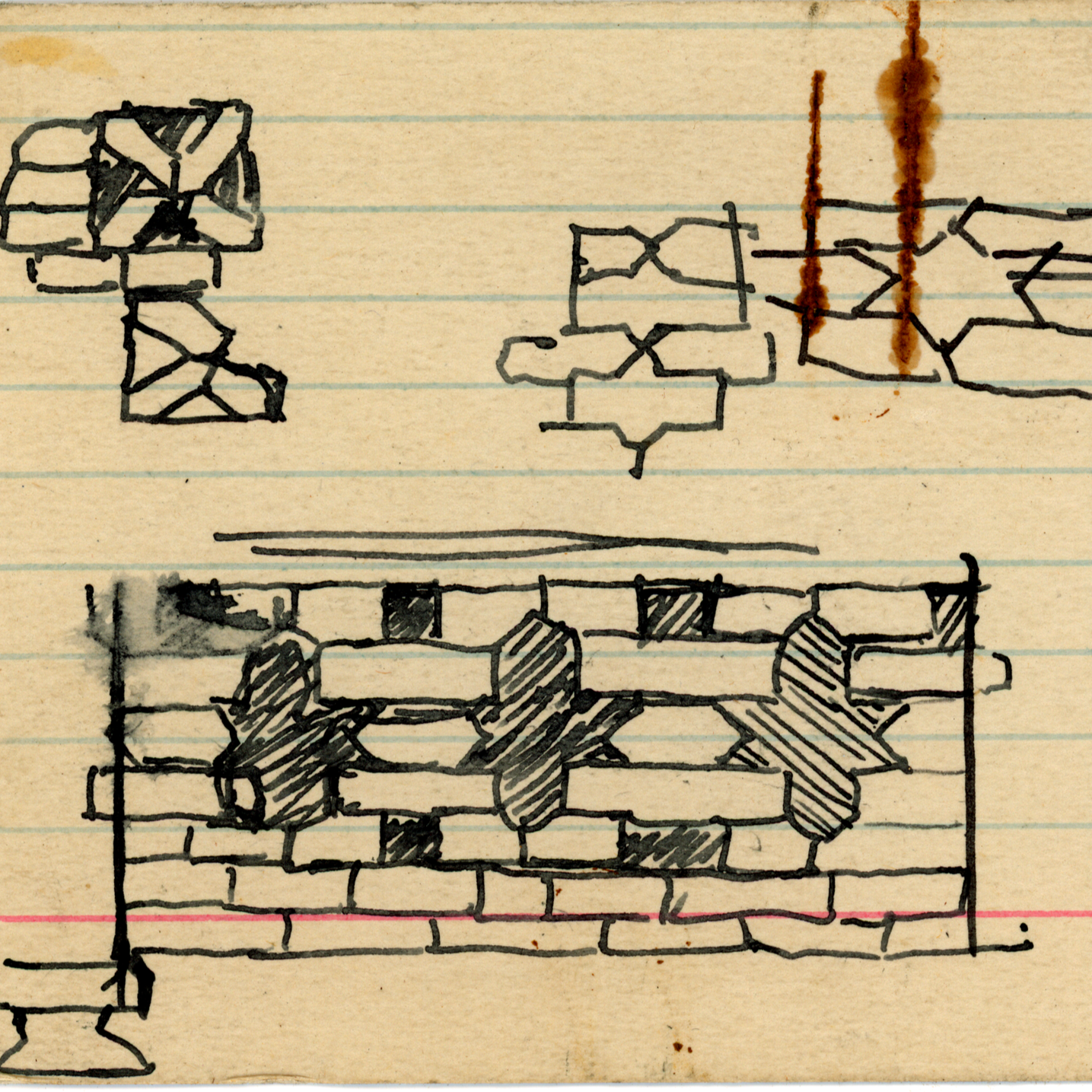
Mary Mowbray-Clarke, ketches of carved brick designs in teahouse wall, ~1936, Justin Duerr Collection, “Dutch Garden+Wild Garden…” Box, “Brickwork-radio” folder, on loan as of publishing.
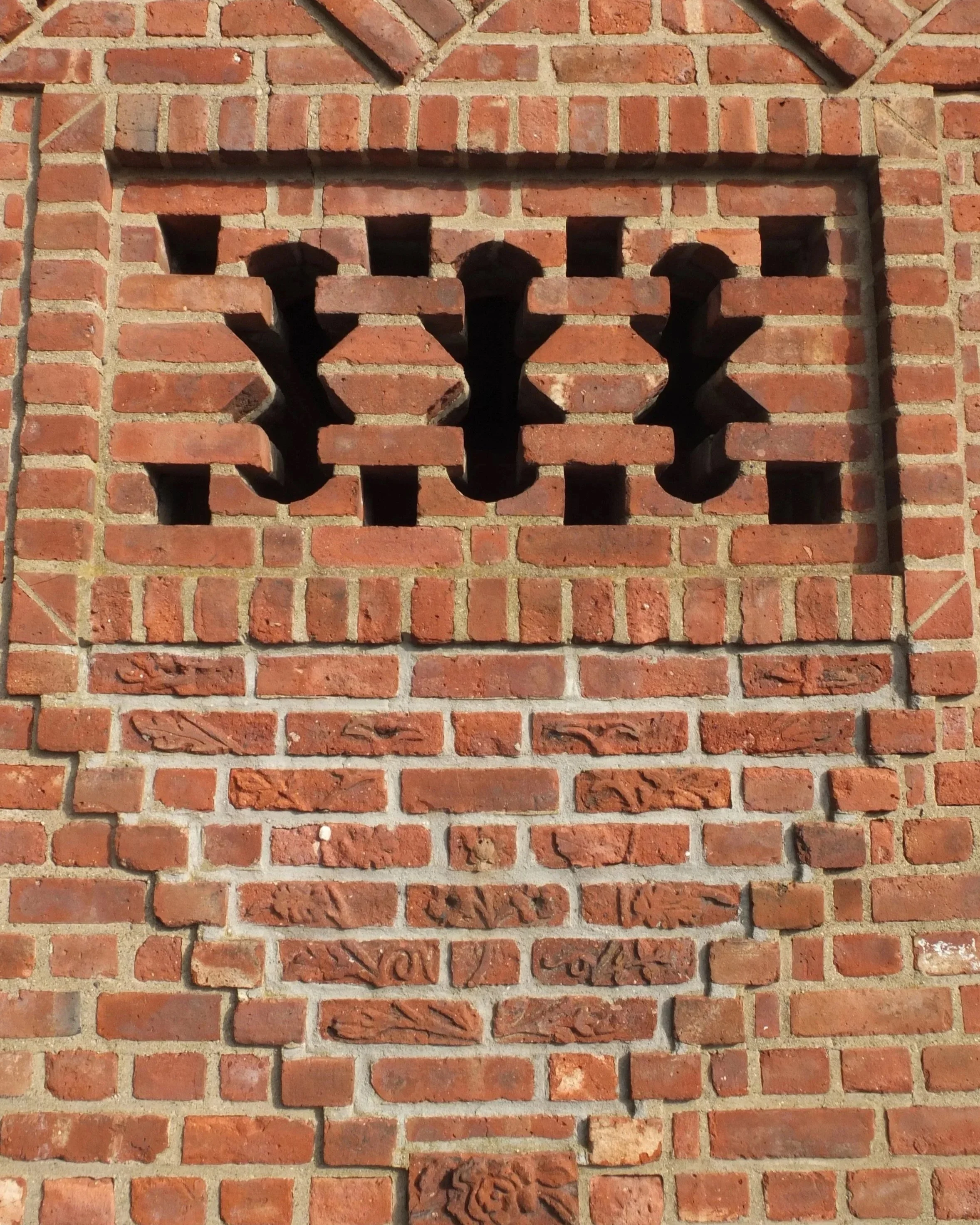
Photo of teahouse, taken by Luke Spaltro, Oct. 24, 2024.
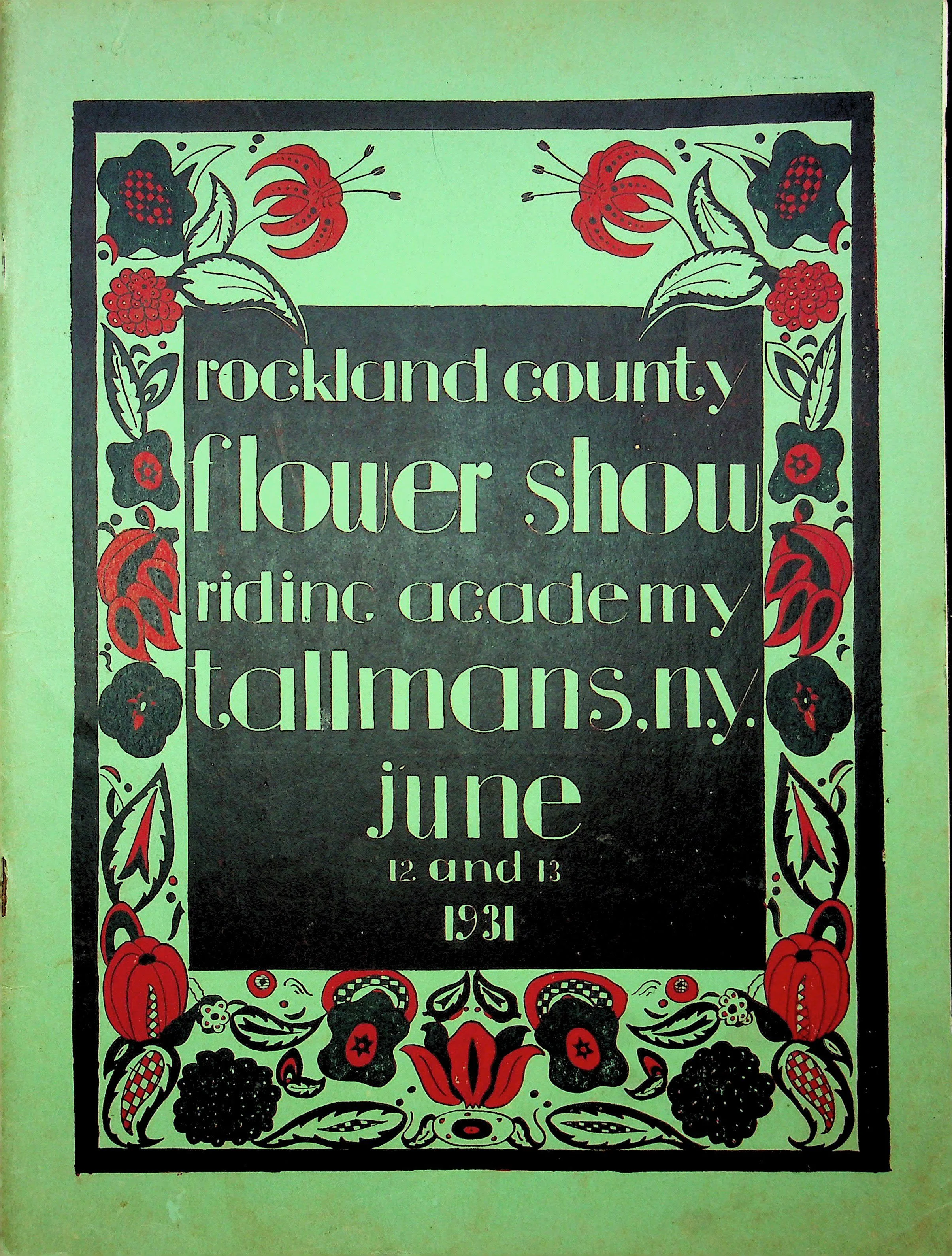
Cover of the Rockland County Flower Show, June 1931, Janet Newman Collection, ©Haverstraw Brick Museum archives
In response to criticisms, Secretary of the Brick Manufacturer’s Association J. H. Hansen wrote that, in reality, it would likely take six masons six months to complete the teahouse. Moreover, upon seeing the intricacy of the work that had not been “executed…in this country for many, many years,” Hansen claimed there was a possibility workers were laboring above the part-time hours allotted by the PWA. In closing, he praised Mowbray-Clarke and her masons, claiming the work “appeared to be the work of artists, not brick masons.”[50]
THE DUTCH GARDENS HORTICULTURAL ASSOCIATION
Upon the completion of the garden’s construction, Mary sought to utilize the space through the Dutch Gardens Horticultural Association, whose mission was to promote “the conservation of natural resources” through exhibits, displays, demonstrations, lectures, horticultural and botanical shows, classes in garden sciences, etc. Membership was on a sliding scale, ranging from 50 cents to $100.[51] On June 8, 1937, the bylaws and constitution were formally approved by vote, and nearly 250 individuals intended to become dues-paying members. One of the group's first goals was to encourage the Board of Supervisors to purchase an additional 23 acres to expand the garden.[52] The Association hosted several events, including an annual flower show, open to members and non-members alike, encouraging any botanical lovers to exhibit their plants.[53] The garden saw 1,000 monthly visitors in its first year, and within the first month of the Association’s existence, the gardens averaged 5,000 monthly visitors.[54]
AN UNFINISHED VISION
As the gardens continued to gain recognition, Mary wished to expand the original boundaries across the brook, removing the courthouse and Jail parking lot, which, in her opinion, added to their “factory appearance.”[59] With both growing support from the Horticultural Association alongside continued national attention, Mary began drafting blueprints for an expansion of the gardens. One of the major additions to these new plans was a monument “in memory of the brickmakers of Haverstraw using marred bricks collected from old buildings.”[60]
While her 1937-1938 blueprints and participation in the 1939 World’s Fair for “Rockland Day” suggested she would expand the gardens, American involvement in WWII diverted labor and funds to the war effort abroad. At this time, however, the gardens still played an important role. Flowers were replaced with fruits and vegetables in a Victory Garden, which helped feed prisoners in the adjacent County Jail.[61]
The original gardens still served their purpose. As recalled by Rockland resident Helen Bryant, despite its construction being “in the depth of the Depression when most of us were caught with our stocks down, our mortgages up and our jobs slipping through our fingers,” the garden gave the community joy, reminding them “that there were many things more important than security.”[62]
“Building a Public Park is only the beginning. The end is for the future.”[63]~Mary Mowbray-Clarke
Written by Museum Historian and Educator Luke Spaltro. Edited by Executive Director Rachel Whitlow. This BrickTalk would not be possible without the courteous donations of the Williamson Family, The Estate of Janet Newman, and a loan of materials from Justin Duerr, Mary’s preeminent biographer.
Works cited and further reading
[1] “Rockland County Court House and Dutch Gardens,” National Register of Historic Places Registration Form, Dec. 3, 1990, p. 8. https://catalog.archives.gov/id/75321486.
[2] Justin Duerr, A Plea For Loveliness: The Life, Times & Circles of Mary Mowbray Clarke (Vol. I: 1874-1920), unpublished manuscript, pp. 28, 47, 76, 91, 275.
[3] Allan Antliff, The Culture Of Revolt: Art And Anarchism In America, 1908-1920, PhD diss. (University of Delaware, 1998) pp. 190.
[4] Madge Jenison, Sunwise Turn: A Human Comedy of Bookselling New York: E.P. Dutton & Co., Inc., 1923), p. 11. (https://archive.org/details/sunwiseturn0000madg/page/10/mode/2up?q=rent.
[5] Harold Loeb, The Way It Was (New York: Criterion Books, 1959), p. 30. https://archive.org/details/wayitwas00loeb/page/30/mode/2up?q=mowbray-clarke
[6] In 1908, Mary and her husband purchased land on South Mountain while Mary was pregnant with their child, “Bumper.” Here, Mary, John Frederick, and artist Herbert Crowley began establishing The Brocken. In???, her husband left her for a former Finch School pupil, leaving Mary as a single mother. Duerr, A Plea For Loveliness, pp. 207, 860.
“Mary Mowbray-Clarke is Dead; Art Critic Had Run Book Shop,” The NY Times, Nov. 21, 1963, p. 33; Loeb — the only male stockholder in the Turn and later organizer of the art magazine Broom — described the artist colony as a “revolt against ‘our commercial age’” where “Graft and war as well as billboards and slums were blamed on business.” Loeb, The Way It Was, 29.
[7] Betzi Manoogian, “Mary Mowbray Clarke, Dutch Gardens Creator, Looks Ahead at Eighty,” Rockland County Times, Vol. 65, No. 37, p. 2. “https://news.hrvh.org/veridian/?a=d&d=rocklandctytimes19540826-01.1.2&srpos=35&e=------195-en-20--21-byDA-txt-txIN-%22mowbray%22------
[8] Mary F. Swart to Mrs. John Mowbray-Clarke, Mar. 15, 1927, Collection of the Estate of Janet Newman, Estate of Janet Newman, “Hist. Research, and notes for lectures on Rockland County” folder, Haverstraw Brick Museum Archives.
[9]Jenison, Sunwise Turn, 72.
[10] Mary Mowbray-Clarke, “Form of Nomination and Application for a Fellow of The Royal Horticultural Society,” Justin Duerr Collection, Box “Dutch Garden+Wild Garden…,” Misc. Folder including Brick Magazines and Civilian Defense Papers, on loan to the Haverstraw Brick Museum as of publishing.
[11]“Historian Budke Defends Work and Aim of the Rockland Society,” Nyack Evening Journal, Vol. 42, No. 273, Nov. 18, 1929, p. 3 .https://news.hrvh.org/veridian/?a=d&d=jbaghabf19291118.1.3&srpos=48&e=------192-en-20--41-byDA-txt-txIN-%22budke%22------ ; George H. Budke, Historian of the R.C.S., to Mrs. Mowbray Clarke, Jun. 13, 1931, Justin Duerr Collection, Box “Dutch Garden+Wild Garden…,” “Rockland Society” Folder, on loan to the Haverstraw Brick Museum as of publishing.
[12] Mary Mowbray-Clarke, “Another Letter on Old Names for Highways, Rockland County Leader, Vol. 39, No. 48, Dec. 3, 1931, pp. 1, 8. https://news.hrvh.org/veridian/?a=d&d=ifadgbdf19311203.1.1&e=-------en-20--1-byDA-txt-txIN-%22mowbray%252Dclarke%22------
[13]https://news.hrvh.org/veridian/?a=d&d=ieadbehj19321001.1.5&srpos=2&e=------193-en-20--1--txt-txIN-%22mowbray%22----1932--
[14] It is also worth noting that in this time, Mary was leveraging her connections in the South Mountain Road collective of creatives, using her neighbor Chester Hope’s position as editor of the Rockland County Journal to publish more work. Mary Mowbray-Clarke to George H. Budke, Apr. 26, 1932, Justin Duerr Collection, Box “Dutch Garden+Wild Garden…” Box, “Rockland Society” Folder, on loan to the Haverstraw Brick Museum as of publishing.
[15] “Patterson New Head of C’TY Society,” Rockland County Evening Journal, Vol. 44, No. 17, Jan. 21, 1931, pp. 1-2. https://news.hrvh.org/veridian/?a=d&d=jbaghabf19310121.1.2&e=------193-en-20--1-byDA-txt-txIN-%22budke%22------
[16] Mary Mowbray-Clarke, “Early County Trading Done by Bartering,” The Journal News, Vol. 45, No. 306, Dec. 31, 1932, pp. 1-2. https://news.hrvh.org/veridian/?a=d&d=ieadbehj19321231.1.2&e=-------en-20--21-byDA-txt-txIN-%22mowbray%252Dclarke%22------; Madge Jenison, “The Novel Writers,” The Journal News, Vol. 50, No. 99, Aug. 31, 1939, p. 10. https://news.hrvh.org/veridian/?a=d&d=ieadbehj19390831.1.10&srpos=86&e=------193-en-20--81-byDA-txt-txIN-%22south+mountain+road%22----1939–
[17] Unfortunately, there is no known record of this writing as of publication. “Hamish McLaurins To Leave Monday on Tour of World,” The Journal News, Vol. 46, No. 234, Oct. 6, 1933, p. 4. https://news.hrvh.org/veridian/?a=d&d=ieadbehj19331006.1.5&srpos=9&e=------193-en-20--1-byDA-txt-txIN-%22mowbray%252Dclarke%22----1933--
[18] “To Preserve Beauty Spots in Rockland,” The Journal News, Vol. 45, No. 73, pp. 1, 3. https://news.hrvh.org/veridian/?a=d&d=ieadbehj19340328.1.3&e=-------en-20--21-byDA-txt-txIN-%22mowbray%252Dclarke%22------
[19] The Friends of the Dutch Garden, “Dutch Garden: The Best kept secret in Rockland County!” Williamson Family Collection, Haverstraw Brick Museum Archives.
[20] “To Preserve Beauty Spots in Rockland,” The Journal News, pp. 1, 3.
[21] Mary Mowbray-Clarke, “County Court House Park at New City, Rockland County, New York,” p. 5., Justin Duerr Collection, “Dutch Garden+Wild Garden…” Box, “Soil Conservation” Folder, on loan to the Haverstraw Brick Museum as of publishing.
[22]“County Landscape Bureau is Favored by Garden Center,” The Journal News, Vol. 47, No. 57, Mar. 9, 1934, p. 5. https://news.hrvh.org/veridian/?a=d&d=ieadbehj19340309.1.5&srpos=37&e=-------en-20--21-byDA-txt-txIN-%22mowbray%252Dclarke%22------
[23]“To Preserve Beauty Spots in Rockland,” pp. 1, 3. -
[24]“New Members Appointed to County TERA,” The Journal News, Vol. 45, No. 116, May 6, 1934, 1. https://news.hrvh.org/veridian/?a=d&d=ieadbehj19340516.1.1&srpos=47&e=-------en-20--41-byDA-txt-txIN-%22mowbray%252Dclarke%22------
[25]Mary Mowbray-Clarke, “Would Use Samples of Various Brands of Brick for Artistic Decorations at New City Park,” Rockland County Times, Vol. XLIII, No. 43, Sep. 22, 1934, p. 7. https://news.hrvh.org/veridian/?a=d&d=ieadbehj19340616.1.1&srpos=54&e=-------en-20--41-byDA-txt-txIN-%22mowbray%252Dclarke%22------
[26]“Conservation Association’s Picnic Held in County Courthouse Gardens,” The Journal News, Forty-Sixth Year, Jun. 29, 1935, p. 5. https://news.hrvh.org/veridian/?a=d&d=ieadbehj19350629.1.5&srpos=108&e=-------en-20--101-byDA-txt-txIN-%22mowbray%252Dclarke%22------
[27] “Roosevelts May Attend Opening Of Dutch Garden at Courthouse In Fall, Mrs. Mowbray-Clarke Says,” Rockland County Journal News, May 4, 1936, 3.
[28];”Rockland Has Picnic Grove,” The Journal News, Vol. 45, no. 159, July 7, 1934, p. 1.https://news.hrvh.org/veridian/?a=d&d=ieadbehj19340707.1.1&srpos=58&e=-------en-20--41-byDA-txt-txIN-%22mowbray%252Dclarke%22------
[29] Robert Burghardt, “Dutch Garden and Biagio Gugliuzzo, Master of Brickwork,” South of the Mountains Vol. 22, No. 4 (Oct.-Dec. 1978), pp. 3-6.
[30]Mowbray-Clarke, “Would Use Samples of Various Brands of Brick for Artistic Decorations at New City Park,” p. 7
[31] Burghardt, “Dutch Garden and Biagio Gugliuzzo, Master of Brickwork,” pp. 5.
[32] “Roosevelts May Attend Opening Of Dutch Garden at Courthouse In Fall, Mrs. Mowbray-Clarke Says,” Rockland County Journal News, May 4, 1936, 3. https://news.hrvh.org/veridian/?a=d&d=ieadbehj19360504.1.3&srpos=15&e=------193-en-20--1--txt-txIN-%22dutch+garden%22------
[33]“Gardens Will Add to Fame of Rockland,” The Journal News, Vol. 45, No. 142, Jun. 16, 1934, p. 1.https://news.hrvh.org/veridian/?a=d&d=ieadbehj19340616.1.1&srpos=54&e=-------en-20--41-byDA-txt-txIN-%22mowbray%252Dclarke%22------
[34]“2,000 Tulips From Holland To Be Planted in New Park At the County Courthouse,” The Journal News, Vol. 45, No. 175, Jul. 26, 1934 p. 5. https://news.hrvh.org/veridian/?a=d&d=ieadbehj19340726.1.5&srpos=10&e=------193-en-20--1-byDA-txt-txIN-%22dutch+garden%22------
[35] “County to Receive Award In Garden Contest Monday,” The Journal News, Fourty-Fifth Year, Apr. 12, 1935, p. 5. https://news.hrvh.org/veridian/?a=d&d=ieadbehj19350412.1.5&srpos=93&e=-------en-20--81-byDA-txt-txIN-%22mowbray%252Dclarke%22------
[36]“Gardens Will Add to Fame of Rockland,” p. 1
[37]“2,000 Tulips From Holland To Be Planted in New Park At the County Courthouse,” p. 5.
[38] The Friends of the Dutch Garden, “The Dutch Garden:The County Park At New City Court House,” p. 3, Williamson Family Collection, Haverstraw Brick Museum Archives.
[39] “Mrs. Mowbray-Clarke Wins $1,000 Prize for Design of Garden at the Courthouse,” The Journal News, Forty-Fifth Year, Apr. 10, 1935, p. 5. https://news.hrvh.org/veridian/?a=d&d=ieadbehj19350410.1.5&srpos=14&e=------193-en-20--1-byDA-txt-txIN-%22dutch+garden%22------
[40] “Conservation Association’s Picnic Held in County Courthouse Gardens,” The Journal News, p. 5.
[41]“Dutch Garden Called Best of Type in State,” The Journal News, Forty-Seventh Year, Jun. 18, 1936, p. 1. https://news.hrvh.org/veridian/?a=d&d=ieadbehj19360618.1.1&srpos=34&e=------193-en-20--21-byDA-txt-txIN-%22dutch+garden%22------
[42]“WPA to Delay Garden Work,” The Journal News, Forty-Seventh Year, Aug. 20, 1936, p. 3. https://news.hrvh.org/veridian/?a=d&d=ieadbehj19360820.1.3&srpos=47&e=------193-en-20--41-byDA-txt-txIN-%22dutch+garden%22------
[43] Mowbray-Clarke, “County Court House Park at New City, Rockland County, New York,” p. 11.
[44]“Dutch Garden Reports Many New Members,” Rockland County Leader, Vol. 45, No. 34, Aug. 26, 1937, pp. 1, 13. https://news.hrvh.org/veridian/?a=d&d=ifadgbdf19370826.1.1&e=------193-en-20--1-byDA-txt-txIN-%22brick+manufacturers+association%22------
[45] “Rockland County Court House and Dutch Gardens,” 8.
[46]“Rackland County Society Opens Museum at New City,” Rockland County Leader, Vol. 45, No. 37, Sep. 16, 1937, p. 4. https://news.hrvh.org/veridian/?a=d&d=ifadgbdf19370916.1.4&srpos=227&e=-------en-20--221-byDA-txt-txIN-%22mowbray%252Dclarke%22------ ; “Forest Glen Garden Club Holds Picnic in Courthouse Garden,” The Journal News, Fourty-Sixth Year, May 14, 1936, p. 7. https://news.hrvh.org/veridian/?a=d&d=ieadbehj19360514.1.7&srpos=145&e=-------en-20--141-byDA-txt-txIN-%22mowbray%252Dclarke%22------, Robert Burghardt, “Dutch Garden and Biagio Gugliuzzo, Master of Brickwork,” pp. 3-6.
[47]“WPA to Delay Garden Work,” p. 3.
[48]“Dutch Garden Reports Many New Members,” pp. 1, 13.
[49]“Calls Masons Shirkers,” The Journal News, Vol. 45, No. 204, Aug. 29, 1934, p. 1. https://news.hrvh.org/veridian/?a=d&d=ieadbehj19340829.1.1&srpos=69&e=-------en-20--61-byDA-txt-txIN-%22mowbray%252Dclarke%22------
[50]“Editorial Draws Fire of Mrs. Mowbray-Clarke,” Rockland County Leader, Vol. 44, No. 41,Oct. 8, 1936, pp. 4, 14. https://news.hrvh.org/veridian/?a=d&d=ifadgbdf19361008.1.4&srpos=163&e=-------en-20--161-byDA-txt-txIN-%22mowbray%252Dclarke%22------
[51]“Clubs Are Behind Plans for Dutch Gardens Center,” The Journal News, Forty-Seventh year, Apr. 30, 1937, p. 5. https://news.hrvh.org/veridian/?a=d&d=ieadbehj19370430.1.5&srpos=62&e=------193-en-20--61-byDA-txt-txIN-%22dutch+garden%22------
[52]“Dutch Garden Group Enrolls 200 Members,” The Journal News, Vol. 48, No. 29, Jun. 9, 1937, pp. 1, 3. https://news.hrvh.org/veridian/?a=d&d=ieadbehj19370609.1.3&e=------193-en-20--81-byDA-txt-txIN-%22dutch+garden%22------
[53]“Group Arranges Dutch Garden Informal Show,” The Journal News, Vol. 48, No. 117, Sep. 22, 1937, p. 5. https://news.hrvh.org/veridian/?a=d&d=ieadbehj19370922.1.5&srpos=119&e=------193-en-20--101-byDA-txt-txIN-%22dutch+garden%22------
[54]“Resigns As Head of Gardens,” The Journal News, Vol. 48, No. 291, Apr. 18, 1938, p. 5. https://news.hrvh.org/veridian/?a=d&d=ieadbehj19380418.1.5&srpos=251&e=-------en-20--241-byDA-txt-txIN-%27%27MOWBRAY%252DCLARKE%27%27------ ; “Conservation Group Meets At Mrs. Fox’s Home,” The Journal News, Vol. 45, No. 177, Jul, 28, 1934, p. 5. https://news.hrvh.org/veridian/?a=d&d=ieadbehj19340728.1.5&srpos=62&e=-------en-20--61-byDA-txt-txIN-%22mowbray%252Dclarke%22------
[55]“Dutch Garden Reports Many New Members,” Rockland County Leader, Vol. 45, No. 34, Aug. 26, 1937, pp. 1, 13.
[56]Esther C. Grayson, “GARDEN MADE FOR A COUNTY,” New York Times, Jan. 16, 1938, 86.
[57] Ibid.
[58] “New York Times Gives Half-Page to Dutch Garden,” Rockland County Leader, Vol. 46, No. 4, Jan. 27, 1938, p. 7. https://news.hrvh.org/veridian/?a=d&d=ifadgbdf19380127.1.7&srpos=141&e=------193-en-20--141-byDA-txt-txIN-%22dutch+garden%22------
[59]“Supervisors to Wage War on Mosquito,” The Journal News, Vol. 47, No. 14, Jan. 17, 1934, pp. 1, 3. https://news.hrvh.org/veridian/?a=d&d=ieadbehj19340117.1.3&srpos=1&e=------193-en-20--1-byDA-txt-txIN-%22dutch+garden%22------
[60] Mary Mowbray-Clarke, Brickmaker’s Monument Blueprint, 1937?, Williamson Family Collection, Haverstraw Brick Museum Archives.
[61]“Dutch Garden Crowded for Army, Navy Relief Show,” The Journal News, Vol. 53, No. 116, pp. 1-2. https://news.hrvh.org/veridian/?a=d&d=ieadbehj19420921.1.1&srpos=89&e=------194-en-20--81-byDA-txt-txIN-%22dutch+garden%22------; “Blackout — Good Friday Change Lecture Plans,” The Journal News, Vol. 52, No. 271, Mar. 25, 1942, p. 5. https://news.hrvh.org/veridian/?a=d&d=ieadbehj19420325.1.5&srpos=62&e=------194-en-20--61-byDA-txt-txIN-%22dutch+garden%22------
[62] Helen Bryant, “In Memory Of Dutch Gardens,” The County Citizen, Jun. 19, 1963. Courtesy of New City Free Public Library.
[63] Mowbray-Clarke, “County Court House Park at New City, Rockland County, New York,” p. 12