A HISTORY OF BLUES AND JAZZ
Born in 1893, Willie ‘The Lion’ Smith, a Black-Jewish Jazz pianist, cited Haverstraw’s brickyards as one of his main musical influences. In his autobiography, Music On My Mind, The Lion wrote:
“I first heard the blues sung while I was still a barefoot boy… around Haverstraw, New York, where they had around thirty-five brickyards. The yards employed negroes to load and unload the millions of bricks, and when you got anywhere near that town, you could hear the workers chanting and singing. Many of the songs you heard…were familiar melodies from the church songs.”[1]
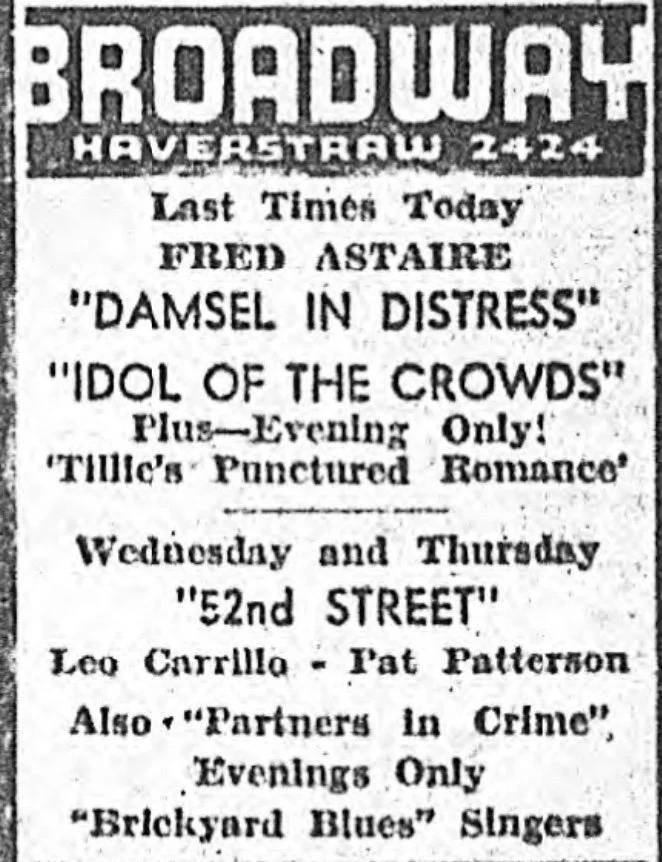
An advertisement for the “Brickyard Blues” in 1937, shortly before the industry fully collapsed in Haverstraw in 1942.[38]
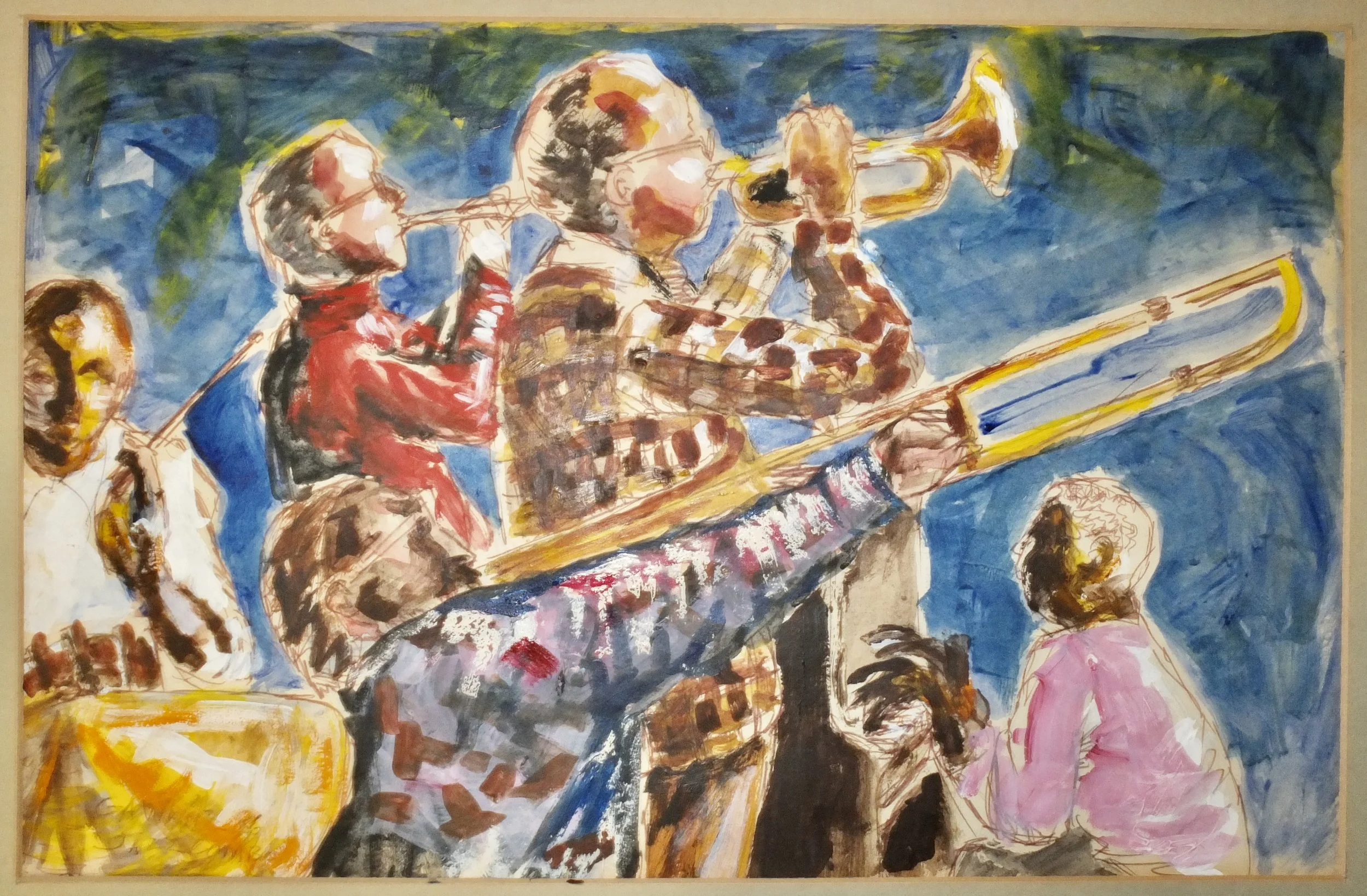
The Lion’s piano playing was instrumental for the Jazz World, influencing others like Duke Ellington — a fellow pianist and behemoth of a composer — who wrote the foreword to Smith’s autobiography. “Democratic Diz” Gillespie — trumpeter, foundationalist of Bebop, and 1964 presidential candidate — claimed that “If it hadn't been for the Lion…we'd have all been floundering.”[2] The legacy of this Jazz was depicted in other art forms, such as the paintings of George White, an African American artist in Haverstraw.
THE PATH TO EMANCIPATION IN HAVERSTRAW
Haverstraw’s African American community can be traced to both the North and the South. In the 18th century, the Allison and De Noyelles families bought most of the land in Haverstraw, which had been worked by enslaved people before, during, and after the American Revolution. The 1790 census records the presence of 238 slaves during this time. In the 19th and 20th centuries, these families would become some of Haverstraw’s foremost brickmakers.[3]
The process of emancipation unfolded slowly in Haverstraw. Even after the American Revolution, slavery persisted within the town. Evidence of this continuation is found in the 1810 census, which documents 50 enslaved individuals in the Town of Haverstraw.[4] The complete abolition of slavery was not realized until July 4, 1827, when the New York State Government enacted legislation ending the practice— achieved through the persistent efforts and resistance of formerly enslaved people, free African Americans, and abolitionist activists who advocated for freedom and equality.
The African Methodist Episcopal (AME) Church of Haverstraw
According to local oral tradition, it is believed that the majority, if not all, of the enslaved individuals in Haverstraw eventually left the village. Despite this, there is evidence to suggest that some members of this community remained in Haverstraw and maintained a strong enough connection to the area to establish the African Methodist Episcopal (AME) Church of Haverstraw. This church was organized before the start of the Civil War in 1861 and before the issuance of the Emancipation Proclamation in 1863. As a result, the AME Church became a significant institution in the village and played a role in the Underground Railroad, serving as a beacon of hope and resilience for the local African American community.
The AME held annual camp meetings in North Haverstraw (now West Haverstraw).[5] In 1855, the Rockland County Messenger, one of Haverstraw’s early papers of record, reported on an African Methodist gathering in Ossining that some Haverstronians ventured to. Here, the editors wrote of members of the church: “When a large number unite in some melody in which their hearts are engaged, you hear music more stirring if not as cultivated as that of the Opera or Concert Room.”[6]
The Great Southern Migration

Original ©Haverstraw Brick Museum Archives, De Noyelles Collection.
As W.E.B. DuBois argued, Black Reconstruction was sabotaged by white Southern legislators who wished to maintain a cheap, subservient Black labor force. Simultaneously, Northern industry needed cheaper labor to maintain profits, and sought this army of labor from the South.
In efforts to maintain workers in tenant farming or sharecropping systems, Black Codes — including the imposition of fines against interstate labor — were enacted by white southern state legislatures to restrict workers’ movement. The Rockland County Times, another Haverstraw paper of record, noted that “with the Southern [Black] laborer eliminated” from these fines, “the situation in the labor market [was] an excessively delicate situation.”[7] Regardless, thousands of workers still traveled north to work on Haverstraw and Hudson Valley brickyards, and in pursuit of better opportunities.
Brick manufacturers hired employment agents who respectively traveled south to hire laborers from Courtland, Norfolk, Spotsylvania, and Wenston, VA; Blanch, Berkeley, and New Bern, NC; Raleigh, South Carolina, etc.[8]
These men, like those from the Dickersons’ plantation of Pittsylvania County, VA, were the sons of the formerly enslaved.[9]
Black men from the South would make the trip up north around March and April, sometimes returning to their families at the end of the season around September and October.[10] In these two periods of months, “every train” heading north, and “every train bound south” had at least a couple of Black workers on them. [11]
The process was described step-by-step by the Rockland County Times:
“Agents from the large plants go South and secure a large number of men, several hundred at a time, and as these men have no money, their fare, etc., is paid by the agents. They are put in shanties and given a start, and are supposed to pay back their fare, etc., in installments out of their bi-weekly pay envelopes.[12]”
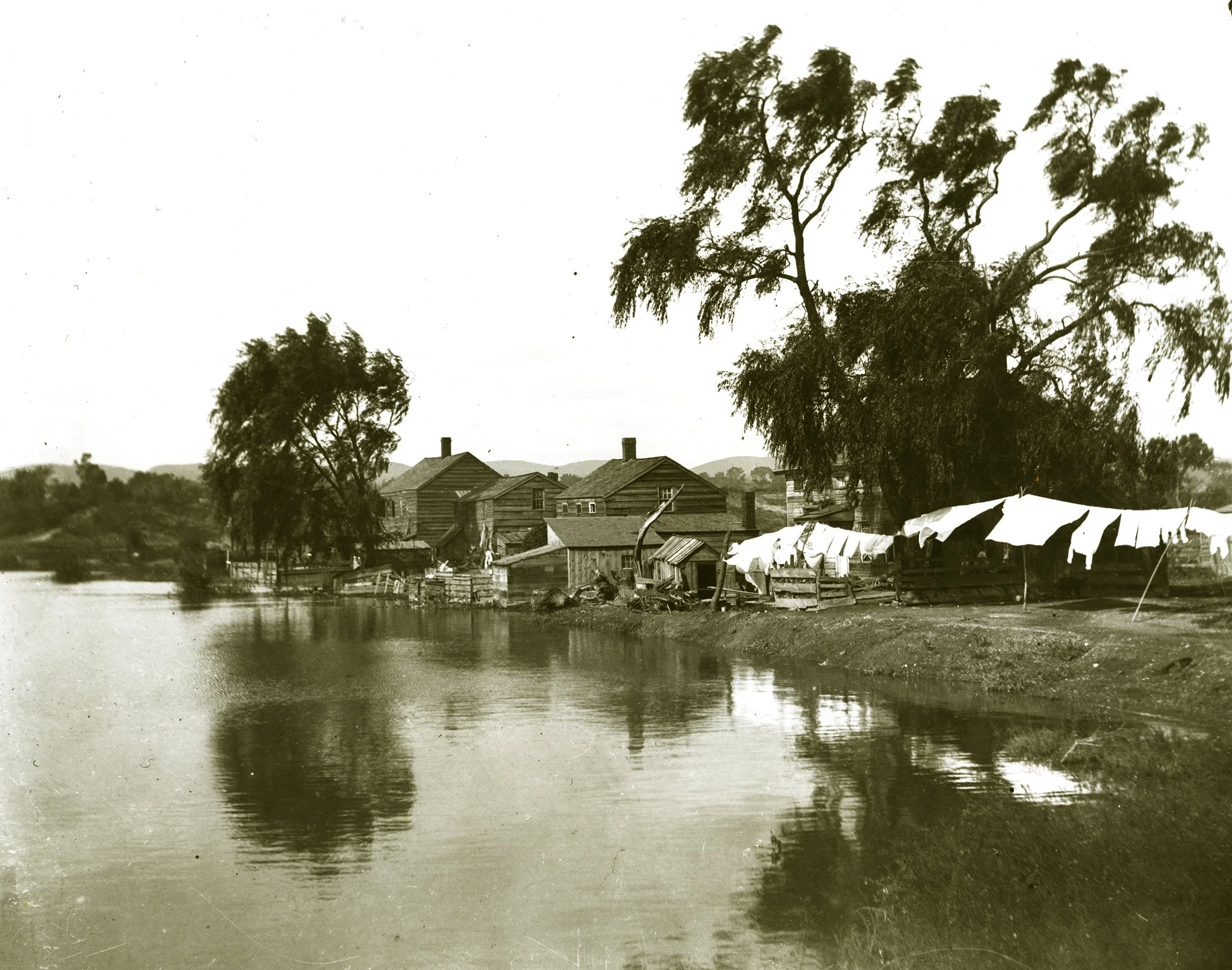
©Haverstraw Brick Museum Archives, Photo of Shanty Housing, Mudhole, DeNoyelles Collection
AN Integrated Workforce, SepArate Lives
Daniel De Noyelles — who grew up on the brickyards and was later the HBM’s first historian — noted that it was “usual in that olden day” to have a “comradeship” between black and white workers. Daniel accurately observed that certain brickyards demonstrated progressiveness by employing integrated workforces.[13] Nevertheless, segregation persisted within the broader community, particularly in terms of housing.
In 1906, one of the largest unionization and strike efforts in the Hudson River brickmaking industry occurred, forcing New York State Labor Inspectors to address worker grievances, which included housing. One reporter wrote that "It appeared that conditions on the whole were satisfactory, so far as concerns the housing of families…but there were also found a number of company barracks, occupied by single men that outraged decency.”[14] Moreover, many held racist views of their workers, including those who had the power to create history: newspaper editors. In 1898, in the midst of a strike on the brickyards, the Nyack Evening Star noted that the brickyard workforce was composed mainly of African Americans, Hungarians, and Italians who held “life very cheap.”
They were further described as “an inferior class” that was the “scum of the earth.” Despite a warped and demeaning view of the working class, the newspaper described a situation of wage slavery, with the brickyard laborers being forced to work “like slaves,” toiling as early as 3:30 AM until 5-6 PM. These workers were held in comparison to the “respectable class” of English, German, and French workers that predominated the labor force on the brickyards in years prior. [15
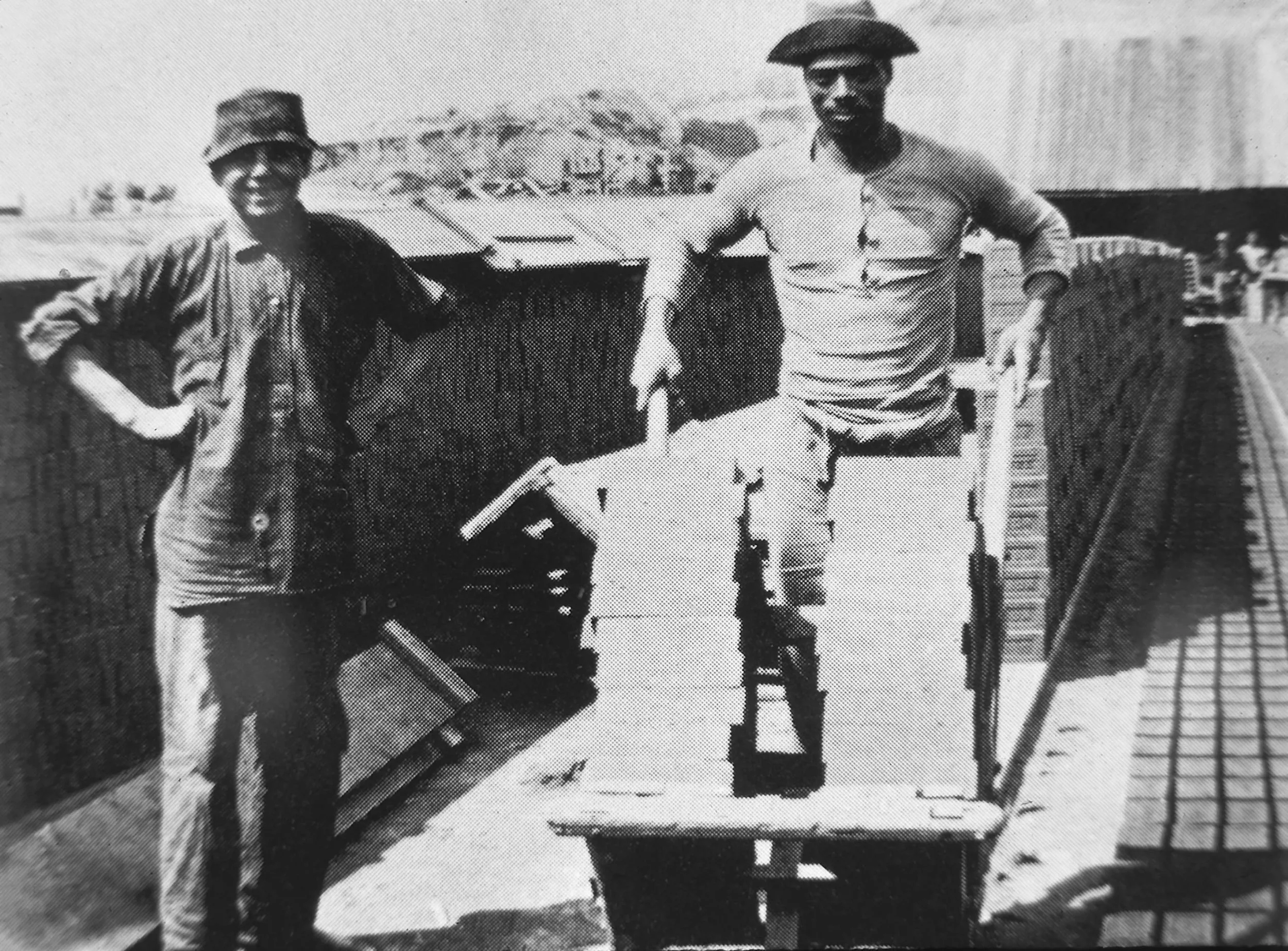
Reprint, Haverstraw Times, c1900s, DeNoyelles Collection, Haverstraw Brick Museum Archives
BLACK LABOR KEPT THE BRICKYARDS AFLOAT
The reliance on Southern labor within Haverstraw’s brickyards was widely recognized, even in the face of persistent racist attitudes. As reported by the Times in 1923, “Southern labor…[was] the only beacon of hope for brick manufacturers, in an effort to keep down the cost of production.”[16] When they left to return south, their absence “handicapped the brickyards. [17] This acknowledgment highlights the indispensable role that Southern workers played in sustaining the local brickmaking industry and underscores the critical impact of their work on the area’s industrial success.
The building frenzy during the roaring twenties was described by the Times as “the greatest in building construction that has ever been known.”[18] Black workers, who carried much of this burden and recognized their own value, leveraged their labor power accordingly. The Haverstraw paper reported that it had become an “annual tradition” for workers to strike to avoid “their obligation to repay the bosses for the advances.” In 1924, Black workers staged a coordinated walkout, demanding an extra dollar per day in wages, in addition to housing advances. They argued that because the price of brick was $20 per M (thousand), they were "entitled to share in the prosperity.”[19]
Other Southern workers — probably hearing from word-of-mouth from community members who had worked on Northern brickyards — soon began taking advantage of brickmakers’ cash advances. Some took their paid fares, only to leave the job for others, such as paintmen. The Times described them as “to be quite expert workmen” in the profession. Others simply “jumped their freight,” with brickmakers requesting they be arrested by local constables and deputy sheriffs. [20] Sometimes, the company agents hired to send for workers from the South were Black themselves, and even they bailed. In May of 1909, “Jeffries” was hired by the Marks and Reilly brick company to recruit Southern labor; however, he “took leg bail” with his $125 advance.[21]
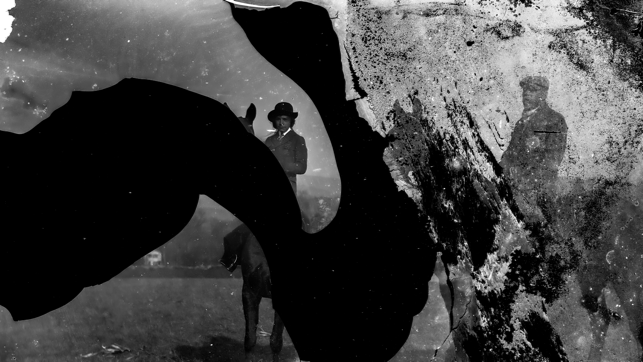
Pictured are two men on horses, the one on the right being Black. This picture is sourced from the glass negatives of Frank De Noyelles, who became Secretary and Manager of the De Noyelles Brick Company in 1906.[27] It could possibly depict two foreman on the family’s brickyard. ©Haverstraw Brick Museum Archives, DeNoyelles/Stoughton Collection, 2020.017.002.
A COMMUNITY GROWS
Regardless of the transient nature of some Black labor, a cohesive community was created both amongst traveling workers and those who remained in Haverstraw. Aside from the singing as the workers labored that The Lion so vividly remembered, on their off time, these workers played with “fiddles, banjoes, and other musical instruments. They also dined together in groups of two dozen, with their chef often cooking “in camp kettles outdoors.”[22]
Black workers did their best to keep the money they earned in their own community. Rather than spending their earnings locally, many individuals sent some of their paychecks down South to help their families. This practice was evident on paydays, when a “crowd” of workers lined up outside the Post Office to send money orders to their families.[23] Local media, such as the Times, expressed concern over this practice, claiming it was “no cause for jubilation on the part of the merchants” as more cash was being sent out of the village than being spent in it.[24]
Others remained in Haverstraw, finding work in the winters, such as helping build the village’s sewer system.[25]Over the years, some rose up the job ladder in the brickyards.
On October 26, 1928, the Times reported that Arthur Moon, a Black assistant foreman on the Excelsior brickyard, bought the home of Dennis McCue on Partition Street.. [26]
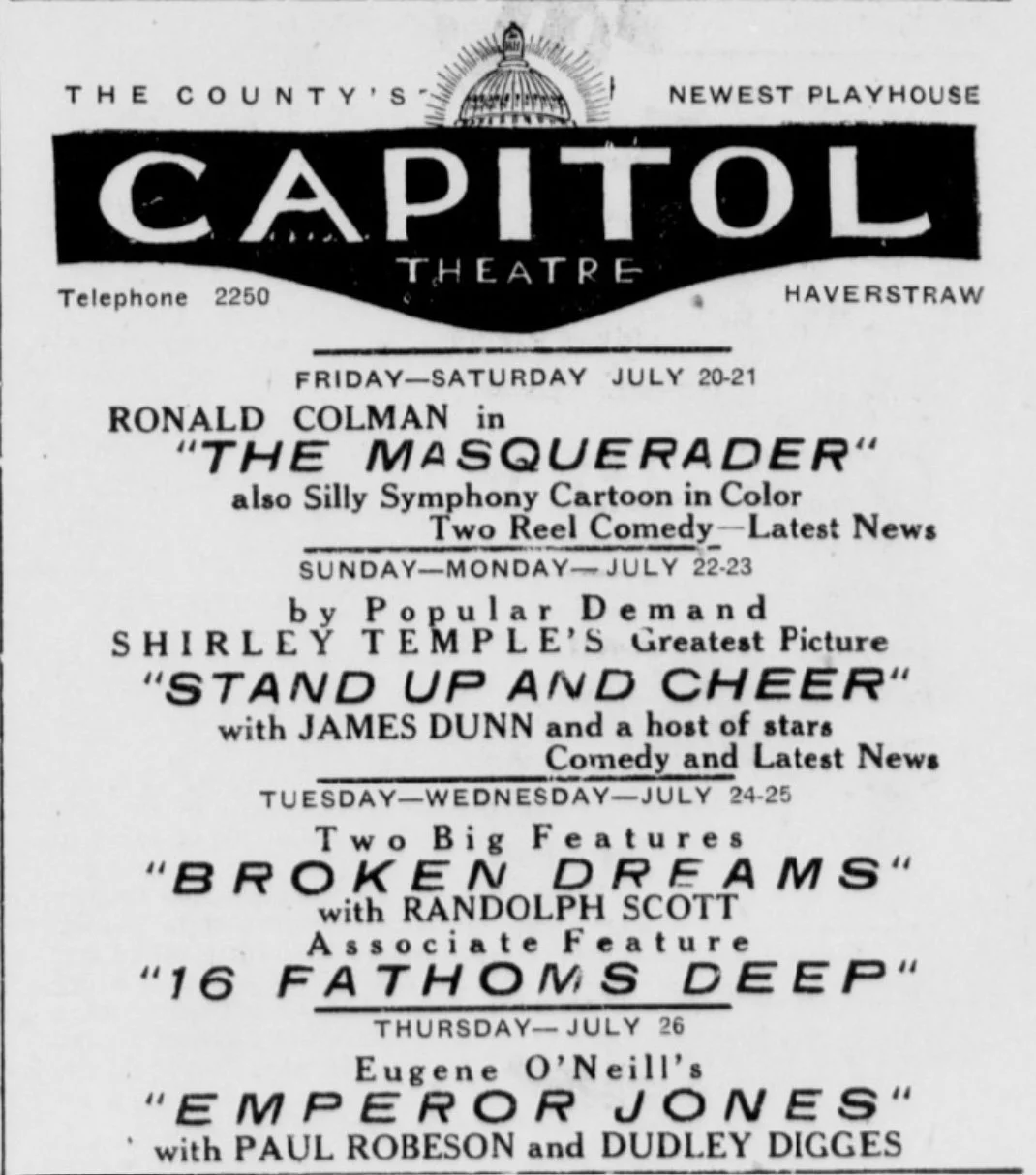
Black entertainment was being consumed by white audiences not just on a local level, but on a national scale in the coming decades. This included Paul Robeson having the first lead role as an African American in a U.S. film.[33]
Additional businesses grew up alongside to support this community. Upon her death in 1925, the Times reported that Mary E. Johnson “was said to be one of the wealthiest [Black] women in the whole [Black] community along the brickyards” due to her “clever[ness] in business deals” and involvement in “a local banking business.”[28]
Others became business owners. In 1901, it was reported that there was a Black barbershop on Rockland Street, formerly a business district in the village.[29] Another woman, Bridget A. Fox (Curran) was described as a “prominent business woman” who, “for twenty-five years,” was “the head of the firm Mrs. Philip A. Fox & Sons is engaged in the coal, fuel oil, and trucking business.[30]
BLACK ENTERTAINMENT, NEW AUDIENCES
As the Black presence in Haverstraw grew, so too did its influence in culture. Local artists played ragtime music — a genre of music birthed by Black musicians after the Civil War in taverns and small venues. This included a trio in 1917 composed of trap drummer Frank O’Brien of Orchard Street in Haverstraw, violinist Fred Harwood of Spring Valley, and pianist Charles Cohn. [31]
Music was also played at larger venues. Vaudeville shows in Waldron’s Theatre — one of the village's cultural hubs — included acts in 1914 like the Thomas McDonald Trio, described as “Premier [Black] Singers, Dancers and Pianists.” Other acts included Moore and Burns, a group of “ragtime banjoists.”[32]
The culture, music, and entertainment of this community was not a monolith in these times. For instance, on October 27, 1932, the Calvary Baptist Church held a screening of The Hell Bound Excursion Train (1930). This movie, while having a largely Black cast with innovative cinematography, decried what it claimed were the sins of the times such as drinking, adultery, and jazz.[34] The church held gospel choir music in favor, holding concerts with those like the Silver Leaf Quartet of Norfolk on June 26, 1933.[35]
In comparison, the Colored Democratic Club of Rockland County’s Dance and Barbecue held at Columbia Hall on Clinton Street on October 22, 1929, included a complete orchestra sourced from Small’s Paradise — the longest running integrated club in Harlem.[36]
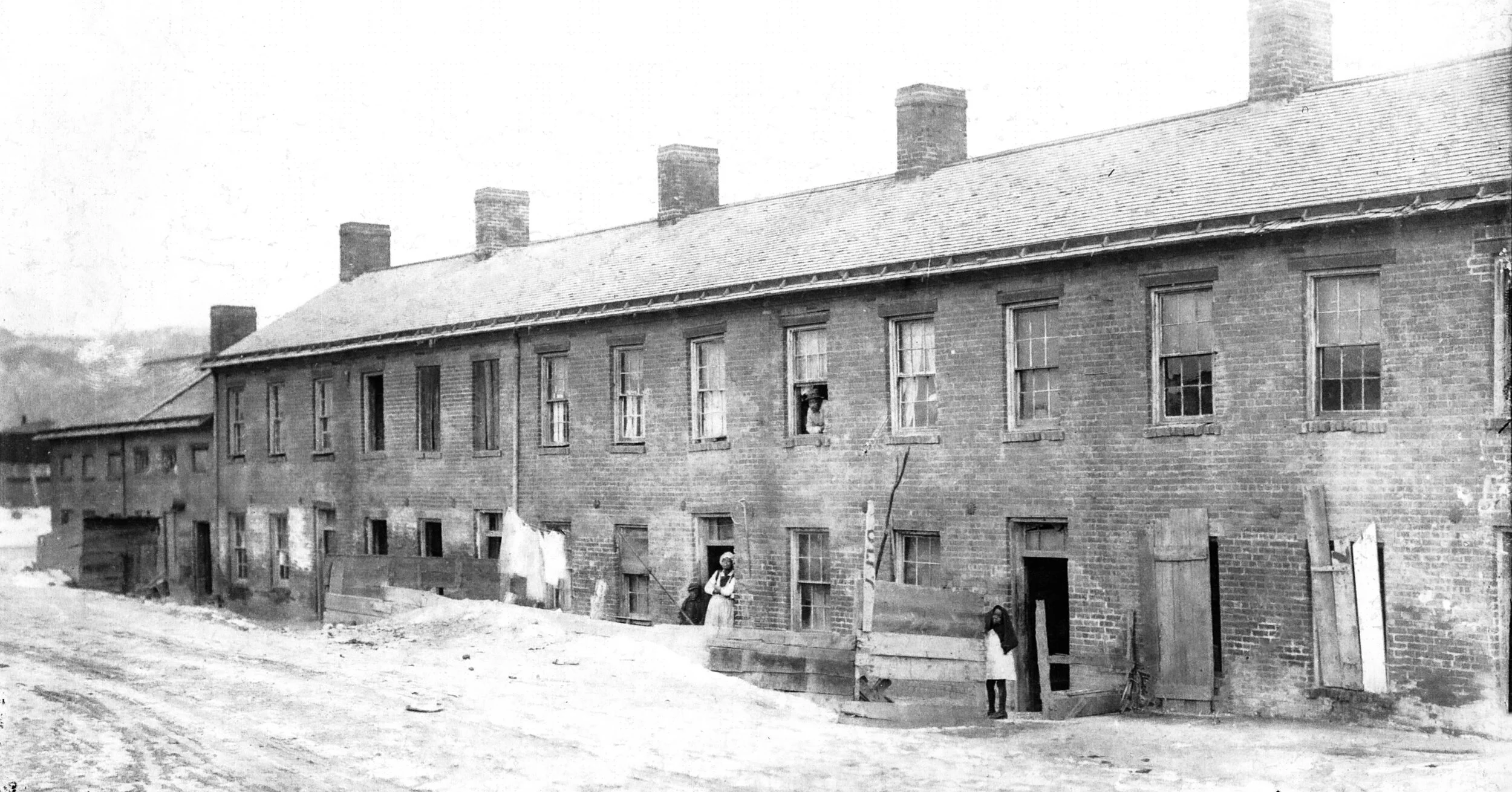
Roseville Housing, rent cost between $3.00-$4.00 a month, ©Haverstraw Brick Museum Archives, Sullivan Collection, 35mm Contacts - Folder 4.
Regardless of these divisions, at the tail end of the brick industry in Haverstraw, three distinct communities had formed within Haverstraw.
From North to South, these included: Roseville or Rosaville, a community that was ⅔ Black by 1927, which was commonly referred to as “up the beach” as it rested along Beach Road; The area of Jefferson, Clinton, and Division Streets, anchored in part by the Calvary Baptist Church; and the “Mudhole,” otherwise known as “Harlem in Haverstraw,” on West Street between Maple and Riverside Avenues.[37]
Written by museum Educator and Historian Luke Spaltro. Edited by Executive Director, Rachel Whitlow
Works cited and further reading
[1] Willie Smith, Music on My Mind: The Memoirs of an American Pianist (Garden City, NY: Doubleday, 1964), p. 4. https://archive.org/details/musiconmymindmem00smit/page/4/mode/2up?q=haverstraw ;
[2]“Willie Smith, jazz pianist, Dies at 79,” New York Times, Apr. 19, 1973, p. 46. https://www.nytimes.com/1973/04/19/archives/willie-smith-jazz-pianist-dies-at-79.html
[3] David Cole, History of Rockland County, New York: with Biographical Sketches of its Prominent Men (New York: J. B. Beers & Co., 1884): pp. 143, 147, 164.https://archive.org/details/historyofrocklan00cole_0/page/147/mode/2up?q
[4] https://dutchgenie.net/bergen/DutchDoorGenealogy/1800-Fed-Census-Haverstraw-Rockland-NY.html
[5] “Another Camp Meeting,” Rockland County Messenger, Vol. X, No. 484, Aug. 30, 1855, p. 3. https://news.hrvh.org/veridian/?a=d&d=rocklandmessenger18550830.2.29.3&srpos=32&e=-------en-20-rocklandmessenger-21-byDA-txt-txIN-%22african%22------
[6]“Colored Camp Meeting,” Rockland County Messenger, Vol. X, No 485, Sep. 6, 1855, p. 3. https://news.hrvh.org/veridian/?a=d&d=rocklandmessenger18550906.2.27.1&srpos=33&e=-------en-20-rocklandmessenger-21-byDA-txt-txIN-%22african%22------
[7]“Brickmakers Face Problem,” Rockland County Times, Vol. XXVII, No. 18, Apr. 21, 1917, pp.1, 3. https://news.hrvh.org/veridian/?a=d&d=rocklandctytimes19170421.1.3&srpos=58&e=-------en-20-rocklandctytimes-41-byDA-txt-txIN-%22dixie%22------
[8] “Curtis Goodman,” Rockland County Times, Vol. XXXVII, No. 45, Jan. 14, 1928, p. 4. The article says “Caurland,” which is probably a misspelling of Cortland. https://news.hrvh.org/veridian/?a=d&d=rocklandctytimes19280114.1.4&srpos=142&e=-------en-20-rocklandctytimes-141-byDA-txt-txIN-%22roseville%22------ ; “Brick Laborer Drowned,” Rockland County Times, Vol. XXXIIII, No. 14, Jun. 7, 1924, p. 4. https://news.hrvh.org/veridian/?a=d&d=rocklandctytimes19240607.1.4&srpos=335&e=------192-en-20-rocklandctytimes-321-byDA-txt-txIN-brick+------; “Man Drowned,” Rockland County Times, Vol. XII, No. 44, Jul. 20, 1901, p. 1; https://news.hrvh.org/veridian/?a=d&d=rocklandctytimes19010720.2.23&srpos=280&e=-------en-20-rocklandctytimes-261-byDA-txt-txIN-%22colored%22-----. Robert Renyolds; ; “Overcome by Heat,” Rockland County Times, Vol. V, No. 40, Jun. 30, 1894, p. 8; https://news.hrvh.org/veridian/?a=d&d=rocklandctytimes18940630.2.123&srpos=7&e=-------en-20-rocklandctytimes-1-byDA-txt-txIN-shanty------. David Gains; “Edward James Chandler,” Rockland County Times, Vol. XLVII, No. 9, Jan. 29, 1938, p. 4.https://news.hrvh.org/veridian/?a=d&d=rocklandctytimes19380129.1.4&srpos=367&e=-------en-20-rocklandctytimes-361-byDA-txt-txIN-%22roseville%22------; “Man Dropped Dead,” Rockland County Times, Vol. XXXVIIII, No. 12, May 24, 1924, p. 1. https://news.hrvh.org/veridian/?a=d&d=rocklandctytimes19240524.1.1&srpos=70&e=-------en-20-rocklandctytimes-61--txt-txIN-%22george+white%22------; “Wants Her Boy,” Rockland County Times, Vol. XXXVIII, No. 28, Sep. 15, 1923, p. 1. https://news.hrvh.org/veridian/?a=d&d=rocklandctytimes19230915.1.1&srpos=77&e=------192-en-20-rocklandctytimes-61-byDA-txt-txIN-%22beach%22------; “Negro on the Brickyard,” Rockland County Times, Vol. XI, No. 38, Jun. 9, 1900, p. 1 https://news.hrvh.org/veridian/?a=d&d=rocklandctytimes19000609.2.13&srpos=5&e=-------en-20-rocklandctytimes-1--txt-txIN-%22colored%22------;
[9] “Rosaville Resident Recalls His Youth As Slave in South,” Rockland County Journal-News, Vol. 45, No. 85, Apr. 11, 1934, p. 2. https://news.hrvh.org/veridian/?a=d&d=ieadbehj19340411.1.2&srpos=237&e=-------en-20--221-byDA-txt-txIN-%22rosaville%22------
[10] “Items Boiled Down,” Rockland County Messenger, Vol. XLVIII, No. 43, Mar. 15, 1894, p. 1. https://news.hrvh.org/veridian/?a=d&d=rocklandmessenger18940315.2.17&srpos=1550&e=-------en-20-rocklandmessenger-1541-byDA-txt-txIN-%22colored%22------ ; “Village Tattle,” Rockland County Messenger, Vol. L, No. 49, Apr. 2, 1896, p. 1
[11] “Food For The Gossipers,” Rockland County Messenger, Vol. LI, No. 22, Oct 1, 1896, p. 3.
“Every Train…,” Rockland County Times, Vol. XXVII, No. 19, Apr. 28, 1917, p. 6.
https://news.hrvh.org/veridian/?a=d&d=rocklandctytimes19170428.1.6&srpos=1016&e=-------en-20-rockla;
“But Two Yards Running,” Rockland County Times, Vol. XIII, No. 5, Oct. 19, 1901, p. 1, https://news.hrvh.org/veridian/?a=d&d=rocklandctytimes19011019.2.3&srpos=307&e=-------en-20-rocklandctytimes-301-byDA-txt-txIN-%22colored%22------
[12] “Colored Men ‘Jump Bounty,’” Rockland County Times, Vol. XXVI, No. 24, May 27, 1916, p. 6.
[13] Dan deNoyelles, “When Brickmaking was Way of Life at Malley’s,” Rockland County Times, Vol. 78, No. Dec. 15, 1966, p. 2, https://news.hrvh.org/veridian/?a=d&d=rocklandctytimes19661215-01.1.1&srpos=35&e=------196-en-20-rocklandctytimes-21-byDA-txt-txIN-%22brickyard%22------
[14] Brick, Tile & Terra Cotta Worker’s Journal, Vol. X, No. 4, Dec. 1906, p. 10. https://babel.hathitrust.org/cgi/pt?id=wu.89062230362&seq=564&q1=hudson+river
[15] “Two thousand brickyarders on strike,” Nyack Evening Star, Vol. 5, No. 295, Jun. 15, 1898, p. 1. https://news.hrvh.org/veridian/?a=d&d=jbaggcgi18980615-01.1.1&srpos=20&e=------189-en-20--1-byDA-txt-txIN-brick+strike----1898–
[16] “Emigration effects building,” Rockland County Times, Vol. XXXIII, No. 9, May 5, 1923, p. 6. https://news.hrvh.org/veridian/?a=d&d=rocklandctytimes19230505.1.6&srpos=205&e=------192-en-20-rocklandctytimes-201-byDA-txt-txIN-brick+------
[17] “Haverstraw,” Rockland County Times, Vol. XX, No. 42, Aug. 7, 1909, p. 8. https://news.hrvh.org/veridian/?a=d&d=rocklandctytimes19090807.1.8&srpos=702&e=-------en-20-rocklandctytimes-701-byDA-txt-txIN-%22colored%22------
[18] “Brick Market Stagnant,” Rockland County Times, Vol. XXXVIII, No. 20, p. 4.https://news.hrvh.org/veridian/?a=d&d=rocklandctytimes19270723.1.4&srpos=57&e=------192-en-20-rocklandctytimes-41-byDA-txt-txIN-%22negro%22------
[19]“More Pay Demanded,” Rockland County Times, Vol. XXXIIII, No. 10, May 10, 1924, p. 1. https://news.hrvh.org/veridian/?a=d&d=rocklandctytimes19240510.1.1&srpos=1240&e=-------en-20-rocklandctytimes-1221-byDA-txt-txIN-%22colored%22------
[20]“Haverstraw,” Rockland County Times, Vol. XXXVII, No. 15, Jun. 19, 1926, p. 8. https://news.hrvh.org/veridian/?a=d&d=rocklandctytimes19260619.1.8&srpos=1425&e=-------en-20-rocklandctytimes-1421-byDA-txt-txIN-%22colored%22------
[21]“Tompkins Cove,” Rockland County Times, Vol. XX, No. 29, May 1, 1909, p. 4. https://news.hrvh.org/veridian/?a=d&d=rocklandctytimes19090501.1.4&srpos=666&e=-------en-20-rocklandctytimes-661-byDA-txt-txIN-%22colored%22------
[22] “Negro on the Brickyard,” Rockland County Times, Vol. XI, No. 38, Jun. 9, 1900, p. 1. https://news.hrvh.org/veridian/?a=d&d=rocklandctytimes19000609.2.13&srpos=176&e=-------en-20-rocklandctytimes-161-byDA-txt-txIN-%22colored%22------
[23]“Post Office Has Banner Year,” Rockland County Times, Vol. XXXVI, No. 50, Feb. 19, 1927, p. 4.https://news.hrvh.org/veridian/?a=d&d=rocklandctytimes19270219.1.4&srpos=1509&e=-------en-20-rocklandctytimes-1501-byDA-txt-txIN-%22colored%22------
[24] “Where the Money Goes,” Rockland County Times, Vol. XXXVI, No. 14, Jun. 12, 1926, p. 6. https://news.hrvh.org/veridian/?a=d&d=rocklandctytimes19260612.1.6&srpos=1421&e=-------en-20-rocklandctytimes-1421-byDA-txt-txIN-%22colored%22------
[25]“Colored Men Sore,” Rockland County Times, Vol. XX, No. 12, Jan. 2, 1902, p. 1. https://news.hrvh.org/veridian/?a=d&d=rocklandctytimes19090102.1.1&srpos=654&e=-------en-20-rocklandctytimes-641-byDA-txt-txIN-%22colored%22------
[26] “Many Real Estate Movements,” Rockland County Times, Vol. XXXVIII, No. 32, Oct. 6, 1928, p. 2. https://news.hrvh.org/veridian/?a=d&d=rocklandctytimes19281006.1.2&srpos=1696&e=-------en-20-rocklandctytimes-1681-byDA-txt-txIN-%22colored%22------
[27] “Seperation Was Short,” Rockland County Times, Vol. XXXVII, No. 8, Apr. 30, 1927, pp. 1, 7. https://news.hrvh.org/veridian/?a=d&d=rocklandctytimes19270430.1.1&srpos=4&e=------192-en-20-rocklandctytimes-1--txt-txIN-%22Frank+DeNoyelles%22----1927--
[28]“Mary E. Johnson,” Rockland County Times, Vol. XXXVIIII, No. 45, Jan. 17, 1925, p. 1. https://news.hrvh.org/veridian/?a=d&d=rocklandctytimes19250117.1.1&srpos=221&e=------192-en-20-rocklandctytimes-221-byDA-txt-txIN-%22colored%22------
[29] “Was Fierce Storm,” Rockland County Times, Vol. XII, No. 42, Jul. 6, 1901, p. 1. https://news.hrvh.org/veridian/?a=d&d=rocklandctytimes19010706.2.2&srpos=19&e=-------en-20-rocklandctytimes-1-byDA-txt-txIN-%22coon%22------
[30] “Mrs. Philip A. Fox,” Rockland County Leader, Vol. 42, No. 2, Jan. 11, 1934, p. 4. https://news.hrvh.org/veridian/?a=d&d=ifadgbdf19340111.1.4&srpos=6&e=-------en-20--1-byDA-txt-txIN-%22rosevlllE%22------
[31] “Hear Ragtime,” Rockland County Times, Vol. XXVII, No. 12, Mar. 10, 1917, p. 2. https://news.hrvh.org/veridian/?a=d&d=rocklandctytimes19170310.1.2&srpos=17&e=-------en-20-rocklandctytimes-1-byDA-txt-txIN-%22ragtime%22------
[32]“4 Acts of Vaudeville,” Rockland County Times, Vol. XXVI, No. 21, Oct. 17, 1914, p. 4. https://news.hrvh.org/veridian/?a=d&d=rocklandctytimes19141017.1.4&srpos=9&e=-------en-20-rocklandctytimes-1-byDA-txt-txIN-%22ragtime%22------
[33] “Emperor Jones,” Rockland County Times, Vol. XLII, No. 33, Jul. 21, 1934. p. 8. https://news.hrvh.org/veridian/?a=d&d=rocklandctytimes19340721.1.8&srpos=2&e=-------en-20-rocklandctytimes-1-byDA-txt-txIN-%22
[34] “A Religious Motion Picture,” Rockland County Times, Vol. XLI, No. 34, Oct. 22, 1932, p. 5. https://news.hrvh.org/veridian/?a=d&d=rocklandctytimes19321022.1.5&srpos=30&e=------193-en-20-rocklandctytimes-21-byDA-txt-txIN-%22baptist%22------
[35] “Concert at Baptist Church,” Rockland County Times, Vol. XLII, No. 15, Jun. 10, 1933, p. 5. https://news.hrvh.org/veridian/?a=d&d=rocklandctytimes19330610.1.5&srpos=48&e=------193-en-20-rocklandctytimes-41-byDA-txt-txIN-%22baptist%22------; “Will the Circle Be Unbroken —Silver Leaf Quartet of Norfolk,” posted Nov. 21, 2019, by Scott Musil, Youtube, 3 min., 29 sec., https://www.youtube.com/watch?v=FO1aTpMbBtc
[36] “Dance and Barbecue,” Rockland County Times, Vol. XXXIX, No. 32, Oct. 5, 1929, p. 6.https://news.hrvh.org/veridian/?a=d&d=rocklandctytimes19291005.1.6&srpos=163&e=-------en-20-rocklandctytimes-161-byDA-txt-txIN-%22harlem%22------
[37]“Old Activities Recalled,” Rockland County Times, Vol. XL, No. 45, Jan 3, 1931, p. 3. https://news.hrvh.org/veridian/?a=d&d=rocklandctytimes19310103.1.3&srpos=205&e=-------en-20-rocklandctytimes-201-byDA-txt-txIN-%22roseville%22------ ; “This Black Eye is Our Own Fault,” Rockland County Times,Vol. XLVIII, No. 47, Oct. 19, 1940, p. 6. https://news.hrvh.org/veridian/?a=d&d=rocklandctytimes19401019.1.6&srpos=23&e=------194-en-20-rocklandctytimes-21-byDA-txt-txIN-%22negro%22------
[38]“Brickyard Blues,” The Journal-News, Vol. 48, No. 147, Dec. 14, 1937, p. 7. https://news.hrvh.org/veridian/?a=d&d=ieadbehj19371214.1.7&srpos=139&e=------193-en-20-ieadbehj-121-byDA-txt-txIN-------