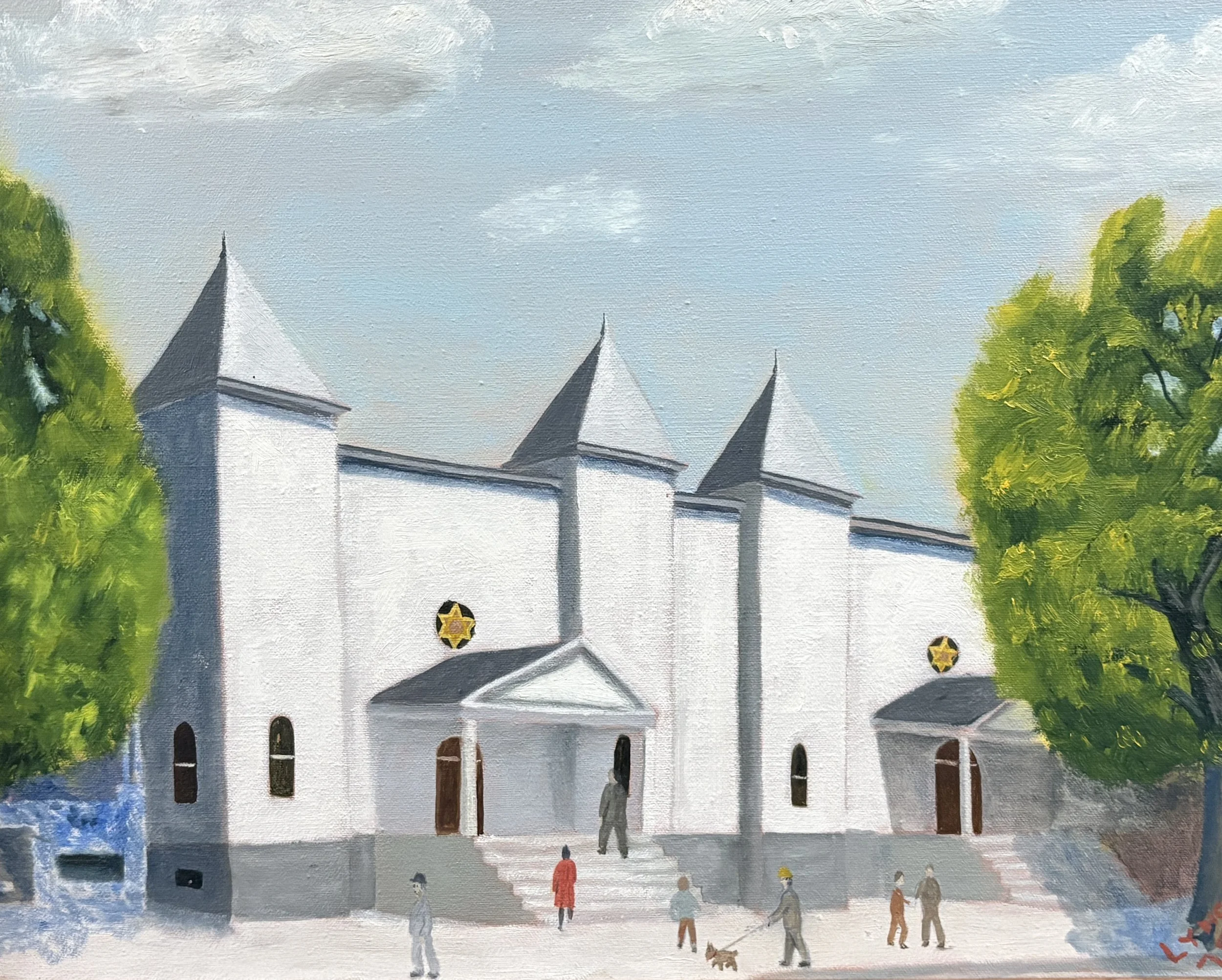
How did Haverstraw’s Jewish population come to be, and how was their community impacted by the Great Landslide of 1906?
Read moreIt Takes a Village: A Tradition of Giving to Libraries and Museums in Haverstraw
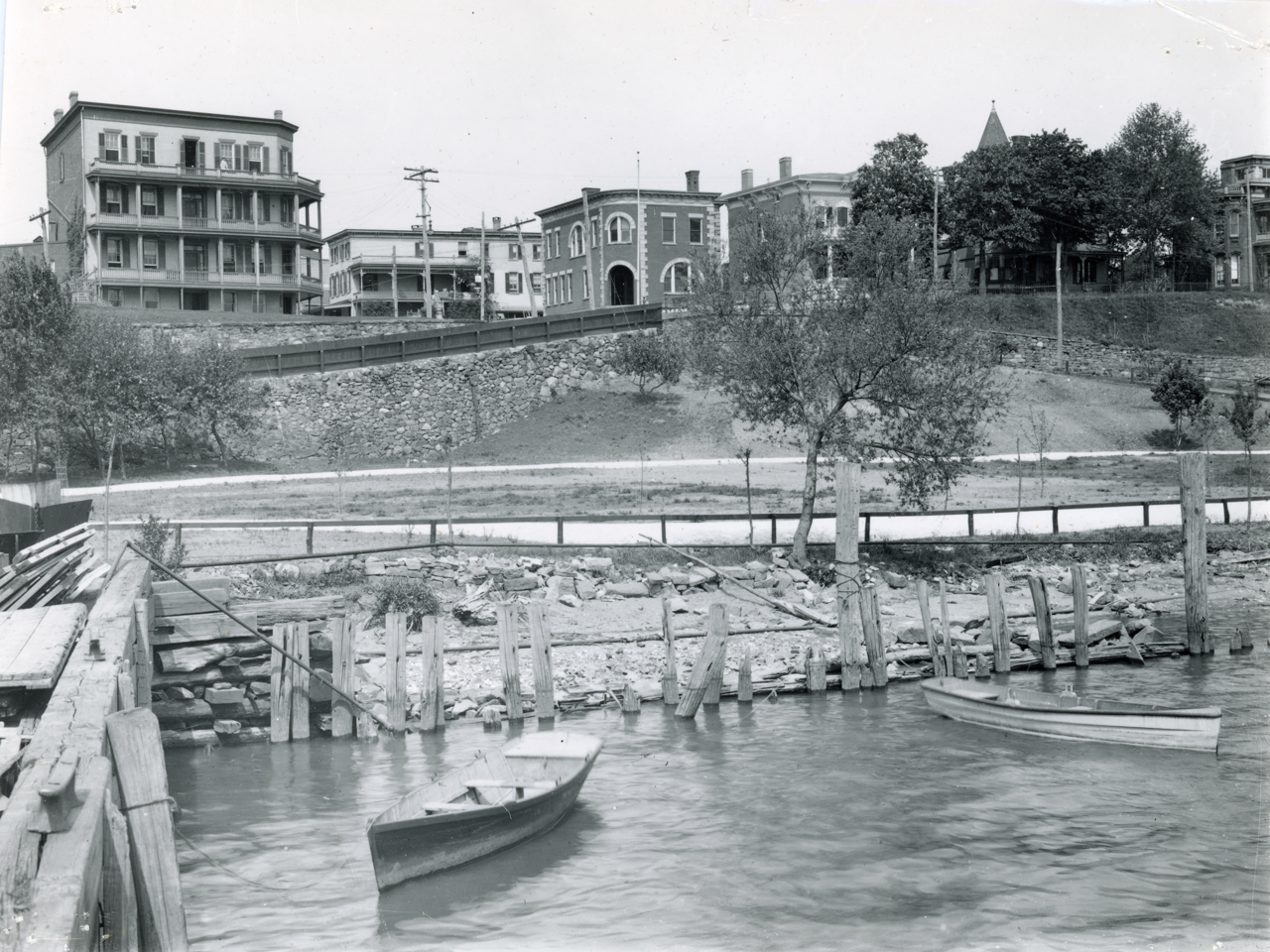
King’s Daughters “Fowler” Library overlooking Haverstraw Bay. U.S Hotel — now the village post office —stands across the street, to the left. 35mm contact, Sullivan Collection.
How can we learn from the history of charity and philanthropy and apply it to contemporary times?
Read moreTravel on the Hudson, and Haverstraw's Queen of the River: The Emeline
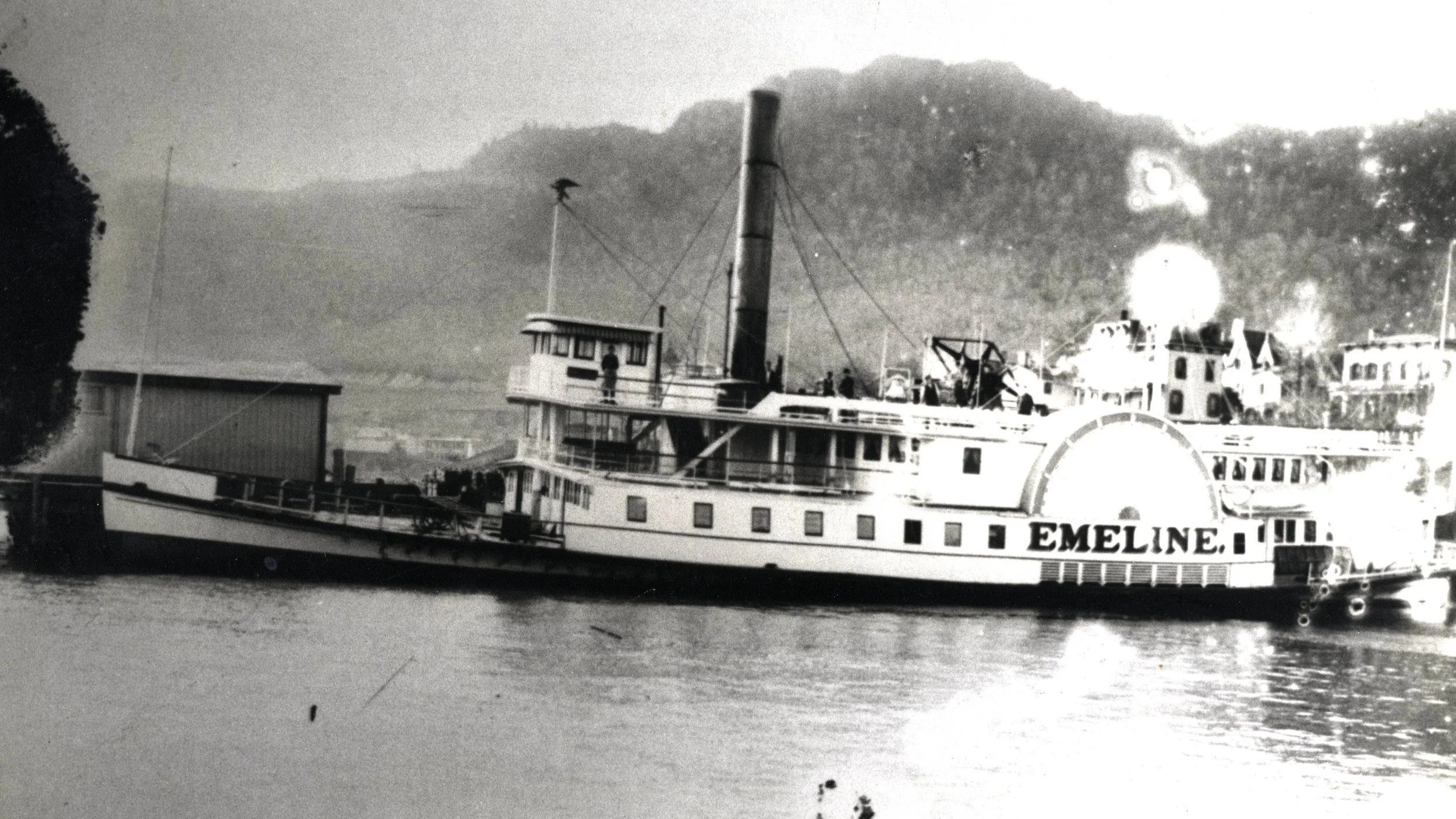
Emeline Steamboat, Daniel De Noyelles Collection, ©Haverstraw Brick Museum Archives
What did river travel in Haverstraw once look like, and will we ever see a resurgence of it?
Read moreBrickTalk: Fluctuating Shorelines—The Impact of Clay Extraction on the Ecology of the Hudson River
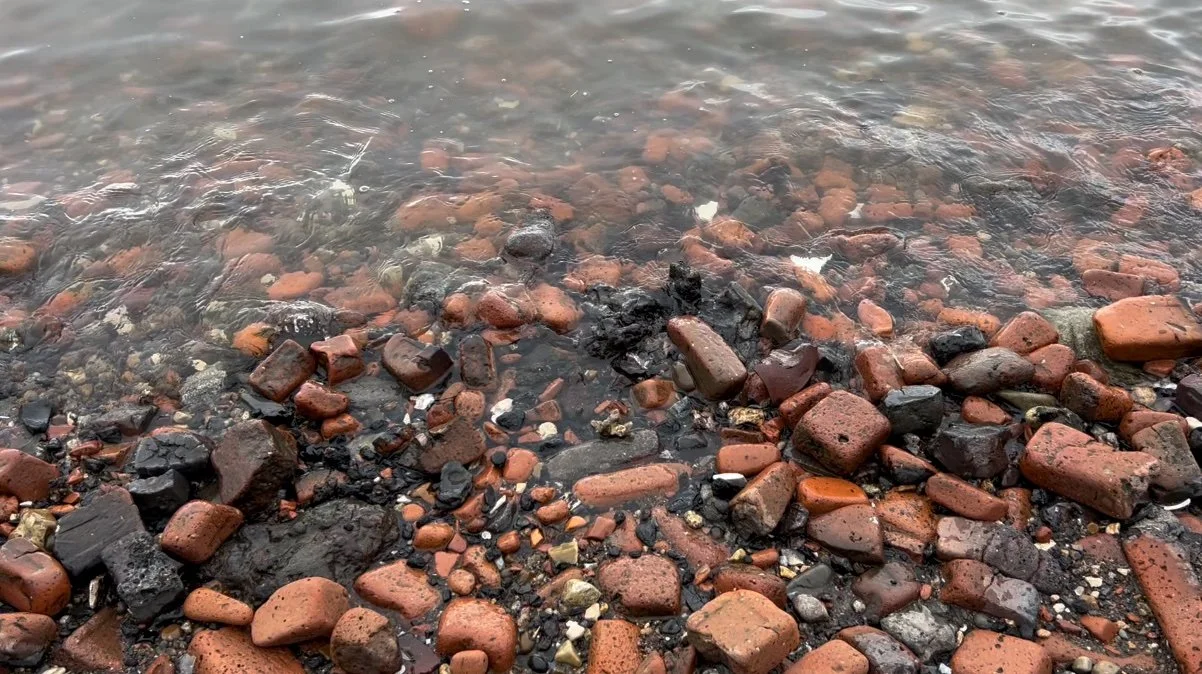
Glass plate depicting Excelsior Brick Company plant and Bulline clay pit. The pit, like others in the village, were filled in by the Hudson River. This pit is now “Bowline” pond. High Tor is cut off from the top right corner. Daniel De Noyelles Collection, circa 1915, ©Haverstraw Brick Museum Archives.
As we celebrate Earth Day, how can we learn from manufacturing industries predicated upon exploiting our land, resources, and planet?
Read moreBrickTalk: Women & The Brickyards
Mrs. Robert Jackson Davidson Collection, circa 1900s, ©Haverstraw Brick Museum Archives.
What can we learn from the history of working women in Haverstraw and the brick industry?
Read moreBrickTalk: Haverstraw Bay Boatmen's Local No. 474
The Dorothy, owned by Denton Fowler, was one of countless barge boats that shipped bricks from Haverstraw to New York City. Thomas Sullivan Collection, Haverstraw Brick Museum Archives.
What did work for men employed on barge boats look like, and why did this lead to what is believed to be the first union in the Haverstraw brick industry?
Read moreBrickTalk: Heritage in Brickwork, Inspiring 21st Century Architecture →
How does the heritage of brickwork inspire modern-day architecture?
Using the collaboration of Clarke and Gugliuzzo as inspiration, Jonathan A. Scelsa and Jennifer Birkeland of OP.AL Architects, husband and wife as well as architectural partners, are collaborating on the building plans of the Brick Museum’s new 3 ½ story design.
Read moreBrickTalk: Labor in the Brickyards, Acknowledging the Untold Stories →
From the Musical Working: Based on the book by Studs Terkel. Music was composed by J. Taylor, M. Rodgers, S. Schwartz, M. Grant & C. Carnelia. Lyrics were written by S. Birkenhead, S. Schwartz, C. Carnelia, J. Taylor & M. Grant. Schwartz developed the libretto with N. Faso. Photo Credit, Rachel Whitlow
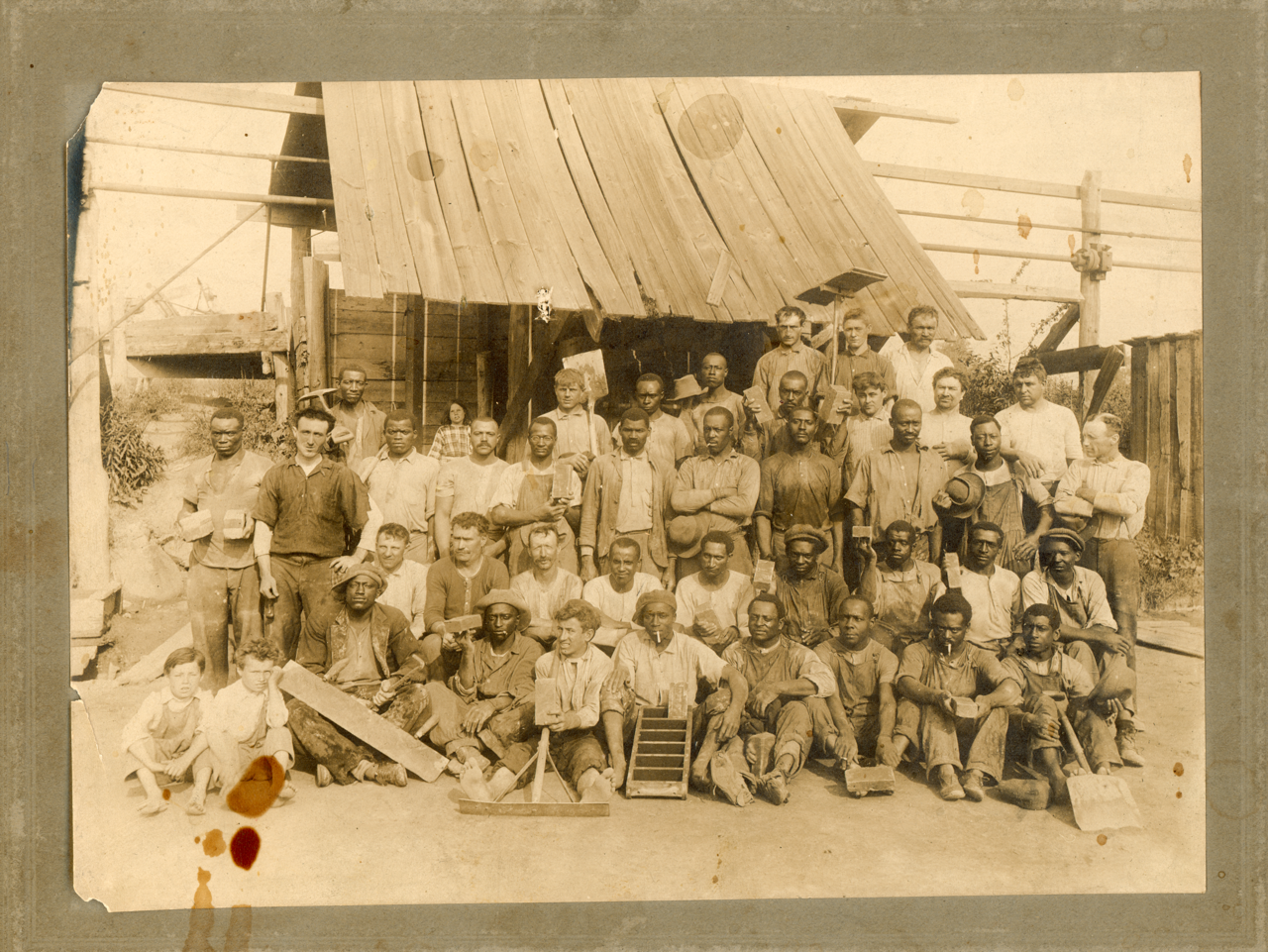
As we celebrate the end of black history month and the beginning of women's history month the Haverstraw Brick Museum acknowledges the significant contributions of these two often left out communities whose behind the scenes labor helped build, sustain and manage the day-to-day operations of the brickyards of Haverstraw.
Read moreBrickTalk: Families in Trade—Growing up in the Brickyards of Haverstraw →
Children Iceskating a clay hole, 1908 Tom Sullivan collection, Haverstraw Brick Museum
This winter, we are exploring the world of the brickyards through the men, women, and children who lived and worked in and around them. Brick-making was often a family affair, and in Haverstraw, children edged green bricks. As they aged into teenagers, older children worked alongside their fathers and neighbors, learning the job's parameters as they went. It was common to begin working full-time in the brickyards around age 13; by age 18, these young men had typically performed every job in the brickyard and were positioned to start a brickyard of their own.
Read moreBrickTalk: The Lenape in 17th Century Haverstraw →
As we mark Native American Heritage Month, the Haverstraw Brick Museum would like to acknowledge that the Museum, and the entire village of Haverstraw, is located on the traditional land of the Lenape people. The story of the Lenape, and the early relationships between natives and European settlers, is an essential part of the history of Haverstraw.
Read moreA Tale Untold: The Widow DeNoyelles of Haverstraw →
The Milbert Lithograph of the DeNoyelles Property circa 1790 Haverstraw, Dan DeNoyelles Collection, Haverstraw Brick Museum Archives
In her landmark study Revolutionary Mothers: Women in the Struggle for American Independence, historian Carol Berkin explores the roles women played in the Revolutionary War. While not soldiers, officers, or politicians, these women nonetheless exerted sway over the outcome of the war, through their activities as protestors and demonstrators, as writers, as supporters and suppliers of the Army, and even as spies.
In Haverstraw one women quietly supported the Patriot cause, providing food and goods to the local militia and Washington’s Continental Army. Her tale has mostly gone untold.
Read moreBrickTalk: The Jova Brickyard →
Jova Brickyard, Drying Green Bricks, Newsprint Photo from Dan DeNoyelles Collection
The story of Haverstraw is a story of industry. And the story of industry is a story of immigration. As we mark the end of Hispanic Heritage month, we dipped into the archives of the Haverstraw Brick Museum to learn more about the hispanic community in Haverstraw. The history of the community stretches back to the mid-1800s, when immigrants came to Haverstraw to work in the brickyards and learn the brick trade. A distinctive aspect of the brick industry here was that it did not necessarily require land ownership; in a model piloted by James Wood, a Haverstraw native, many early brick-making sites were built on leased land and with leased machinery. As he famously said, “Brickmaking is a poor man’s game.”
Read more