“Just as it was unity that gave birth to the nation, so it is unity that must preserve the nation. ‘In union there is strength,’ is as true today as it was a century or two ago. “Together!” is the call of the age”[1] - Rockland County Times, July 3, 1909.
Stars and Stripes
As we, as a nation, approach the 250th anniversary of the signing of the Declaration of Independence, and as the Haverstraw Brick Museum marks the 50th anniversary of its founding as a museum, we find ourselves asking: what does unity mean to us today?
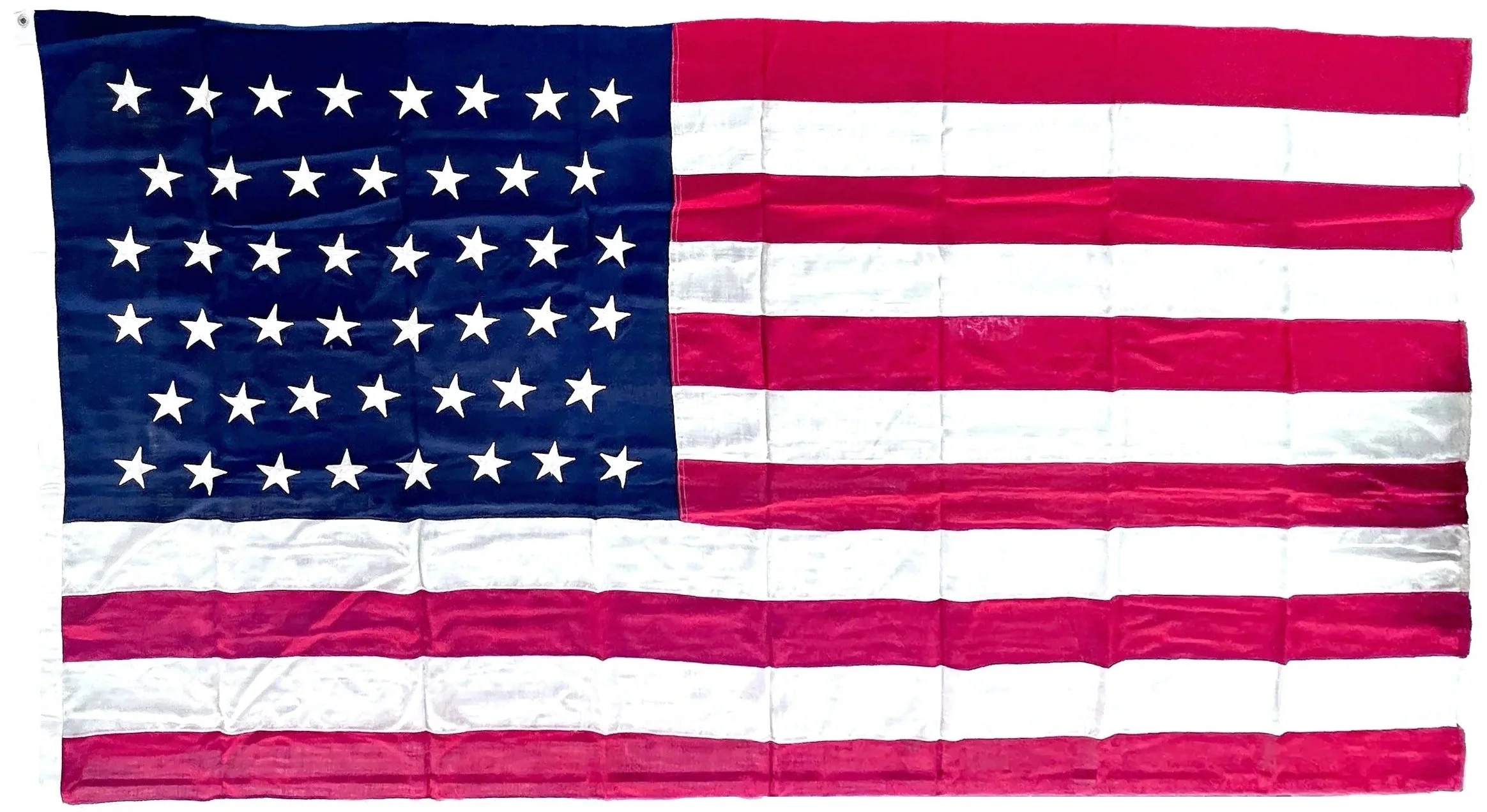
On June 14, 1777, the Continental Congress chose a national flag to symbolize the emerging United States. For many years, the American flag flew with 48 stars and was displayed across the nation, including at Haverstraw’s Garner Brickyard.
Our new exhibition, A Sense of Place: Haverstraw History, 1616–2026, follows that question through a new timeline interpretation and the material life of one flag: where it was made, what it represented, who labored beneath it, and whose histories were excluded from its promise. From Munsee homelands to the Garner Print Works and brickyards, from patriotic celebrations to racialized labor conflict, the flag becomes more than an emblem of national unity. It becomes a way to examine the unfinished revolutions embedded in Haverstraw’s landscape—revolutions in industry, citizenship, memory, and belonging.
THE LAND AS AN ARCHIVE
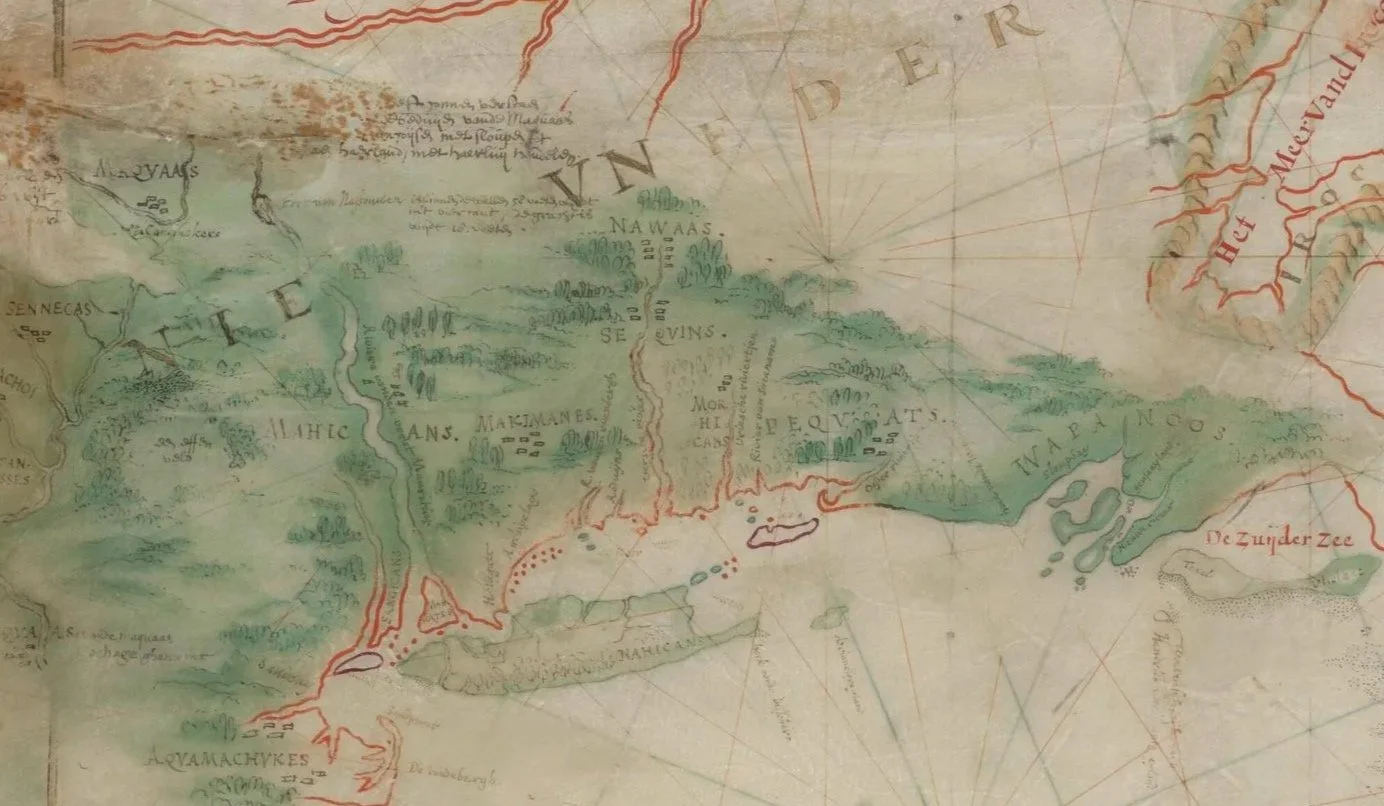
The Lower-Hudson Valley region is the ancestral home of the Munsee. Like the Six Nations, the Lenni Lenape confederacy is divided into three “bodies” and language dialects: the Unâmis (Turtle Tribe), the Unalâchtgo (Turkey Tribe), and the Munsee (Wolf Tribe).
The Munsee who lived here were referred to by the Dutch as the Haverstroos, Remahenonck, Rumachenanck, and Reweghnoncks, names that probably described the bodies of water along which they lived. Munsee historical recollections emphasize the cyclical nature of the seasons and the environment, including corn growing, as well as eel migration and spawning.
On October 1, 1609, Henry Hudson’s ship anchored at Haverstraw, beginning the process of Dutch colonization and occupation of Munsee lands in what would become Rockland County and the colonies of New York and New Jersey.
Throughout the 17nth century, the Dutch formed the New Netherlands colony, and in its formation instigated numerous massacres and wars against the greater Lenni Lenape Nation. The British empire took the colony in 1664, and renamed it New York.
Munsee sachems — leaders of local communities — gathered in attempt to prevent violence, slow Dutch settlement, and maintain their autonomy. Between 1666-1686, the Rumachenanck negotiated, and renogitated with the Dutch, eventually selling a tract of land, including the present-day Village of Haverstraw, to a Dutch merchant named Balthazar de Harte. “ Menisacongue” (Minnisceongo), a Munsee word for the creek in Haverstraw, was used as one of the patent’s boundaries.[2]
Following the De Hart patent came further encroachment of the western frontier with the Cheescocks patent of 1702/3 and the Wayawanda patent of 1703. The Wayawanda patent was signed mostly by Haverstraw residents, and was described by Orange County Historian Samuel Watkins Eager as “for mere speculating purposes; upon which [the Haverstronians] slept and dreamed golden dreams about magnificent fortunes.”[3] The patent’s western boundaries were the Minnisink Valley, or the northern portion of the Delaware River Valley. In the subsequent century, beginning with William Penn’s infamous “Walking Purchase,” the Delaware - Lenape were forcibly removed westward.
A Munsee diaspora developed itself in what, on November 6, 1907, became the 46th state to join the United States: Oklahoma.[4]
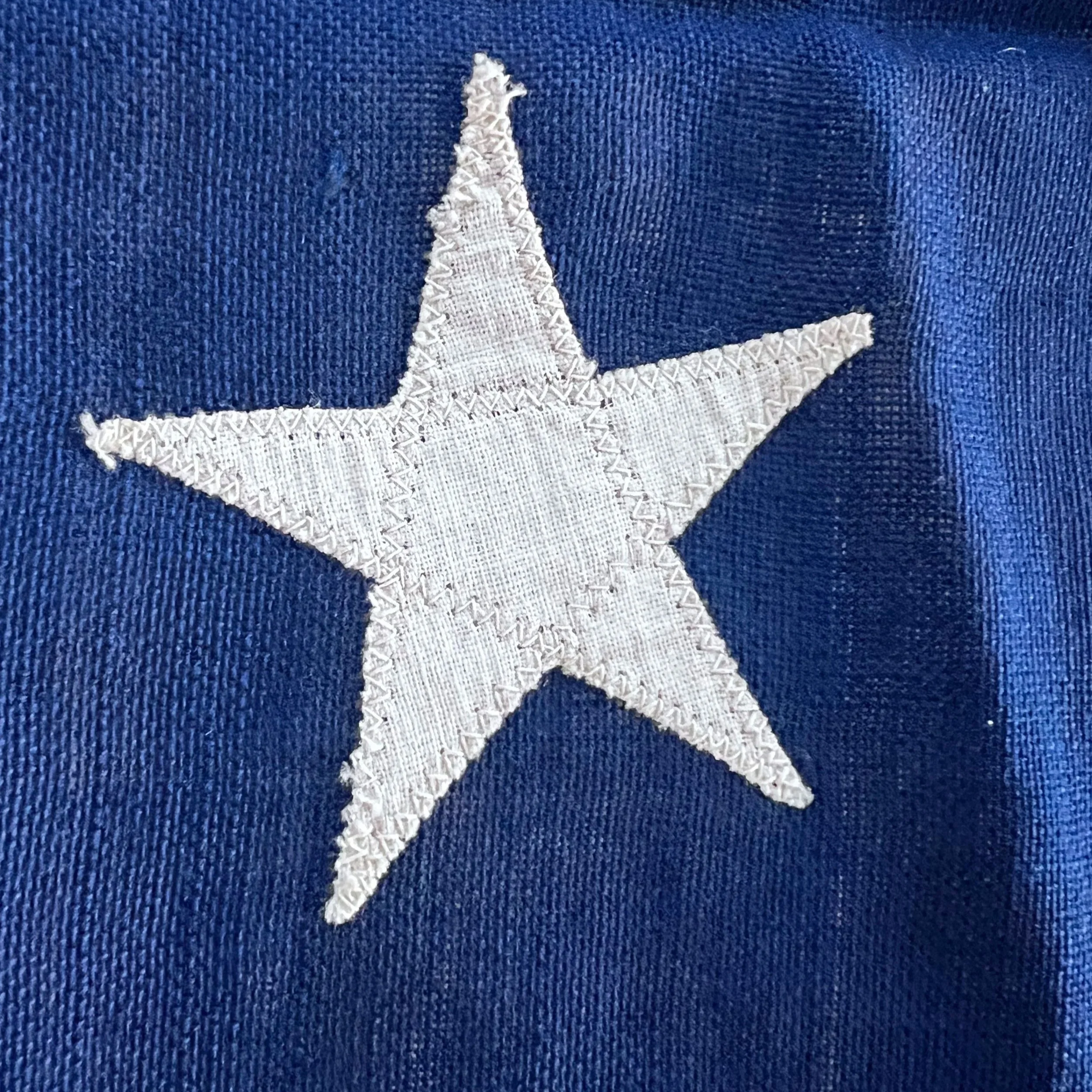
Detail of Garner Brickworks American Flag, Donated by Ira Hedges. 2002.004.002, ©Haverstraw Brick Museum Archives.
A MOMENTOUS OCCASION: THE American flag flew with 48 stars ON Haverstraw’s Garner brickyard.
The 4th of July, then as now, was a momentous celebration. As the flag flew, The Rockland County Times, Haverstraw’s local paper, stood proud that the “Stars and Stripes, the national emblem of American Liberty, justice and independence raised high.”[5] This flag, however, did not identify America’s latest imperial possessions — Puerto Rico, Cuba, and the Philippines — taken upon the conclusion of the Spanish - American war in 1898. Regardless, the Haverstraw paper reported to its readers that people in the “Phillipines, who fought against the Stars and Stripes a few years ago, now celebrate its birthday with as much enthusiasm as the most patriotic American could wish.” [6]
The flag was most likely stitched and dyed at the Garner Print Works and Bleachery — which specialized in wool, linen, and other textiles — in the neighboring hamlet of Garnerville. The Fourteenth Annual Report of the Factory Inspector, published in 1900, cited the factory as the largest employer in Rockland County, employing 155 women over 18 and 24 girls under 16.
The flag was most likely handmade at the Garner Print Works—which specialized in wool, linen, and other textiles—in the neighboring hamlet of Garnerville. It features hand‑stitched white stars in an unusual zigzag pattern and is marked “5' x 8' woven XXWOOL,” a designation that typically refers to a higher quality, long‑staple wool fiber, making the fabric more durable, weather‑resistant, and better suited for outdoor use. It was probably also dyed at the Print Works. For over a century, “colored dyes, caustics, acids, and other wastes” were frequently dumped into Minnisceongo Creek until the dye works closed in the 1970.[7]
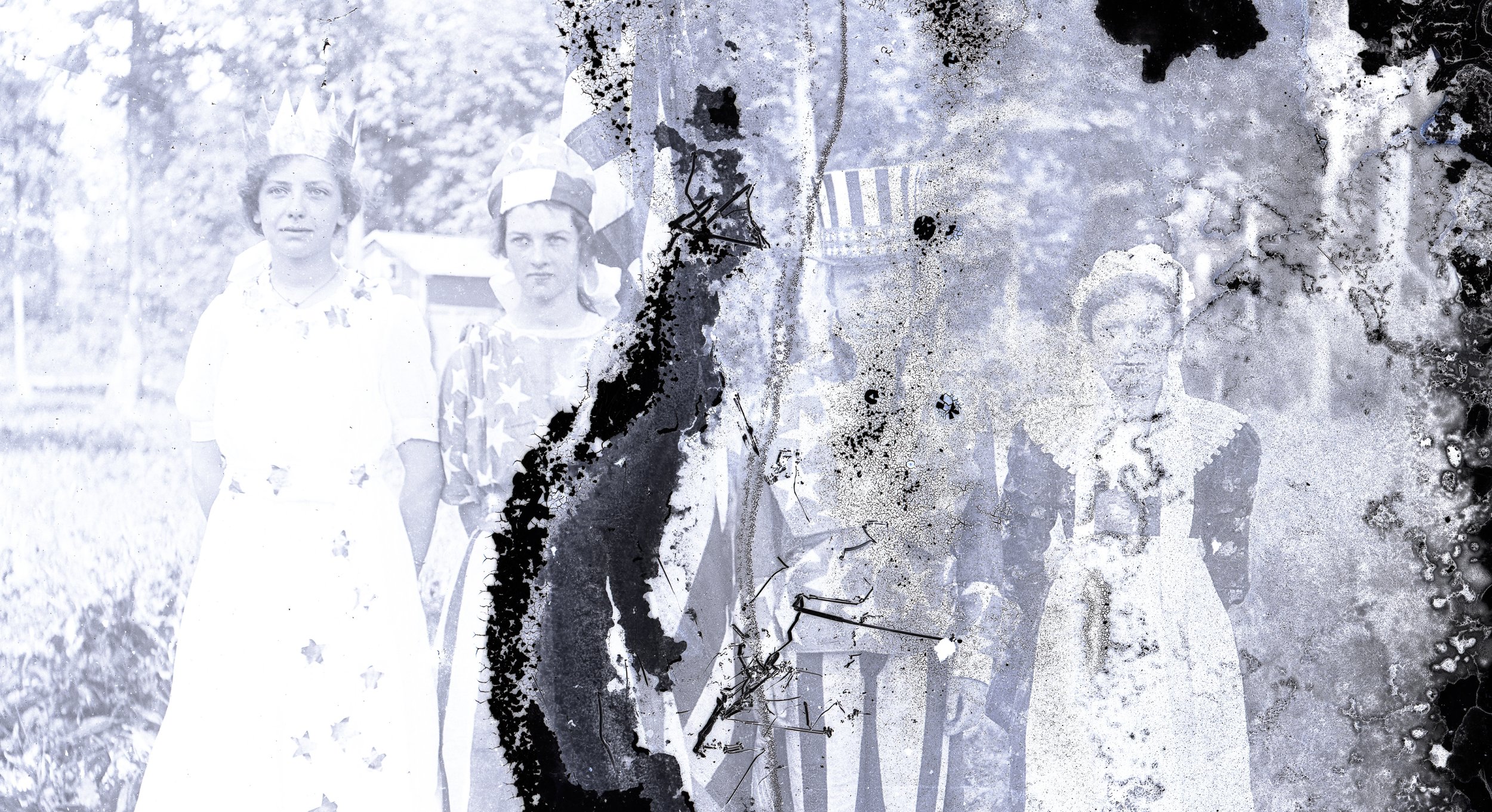
Young adolescents dressed in American garb. A boy is dressed as Uncle Sam, a representation of the United States who is said to have been created during the nation’s second war against Britain in 1812 [12]. Circa 1900-1915. 2020.017.026, Frank DeNoyelles Glass Plates, DeNoyelles Collection, Haverstraw Brick Museum Archives.
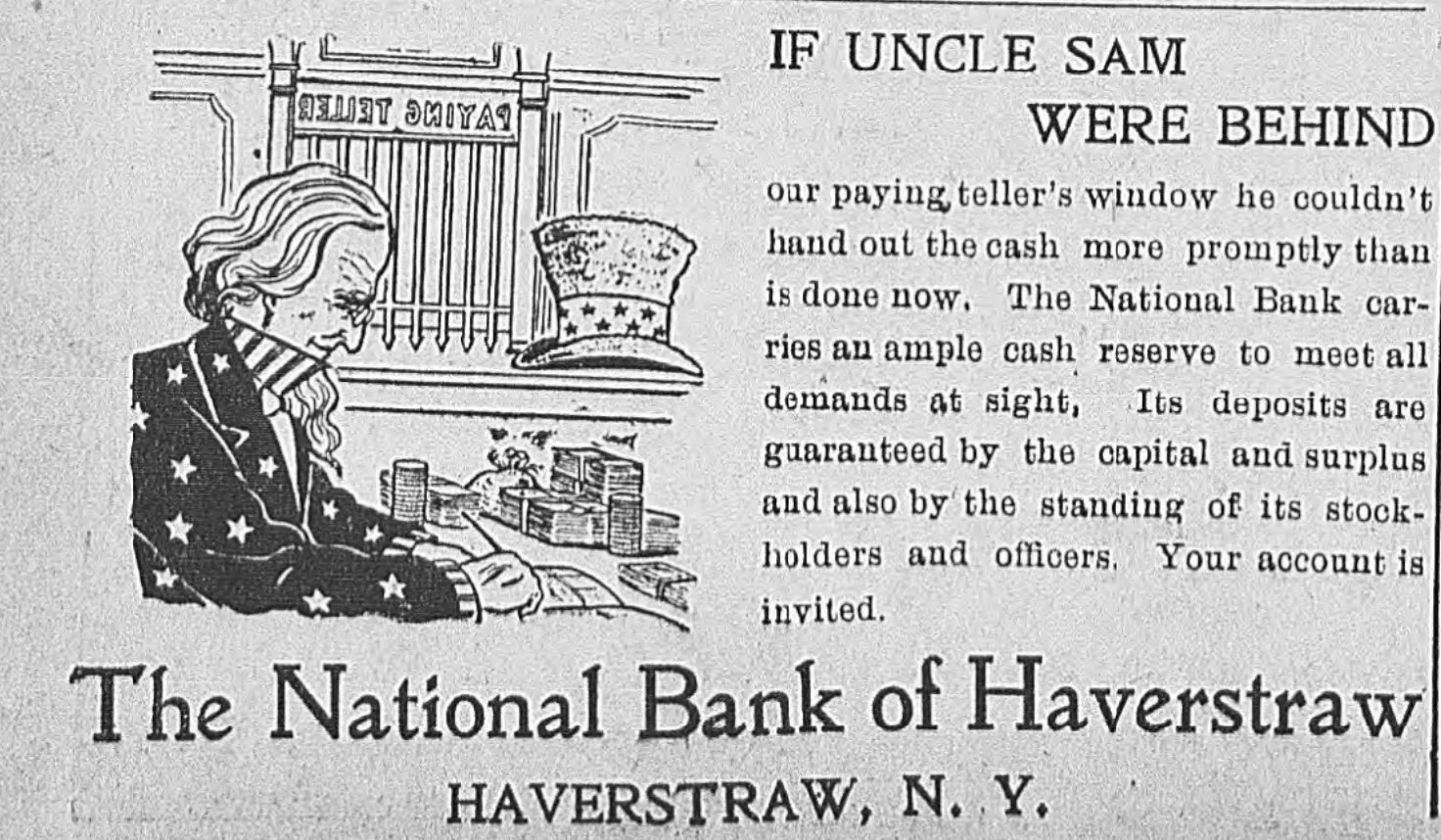
Advertisement in the Rockland County Times [12]. Courtesy of Hudson River Valley Heritage’s Historic digitized Newspapers.
Locally, Haverstraw residents celebrated independence much like we do today. In 1908, General Warren Hose Company initiated its annual 4th of July picnic in “Johnston’s West Haverstraw Park.” Great quantities of fireworks were also sold — enough for the Times to assume that there would “unquestionably…be many mishaps,” and for Police Chief Ford to limit sales.[8] During the week of July 4 in 1911, the Adler business on Rockland Street sold 1,400 kegs of alcohol, a 40% increase from their normal 1,000 kegs/week during the summer.[9] Residents were also encouraged to celebrate with their dollar. On a petty cash level, businesses like Baum Bros on Broadway offered sales over the holiday week.[10] On a financial industry level, Uncle Sam was used to promote The National Bank of Haverstraw, many of its capital stockholders being brickmakers. [11]
Revolutions in Brickmaking
The Garners’ economic foothold in the area was jump-started in 1853 with the incorporation of the Rockland Print Works Company in 1853 with a capital stock of $100,000 and around 300 employees under their payroll.[13] Having such extensive amounts of capital, the Garner family invested in other industries, such as brickmaking. Moreover, they had the ability to consistently be innovative. Per The Redhook Journal, the Garners had invested in the industry as early as 1876.[14] However, it wasn’t until around the turn of the century that they heavily invested themselves in brickmaking.
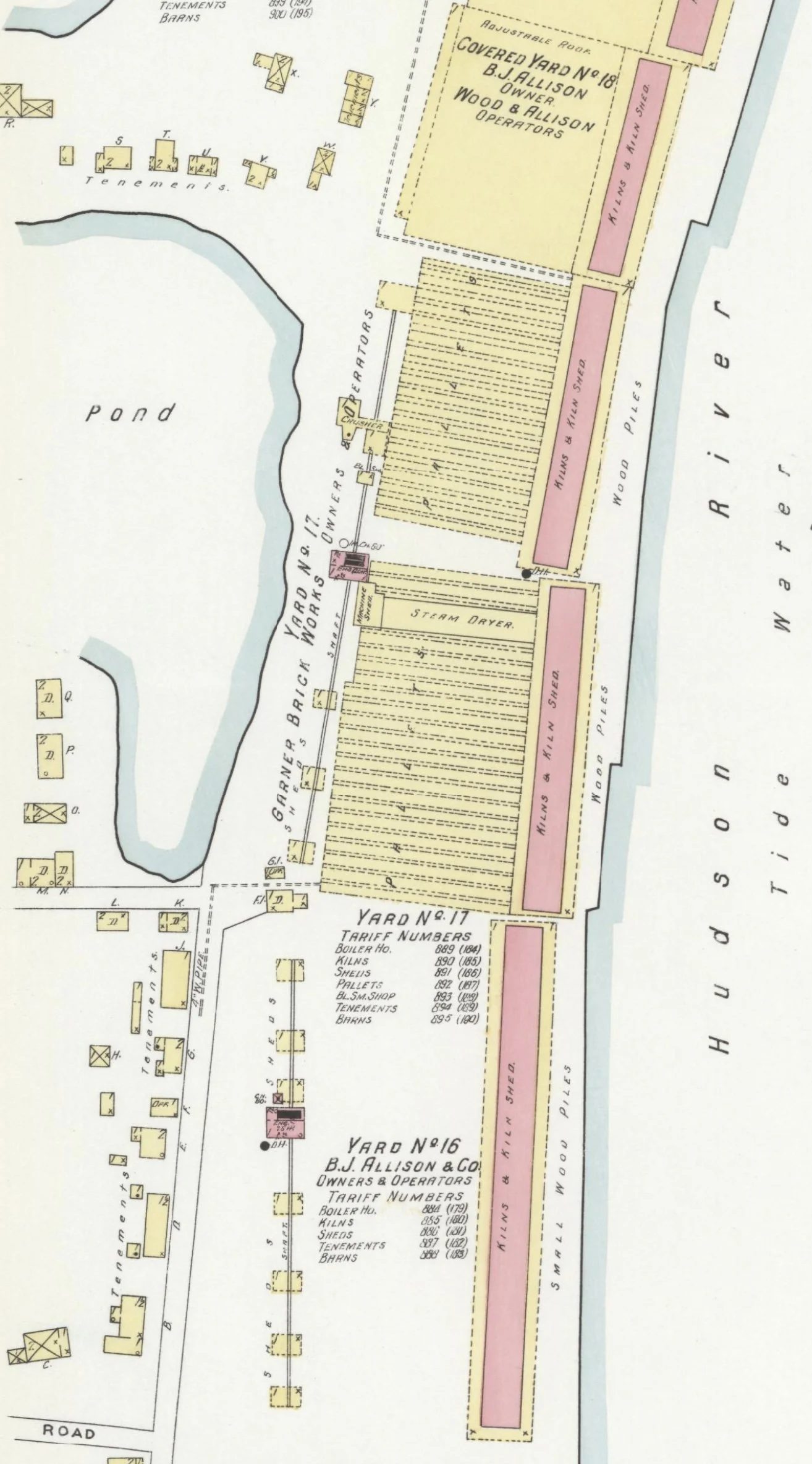
The Garner brickyard was located in the Roseville neighborhood, in between the B.J. Allison & Co brickyards. 1910 Haverstraw Sanborn Insurance Map, Library of Congress.
In 1890, they became the first brickyard to burn their kilns with oil.[15] By 1906, Garner & Co. owned six brick machines.[16] These machines were powered by a “coil-fired boiler which ran a 120 horsepower Newburgh Corliss steam engine.”[17] James Morrissey, the engineer, was responsible for ensuring the steam engine was powered and working.[18]
A majority of wet bricks were put into pallet drying yards — a Haverstonian invention — to protect them from rain and other inclement weather as they dried. However, the brickyard was also the first “up the beach” to utilize steam drying bricks before they were fired in kilns.[19] The machine could steam-dry up to 50,000 bricks per day, or the output of roughly two machines per day,[3] and could work through the winter months.[20]
In 1909, Nyack’s City and Country reported that the brickyard had a 13-arch kiln of steam-dried green brick ready to fire, estimated to produce 650,000 bricks, and was in the midst of burning a 25-arch kiln, estimated to have 1.25 million bricks.[21]
In this time period, the brickyard was managed by superintendent John Peck, a former member of the Brick Manufacturer’s Association of the Hudson River.[22]
“Citizenry” and the Foreign element
“Nor is the great mass of our foreign population which is ultimately to be consolidated into the American nation properly informed…of the country to which they have come for refuge and freedom.”[23] - Rockland County Times, July 3, 1909.
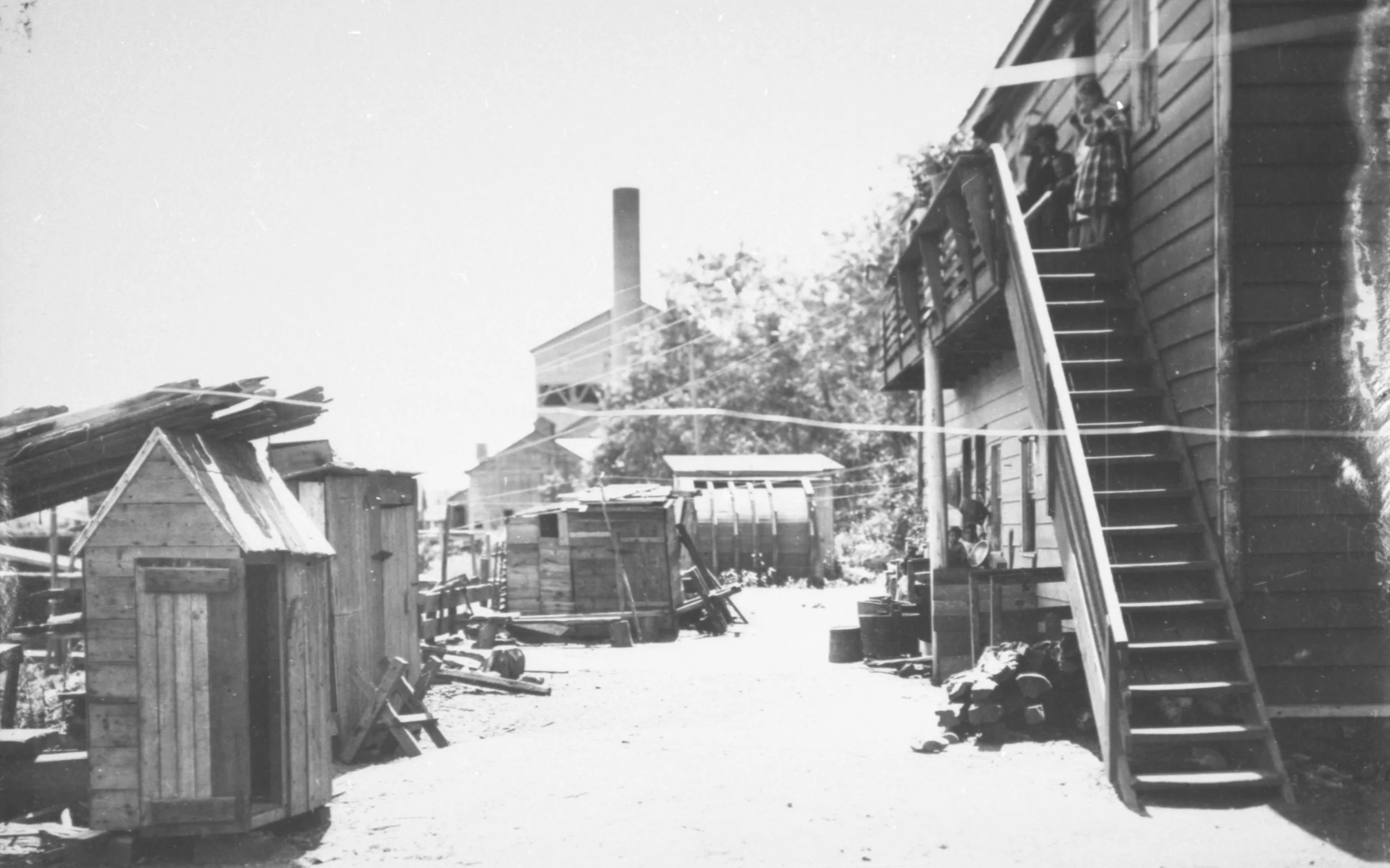
Worker’s housing varied on the brickyards, from shanties, to wood houses, to brick tenements. Worker’s housing on the Garner brickyard, circa 1903. 35mm contact print, Sullivan Collection, Haverstraw Brick Museum Archives.
By the 1900s, brickyard owners found themselves in a paradox. They often relied on transient labor, in part to help prevent unionization [24]. This was especially true after the West Shore Railroad reached the village, making it easier to recruit Black laborers from the South. At the same time, however, many in the village, including the local newspaper, frequently bemoaned this population.
While the term “foreigner” was often used to describe immigrants from other nations, migrant Black brickworkers were labeled this way as well. On September 30, 1911, the Rockland County Times wrote: “Every train is carrying the foreign brickworkers from Haverstraw…The colored gentlemen are leaving as fast as they can” for Virginia, Georgia, and the Carolinas. [25]
At times, the newspaper of record expressed sympathy for the brickworkers’ plight. As the 1908 brickmaking season began, manufacturers cut workers’ wages “an average of 40 cents per day,” or by “between 20 and 25 per cent.” Paraphrasing worker grievances, the Times reported that workers said: “that the brickmakers take advantage of their condition in life…by force of circumstances after a long, hard winter, [they] are really compelled to accept whatever wages are offered.” [26] However, when these Black workers went on strike in 1911, they were again described as “foreign” and contrasted with “local people,” who supposedly did not “feel aggrieved at existing conditions.” [27]
After successive strikes at the turn of the century, the piece-work pay model — as opposed to the hourly model —remained, demanding that workers produce bricks faster.[28] In turn, the risk of injury and even death was ever present.
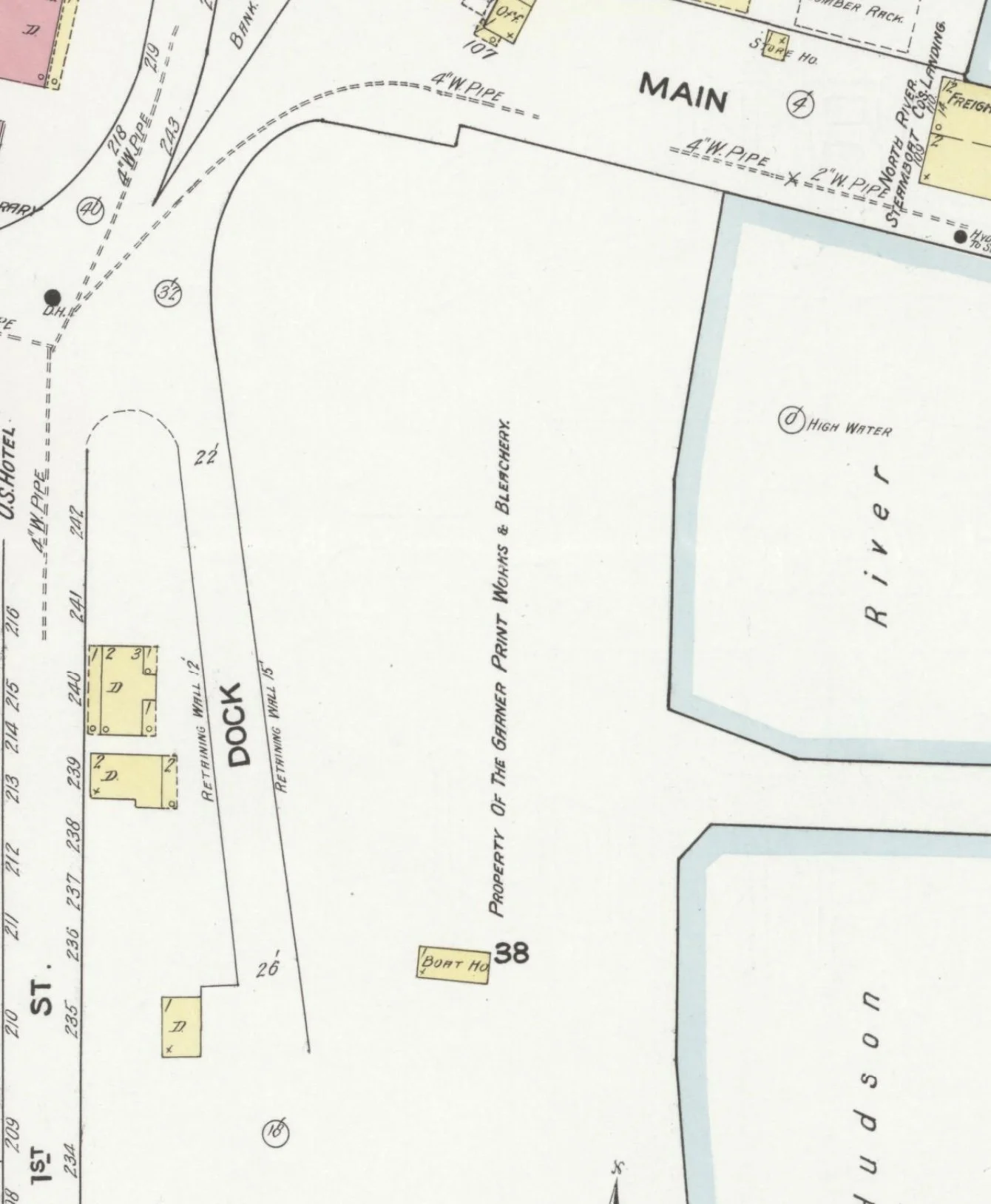
The Garner Print Works and Bleachery Dock stood in what is now Emeline Park. 1910 Haverstraw Sanborn Insurance Map, Library of Congress.
On January 6, 1909, Andrew Petrosky, “a Hungarian machine boy,” got caught in the machine’s gears. His body was thrown around as his leg broke. Thankfully, due to Henry Thrower’s intervention, a Black worker, Petrosky was protected from being “battered to death,” and given enough time for engineer Harrigan to pull the emergency stop.[29]
Unfinished Revolutions
By 1912, the flag that flew over Haverstraw carried 48 stars, marking the admission of New Mexico and Arizona as the 47th and 48th states. Yet the expansion of the nation did not mean that the promises represented by the flag had been equally fulfilled. Women’s suffrage — advocated for in Haverstraw by organizations such as the Black Fairmont Baptist Church — would not be federally ratified for another eight and a half years. [30] At the same time, local women’s organizations such as the King’s Daughters, who helped advance the village library, continued shaping public life by beginning efforts to create a public park at the Garner Print Works docks between 1908 and 1912. [31]
As many of us celebrate the Fourth of July—often with parades, picnics, fireworks, and patriotic displays much like Haverstraw residents did more than a century ago—this flag asks us to look more closely at what, and whom, those celebrations have represented. Who sewed the Stars and Stripes onto the flag? Who worked beneath it in the brickyards, print works, docks, and factories? How did the bricks made along Haverstraw’s riverfront help build the nation, and what did that labor cost the people and landscapes that made such growth possible?
What does unity mean to us today?
Haverstraw’s history suggests that unity has never been a finished condition. It has been made, contested, and remade through struggles over land, labor, immigration, citizenship, public memory, and the ownership of public spaces. To celebrate Haverstraw history and the American flag is therefore to follow a larger story of liberty and justice: one stitched not only into national symbols, but into the work, conflict, exclusion, and the hope of the many generations of people-and their descendants- who overcame great challenges to move here and who continue to call Haverstraw their home.
WRITTEN BY MUSEUM HISTORIAN LUKE SPALTRO, Additional Writing and EDITING BY EXECUTIVE DIRECTOR RACHEL WHITLOW
Citations and Further Reading
[1] “True Meaning of the Celebration of the Glorious Fourth,” Rockland County Times, Vol. XX, No. 38, July 3, 1909, p. 2. https://news.hrvh.org/veridian/?a=d&d=rocklandctytimes19090703.1.2&e=-------en-20-rocklandctytimes-1--txt-txIN-%22baum+bros%22------
[2] Those remaining in the region are a part of the Ramapough Lenape Nation. Robert Steven Grumet, The Munsee Indians: A History (Oklahoma: University of Oklahoma, 2009) p. 126; Edward Manning Ruttenber, History of Orange County, New York (Philadelphia: Everts & Peck, 1881) 21.https://archive.org/details/cu31924028832693/page/21/mode/1up?q=haverstraw&view=theater . David Cole, History of Rockland County, New York, (New York: J. B. Beers & Co., 1884), p. 141. https://archive.org/details/historyofrocklan00cole_0/page/141/mode/1up?q=%22garner%22 ; George Henry Budke, “Indian deeds, 1630 to 1748. BC-88,” (Unpublished manuscript, n.d.), p. 66-68.
[3] Samuel W. Eager, An Outline History of Orange County (Newburgh: S. T. Callahan, 1846) pp. 237, 446.
[4]“The History of the Delaware Nation,” Delaware Nation, https://www.delawarenation-nsn.gov/history/
;“Stockbridge - Munsee,” Oklahoma Historical Society, https://www.okhistory.org/publications/enc/entry?entry=ST039.
[5] “True Meaning of the Celebration of the Glorious Fourth,” Rockland County Times, p. 2.
[6] “Fourth of July in Manila: Birthday of the American Nation is Celebrated with the Greatest Enthusiasim,” Rockland County Times, Vol. XX, No. 38, July 3, 1909, p. 7. https://news.hrvh.org/veridian/?a=d&d=rocklandctytimes19090703&e=------190-en-20-rocklandctytimes-1-byDA.rev-txt-txIN-%22independence%22------
[7] “Employers of Labor,” Rockland County Times, Vol. XII, No. 14, Dec. 22, 1900, 1. https://news.hrvh.org/veridian/?a=d&d=rocklandctytimes19001222.2.4&srpos=12&e=------190-en-20-rocklandctytimes-1--txt-txIN-women+work------ . For Further reading into women’s labor in this time period, see Luke Spaltro, “BrickTalk: Women & The Brickyards,” April 1, 2025, Haverstraw Brick Museum, https://www.haverstrawbrickmuseum.org/from-thearchives/women-and-the-brickyards. ;“Garnerville Terminal May Lose Dye House,” Rockland County Times, Vol. 82, No. 9, January 28, 1971, p. 1. https://news.hrvh.org/veridian/?a=d&d=rocklandctytimes19710128.1.1&srpos=1&e=-------en-20-rocklandctytimes-1--txt-txIN-%22dye%22+%22pollution%22------ ;
[8] “Fourth’s Program,” Rockland County Times, Vol. XIX, No. 38, July 4, 1908, p. 1. https://news.hrvh.org/veridian/?a=d&d=rocklandctytimes19080704.1.1&srpos=30&e=------190-en-20-rocklandctytimes-21-byDA.rev-txt-txIN-%22independence%22------
[9]; “Fireworks! Fireworks!” Vol. XX, No. 38, July 3, 1909, p. 1. https://news.hrvh.org/veridian/?a=d&d=rocklandctytimes19090703.1.1&e=------190-en-20-rocklandctytimes-1-byDA.rev-txt-txIN-%22independence%22------
[10] “Attended Unique Banquet,” Rockland County Times, Vol. XXIII, No. 5, November 25, 1911, p. 1. https://news.hrvh.org/veridian/?a=d&d=rocklandctytimes19111125.1.1&srpos=9&e=------191-en-20-rocklandctytimes-1-byDA-txt-txIN-%22july+4%22------
[11] Baum Bros Department Store, “ INDEPENDENCE DAY,” Rockland County Times, July 4, 1911, p. 6. https://news.hrvh.org/veridian/?a=d&d=rocklandctytimes19110701.1.6&srpos=7&e=------191-en-20-rocklandctytimes-1-byDA-txt-txIN-%22independence%22------
[12] Danna Bell, “Uncle Sam: American Symbol, American Icon,” Library of Congress, July 1, 2014, https://blogs.loc.gov/teachers/2014/07/uncle-sam-american-symbol-american-icon/. ; The National Bank of Haverstraw, “IF UNCLE SAME WERE BEHIND,” Rockland County Times, Vol. XX, No. 36, p. 4. https://news.hrvh.org/veridian/?a=d&d=rocklandctytimes19090619.1.4&srpos=7&e=------190-en-20-rocklandctytimes-1-byDA.rev-txt-txIN-%22uncle+sam%22------
[13] Cole, History of Rockland County, pp. 166, 195.
[14] “General Intelligence,” Red Hook Journal, Vol. XVII, No. 20, September 1, 1876, p. 2. https://news.hrvh.org/veridian/?a=d&d=ifacgjje18760901.1.2&srpos=1&e=-------en-20--1-byDA-txt-txIN-%22garner+brick%22------
[15] Daniel deNoyelles, Within These Gates (Thiells, New York: Haverstraw Brick Museum, 2002), p. 58.
[16] Ibid., 270.
[17] Thomas Sullivan to Pat Gordon, “RE: Brickyard Enginehouse Chimney located at the electric generating Bowline Plant formerly Orange and Rockland,” October 24, 1999, Sullivan Collection, Haverstraw Brick Museum Archives.
[18] “Engineer is almost scalded to death,” City and Country, Forty-Sixth Year, February 27, 1909, p. 3. https://news.hrvh.org/veridian/?a=d&d=ifacfgic19090227-01.1.3&srpos=6&e=-------en-20--1-byDA-txt-txIN-%22garner+company%22------
[19] “Rockland in the swim,” Rockland County Times, Vol. XX, No. 5, November 14, 1908, p. 1. https://news.hrvh.org/veridian/?a=d&d=rocklandctytimes19081114.1.1&srpos=31&e=------190-en-20-rocklandctytimes-21-byDA.rev-txt-txIN-%22garner%22------
[20] “Artifical Drying of Bricks,” Nyack Evening Journal, Twentieth year, January 11, 1909, p. 2. https://news.hrvh.org/veridian/?a=d&d=jaaggbbf19090111-01.1.2&srpos=4&e=------190-en-20--1--txt-txIN-%22garner+brick%22------
[21] “Amount of brick the smallest in years,” City and Country, Forty-sixth year, February 27, 1909, p. 1. https://news.hrvh.org/veridian/?a=d&d=ifacfgic19090227-01.1.1&srpos=5&e=-------en-20--1-byDA-txt-txIN-%22garner+company%22------. Each arch was estimated to produce 50,000 bricks.
[22] “Village Politics,” Rockland County Times, Vol. XIX, No. 20, February 29, 1908, p. 1. https://news.hrvh.org/veridian/?a=d&d=rocklandctytimes19080229.1.1&srpos=11&e=------190-en-20--1--txt-txIN-%22garner+brick%22------; “Brickyards to close down Oct. 1.,” Kingston Daily Freeman, Vol. XXXVI, No. 261, August 22, 1907, p. 2.
[23] “True Meaning of the Celebration of the Glorious Fourth,” Rockland County Times, p. 2. https://news.hrvh.org/veridian/?a=d&d=rocklandctytimes19090703.1.2&srpos=24&e=------190-en-20-rocklandctytimes-21-byDA.rev-txt-txIN-%22foreign%22------
[24] Luke Spaltro, “BrickTalk: May Day,” Haverstraw Brick Museum, May 1, 2026. https://www.haverstrawbrickmuseum.org/from-thearchives/bricktalk-may-day-labor-in-the-brickyards
[25] “Moulding has ceased,” Rockland County Times, Vol. XXII, No. 49, September 30, 1911, p. 1. https://news.hrvh.org/veridian/?a=d&d=rocklandctytimes19110930.1.1&srpos=46&e=------191-en-20-rocklandctytimes-41-byDA-txt-txIN-%22foreign%22------
[26] “Down go the wages,” Rockland County Times, Vol. XIX, No. 32, May 23, 1908, p. 1. https://news.hrvh.org/veridian/?a=d&d=rocklandctytimes19080523.1.1&srpos=38&e=------190-en-20--21-byDA-txt-txIN-%22brickyard%22----1908%E2%80%93–
[27] “Men want old wages,” Rockland County Times, Vol XXII, No. 30, May 20, 1911, p. 1. https://news.hrvh.org/veridian/?a=d&d=rocklandctytimes19110520.1.1&srpos=16&e=------191-en-20-rocklandctytimes-1-byDA-txt-txIN-%22foreign%22------
[28] Spaltro, “BrickTalk: May Day.”
[29] “Caught in a chain belting,” Nyack Evening Journal, Twentieth Year, January 9, 1909, p. 1. https://news.hrvh.org/veridian/?a=d&d=jaaggbbf19090109-01.1.1&e=------190-en-20--1--txt-txIN-%22garner+brick%22------
[30] “Suffrage speeches at the sunday-school union picnic,” Rockland County Times, Vol. XXVI, No. 7, p. 5. https://news.hrvh.org/veridian/?a=d&d=rocklandctytimes19140711.1.5&srpos=91&e=-------en-20-rocklandctytimes-81-byDA-txt-txIN-%22suffrage%22------
[31] “Public Park in Haverstraw,” Nyack Evening Journal, twenty-fourth year, May 24, 1912, p. 1. https://news.hrvh.org/veridian/?a=d&d=jaaggbbf19120524-01.1.1&srpos=16&e=------191-en-20-jaaggbbf-1-byDA-txt-txIN-%22haverstraw%22----1912– ; “Citizens Protest Oil Tank Construction,” Rockland County Times, Vol. XLII, No. 45, November 25, 1933, p. 1. https://news.hrvh.org/veridian/?a=d&d=rocklandctytimes19331125.1.1&srpos=43&e=-------en-20-rocklandctytimes-41-byDA-txt-txIN-%22public+park%22------